Feature InterviewsFeature Interviewshttp://www.darkscribemagazine.com/feature-interviews/2017-10-18T16:13:27ZSquarespaceLast Man Standing: Meet the Guy Behind ‘Final Girls’http://www.darkscribemagazine.com/feature-interviews/last-man-standing-meet-the-guy-behind-final-girls.htmlDark Scribe Magazine2017-07-11T10:00:00Z2017-07-11T10:00:00ZBy, Vince A. Liaguno
If you haven’t heard of Final Girls, out today from Dutton (a boutique imprint of Penguin Group), you’ve likely spent the first half of the year living in a bubble. Easily the buzziest book since Gone Girl, the hubbub that heralded Final Girls started with a mere tweet from a little-known author named Stephen King, who called it the "first great thriller of 2017" and compared it to Gone Girl by Gillian Flynn. Quite an endorsement from quite the writer indeed.
The momentum behind the thriller has only ratcheted up in the months since, with foreign rights sold in more than 20 countries, starred reviews from Kirkus, Library Journal, and Booklist, and features in major press outlets like Entertainment Weekly, Cosmopolitan, Redbook, Elle, and The Wall Street Journal. And with the kind of enviable marketing campaign Dutton has dedicated to the book, Final Girls—which has also been named a Book of the Month Club selection for July—promises juggernaut success for its creator, one Riley Sager. But you won’t be seeing Sager making the rounds on the evening news or late night talk shows the way Gillian Flynn did when Gone Girl blew through the bestseller stratosphere nor doing any book signings—at least not just yet.
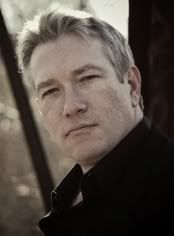
Riley Sager, as it turns out, is a pseudonym for a previously published mystery writer—a previously published male mystery writer—who Sager’s savvy agent suggested step aside and let the pages do the talking this time. And, if the fact that Final Girls generated so much watercooler conversation before its official release is any indication, it’s a strategy that seems to have worked brilliantly.
If this all sounds like the literary version of the Hollywood dream, it is for the mild-mannered film nerd who wrote Final Girls. Sager isn’t letting the book’s pre-release buzz or prospects go to his head nor is he counting any chickens at this early juncture. In fact, when this writer presses him during the interview to fantasize about casting choices for the inevitable film version, he politely declines, citing that he’s got no thoughts beyond the book’s release—nor does he want risk possibly “torpedoing anything” with his own thoughts on which Hollywood heavyweights might make the perfect Quincy, Sam, or Lisa.
For now, he’s taking it all in humble stride, grateful to be a full-time novelist able to support himself with his writing. He’s got no immediate plans to move out of the New Jersey townhouse he’s lived in for the past dozen or so years and still drives the same beat-up Volkswagen Beetle sorely in need of new tires and a paint job. He’s still cooks dinner and does dishes and the housework. After all, he tells me, “When the toilet needs to be cleaned, it doesn’t really matter if Stephen King liked your book.”
On the weekend before the novel’s release, Dark Scribe Magazine caught up with Sager to discuss Final Girls, its inspirations, and the origins of that mysterious pseudonym. And, yes, we know who the real Riley Sager is—but we’re going to let The Wall Street Journalspill those beans shortly.
Dark Scribe Magazine: With the book’s titular moniker originating from a term coined by Carol J. Clover in her seminal meditation on slasher films Men, Women, and Chainsaws: Gender in the Modern Horror Film, let’s begin by clearing something up: Is Final Girls a horror novel with thriller elements or a thriller with horror elements?
Riley Sager: It is very much a thriller with horror elements. My goal with the book was to take the concept of the Final Girl and drop it into the real world. I treat what happened to these women as true-life scenarios, with all the modern-day baggage that comes with it. The press. The Internet. The psychological trauma. It was really important to me to avoid veering into camp or parody. Yet the title alone does indicate that there’s a horror element involved. That comes in the form of flashbacks to the night Quincy—the main Final Girl—survived a massacre that left the rest of her friends dead. I think of those chapters as a slasher flick within the book. You know what happens in the very first chapter, but not how or why it happened.
DSM: Where did the idea for Final Girls come from—and were there any earlier incarnations of the idea that might have led to a completely different book?
Riley Sager: The idea came to me on Halloween while watching, of course, Halloween. I’ve seen the movie too many times to count, along with Halloween II and the unfortunately titled but surprisingly effective Halloween: H20. Basically, I started thinking about Laurie Strode and how the movies—especially Halloween: H20—really missed an opportunity to show how traumatizing the events of the first movie were for Laurie. Sure, they touch upon it, but not nearly enough in my opinion. That got me thinking about how a Final Girl would be like five, ten, fifteen years after what happened. Do they think about it every day? Do they try to forget it? Can they ever truly trust anyone? So I came up with the idea of three real-life Final Girls and how they might interact, especially if they find themselves threatened years later. I toyed with the idea of making it a YA series, kind of like a slasher-flick version of Pretty Little Liars, but that lasted about a day. Very early on, I knew exactly what kind of book I wanted it to be.
DSM: Editing can often be a painful process for the writer. Is there a personal favorite scene or character in Final Girls that got excised during the editing process?
Riley Sager: There’s actually very little that got left on the cutting room floor. I got very, very lucky in that my editor and I shared the same vision for Final Girls. There were no attempts to change things too drastically or push the book in a different direction. The only thing we disagreed about was a certain scene in Central Park. She stated her case. I stated mine. We agreed to compromise. It was all very civil and stress-free because my editor—the fabulous Maya Ziv at Dutton—truly is the nicest person on Earth. Plus, it helped knowing that we both wanted to put out the best damn book we possibly could. That was the goal with every little thing we changed.
DSM: We’ve all heard the term “water cooler” applied to pop culture phenomena that everyone’s talking about—usually a film or TV show. With the tremendous advance word that’s preceded Final Girls—including that doozy of a blurb from Stephen King—what does it feel like to be within the buzz and the topic of water cooler conversation this early out?
Riley Sager: Honestly, it’s all very surreal. I mean, I know it’s happening. I’ve seen the early reviews and the blurbs and the steadily building buzz. But it doesn’t quite feel like it’s happening. For instance, Stephen King’s very generous blurb. I’m still not exactly sure how it happened, so it doesn’t quite feel real. Same thing with Final Girls being chosen for the Book of the Month Club. Or it being featured in Entertainment Weekly. Right now, there’s a disconnect between my reality and the book’s reality.
Part of that is because I’ve been trying to avoid the buzz as much as possible. Don’t get me wrong—it’s wonderful and amazing and more than I ever dared to dream. But I think dwelling on it too much isn’t the healthiest thing to do. I wrote the best book I possibly could. Now there’s nothing left for me to do. Whatever happens next is now out of my hands.
Then there’s the fact that my life hasn’t really changed all that much. Yes, I’m now a full-time novelist, which is incredible. I feel very lucky to be able to support myself just through my writing. But other than that, I’ve kept things pretty normal.
DSM: Riley Sager is a pseudonym. Has being publicly anonymous—at least at this point in time—allowed you any advantages in the months leading up to the book’s release? Conversely, has there been a downside to the pseudonym? Without giving away any identifying details of your real identity, why did you and/or Dutton opt to go with a pseudonym?
Riley Sager: People sometimes forget that publishing is, at its core, a business. And the pseudonym was a business decision suggested by my agent. I’ve had books published under both my real name and another pen name. In both instances, sales were less than stellar. When I turned in Final Girls, my agent immediately suggested a pseudonym, mostly because everyone prefers a shiny, new, unknown author to one with several books and middling sales under his belt. She thought a pseudonym was the best way to make Final Girls a success. I agreed. As for the name Riley Sager, we wanted something gender neutral to add to the mystery of my identity while also giving a nod to the fact that many Final Girls in the movies have a gender-neutral name. (Hello, Sidney!) I chose Sager because it’s my maternal grandmother’s maiden name and my agent liked the way it sounded. Riley is a mash-up of my parents’ first names—Ray and Linda.
As for being anonymous, I quite enjoy it. I’m not one of those authors who needs public praise or recognition to feel good about myself. I’m also, by nature, very private. So the pseudonym situation works well for me. If there’s a downside, it’s probably the fact that I haven’t done much in-person press or events to promote the book. From the very beginning, my publisher and I agreed that the book should be the focus, not Riley Sager. That’s slowly starting to evolve now that the book is finally out. I just did an interview and photo shoot revealing my identity for a major newspaper, and I recently added a few public events to my schedule, which I hope will be fun and not stressful. My characters may not be shy, but I certainly am.
DSM: Is it safe to assume that slasher films in some significant way inspired Final Girls? What are some of your favorites in the genre? Any wink-wink-nods to any of these films in the book?
Riley Sager: My two favorites are Halloween and Scream. Sure, they’re the most obvious choices, but that’s because they’re both classics that advanced the genre. I’m also enjoying the artistic renaissance horror is experiencing right now. Movies like It Follows and Get Out that pair an indie sensibility with real scares and social commentary.
Final Girls itself is peppered with references to movies. Quincy, the main character, likes Hitchcock and film noir, so there are mentions of those throughout. I also sneak in a Mary Poppins reference, because it’s one of my favorites. And eagle-eyed readers will spot a few references to Halloween, the most notable being that Quincy’s last name is Carpenter. I had to show John Carpenter some love.
DSM: Will there be a next book by Riley Sager…or do your alter-ego and the real you now merge into one writing career? What can you tell us about your next novel?
Riley Sager: There will indeed be another book from Riley Sager, although I can’t say too much about it at this point. I’m in the process of revising it now and much will likely change, including its title. But I can say it’s a riff on Picnic at Hanging Rock. Instead of an all-girls school in Australia, it’s an all-girls summer camp in the Adirondacks. Bad things happen.
]]>Douglas Clegg: Writer, Spy, and Literary Archeologisthttp://www.darkscribemagazine.com/feature-interviews/douglas-clegg-writer-spy-and-literary-archeologist.htmlDark Scribe Magazine2010-11-11T12:51:12Z2010-11-11T12:51:12ZBy, Désirée I. Guzzetta
The best way to get a sense of what Douglas Clegg is like, barring actually meeting him, is to take a look at the whimsical bio on his author website.
There you’ll learn fun facts, such as his humble beginnings as a paperboy at age 12; how he “conquered” babysitting; that he worked at a place called Wolf Trap Farm-Park; or, that he likes to wrangle rabbits.
You’ll also learn that he’s been writing since he was a child – he received his first typewriter at age eight – completing his first novella, Asylum, at age 17. That early start has resulted in dozens of short stories and several novels, a Stoker Award and an International Horror Guild Award (both for his short-story collection, The Nightmare Chronicles), and a Shocker Award (for the collection, The Machinery of Night). In 2011, Clegg will be a Guest of Honor at the HWA Stoker Weekend in New York.
Clegg has had over 20 books published, beginning with 1989’s Goat Dance and including a few written under the pseudonym Andrew Harper. In 1999, Clegg was the first author to have a publisher-sponsored e-serial novel, Naomi, on the internet.
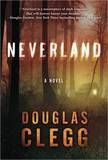
2010 has seen the release of a 20th anniversary trade paperback edition of Clegg’s Southern Gothic novel, Neverland, complete with beautiful illustrations by artist Glenn Chadbourne. A scary supernatural tale of childhood, Neverland draws you in with its splendor — and then punches you harshly in the gut.
Most people would take some time off to celebrate such a significant milestone, but Clegg continues writing (he says about his writing rituals, “I write every day or else I suffer”) from his home on the East Coast, where he lives with his husband and business partner, Raul Silva, and several pets. Dark Scribe Magazine recently caught up with Clegg via email (apropos for a man many consider to be a pioneer in eBooks) to discuss his love of writing, how he created Neverland, and supernatural fiction.
Dark Scribe Magazine: You wrote Asylum at 17. Were there other works before then?
Douglas Clegg: I was about eight years old when my mother gave me a typewriter because I was drawing and writing a lot of stories. I had been doing this since I was about four, but it was at eight that I taught myself to type and started writing fiction seriously. I've never stopped, although I have taken a year off now and then.
Dark Scribe: What do you love most about the act of writing?
Douglas Clegg: The discovery of story, the excavation — digging it out of my mind, finding out more about it, living and breathing it while I'm working on it. And then the whole business side, which is when my agent calls to tell me an editor loves the book and wants to buy it. That's a great post-writing moment.
I love the days when I get excited about getting out of bed in the morning and race to my desk to get back to living in the world of the story.
Dark Scribe: What do you feel are the ways in which the Internet has changed the relationship between the author and the reader?
Douglas Clegg: There's more immediacy and of course more communication with people in general. Beyond that, I write novels the same way I did before I was ever on the Internet: one word at a time, and in isolation.
Dark Scribe: Why did you choose Neverland for a special re-release? What about the novel makes it even more relevant for the times than when you first wrote it?
Douglas Clegg: It's one of my best novels and after nearly 20 years, it seemed like it was a good time. The novel first came out in early 1991, and was out of print quickly back then. Vanguard Press created a beautiful trade paperback edition. It has a rough-edged paper, and the cover has French flaps and a smooth texture to it that's inviting. Plus, of course, those beautiful Glenn Chadbourne illustrations.
I believe that Neverland's appropriateness today may simply be that we're now further removed from what life was like for families and children in the 1960s than we were in 1991. In 1991, the Internet had not yet overwhelmed summer days spent barefoot in the tall yellow grass, without a cell phone.
Those were both dangerous and wonderful times. No one made up your fun for you; you had to create it yourself. You played house, you played school, you discovered shacks in the woods and old cemeteries. Neverland takes place in a world of endless childhood, which I think is appealing to revisit, fictionally.
Dark Scribe: Did you draw upon your own childhood for the way the children in Neverland speak, think, feel?
Douglas Clegg: I drew on my childhood completely for Neverland, and on the observed childhoods and family lives of others. I have intense memories from an early age. I can even remember the day I had to abandon bottles and go to a glass for my milk (in the days just before plastics took over). I remember clinking my teeth on the glass and not liking it one bit. I think these memories played into the writing of the novel. I also fell in love with a particular island off Georgia that became a sort of model for Gull Island in the novel.
I also drew on my influences, Saki, Machen, maybe even a little Lovecraft, all of whom I discovered as a kid, reading on a summer's day at a basketball camp in Davidson, North Carolina, picked from a big suitcase full of books that the woman who ran the campus laundry gave me to read in between basketball practice. It was a confluence of childhood, mystery, southernness, and the supernatural.
I miss the South. I lived a good deal of my life there and I'm a Virginian by birth (yet I thought I was Hawaiian until I was six or seven, since my earliest memories are of Oahu). I went to college in the South and traveled to see friends and their families all over the southern states. I'm completely in Yankee country now, also part of my background since I spent a small portion of my childhood in Connecticut. All of this was the result of being a Navy brat and having parents who were nomadic. They liked to live in various places; I do, too.
Dark Scribe: How did you meet Glenn Chadbourne?
Douglas Clegg: I must have met Glenn at a Necon in Rhode Island at some point, years ago. He is a wonderful artist. Half the fun of being published is getting to know artists. If I could spend my entire life around artists, writers and readers, I'd be happy. Since I do, I guess I must be happy.
Dark Scribe: Are there any motifs in your writing that, upon retrospect, could be read as symbols of your experiences as a gay man?
Douglas Clegg: So far, I've had both a rough and charmed life — I've traveled extensively, particularly in my youth, been in places at the right time, through certain moments that seemed ordinary to me but now I can see their significance to a larger world. As a boy, I traveled with my family through Mexico to archaeological sites, then as a teenager, through Spain in its last fascist government days, and lived in Paris, Hawaii, Los Angeles, and various other places. Those and other experiences have informed my writing and my understanding of the human condition. Where I think being a gay male's informed my fiction is simply that I have a stronger sense of being an outsider than possibly (although not always) a straight male.
Additionally, to write fiction, you've had to have been a spy your entire life — a spy on the human condition. Being gay, as a kid, when I didn't even have the language to talk about it or the understanding, I suppose I was spying on others, by being part of their world. Ultimately, I think all writers are spies in that way.
Anyone who picks up a pen to write fiction is already an outsider. You are not living life in the same way as your neighbor if you step back from the world, look at it, and draw from your insides into the outer world to create a story.
I'm not sure my fiction is differently informed than many other novelists who strive to create from their perception of human nature and the world. I would not want to set up special categories for writers. I agree with Walt Whitman when he wrote, "I contain multitudes." This is what writers are — multitudes within an individual, drawn from the imagination and perception.
Dark Scribe: What is it about supernatural fiction that attracted you to writing it? Are there topics you feel are better explored in the horror or fantasy genres than in other types of fiction?
Douglas Clegg: On one level, there's no fiction that is completely about the world as it is. It is always filtered through the perception of the writer. Therefore, supernatural fiction isn't much of a stretch from that — but with it, I can explore aspects of the irrational, as well as issues of life and death in a way that can move toward magical realism or the imaginative unknown.
I find that fiction that's informed by a reimagining of the world with certain attributes that may or may not be here – ghosts, for example – interests me because there's something about the internal perception of the character that comes into play. In some respects, many stories about hauntings are about memory, self-deception and the projections of the irrational mind. Or, they're about ghosts.
I also enjoy the supernatural in fiction. Mythology, the supernatural, fantasy, a certain kind of horror story —those are my favorites.
Dark Scribe: How have the horror, fantasy, and psychological suspense genres evolved since you first began reading and writing?
Douglas Clegg: I haven't spent time studying the evolution of these genres. I'm interested in story on a level that pretty much ignores genre. I've begun to redefine what my stories and novels are over the years. I love horror fiction, but primarily my own personal definition of it, which doesn't always jibe with where the genre seems to be. I see what I do as supernatural fiction, and from there it can get parsed into horror, fantasy, mystery or suspense, depending on how publishers and booksellers and readers want to do it.
What seem to define genres are reader expectations, and those expectations do change over time. To stay with a genre, you've got to ride those expectations, and I don't have any interest in doing that. I'm not going to tailor my fiction to the tidal shift of any one genre's readers, nor am I going to write the same book over and over again, as I see some writers doing just to keep riding that one wave all the way to the rocky shore.
But I do intend to stake out a territory that's my own in the realm of supernatural fiction, however it's categorized by others. To some extent, I feel my first 20 or so novels were a learning curve. Of them, I think there are six that came out right: Neverland, The Hour Before Dark, The Priest of Blood, Isis, Purity, and Mordred, Bastard Son. Those novels/novellas are somewhat "across the board" — horror, fantasy, dark fantasy, suspense. I don't hate the other books I wrote, but they didn't quite do what I intended them to do within their stories. These six did.
I believe my current projects – the heavy revision of The Innocents at the Museum of Antiquities, a novella called Mr. Darkness, a novel I'm working on called The Language of Wolves as well as this other fantasy novel – all can be added to those six, too, when these are complete. I've been slow to finish these projects because they're breakthroughs for me, each in their own ways. My work as a writer is not yet done.
]]>Nate Kenyon: Writing from the Edgehttp://www.darkscribemagazine.com/feature-interviews/nate-kenyon-writing-from-the-edge.htmlDark Scribe Magazine2010-10-22T15:30:31Z2010-10-22T15:30:31ZBy, Vince A. Liaguno
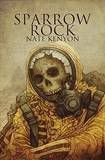
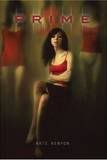
The last time we caught up with Nate Kenyon back in the fall of 2008, he had just released The Reach, the much-anticipated follow-up to Bloodstone, his 2006 Bram Stoker Award-nominated debut. Since then, the busy dark scribe has released Prime, a science fiction novella from Apex, and both The Bone Factory and Sparrow Rock, his third and fourth Leisure novels, respectively.
It’s the latter that’s the focus of our sit-down today. Hailed by DSM as being “relentless in its intensity”, “agonizing in its heartbreak”, and “easily one of the most effective and satisfying novels of dark fiction you’re likely to read this year,” Sparrow Rock is a favorite around our editorial offices. We wanted to know more from Kenyon – a lot more – about Rock’s inside workings and the process of creating his latest apocalyptic fiction frightfest.
Dark Scribe Magazine: Welcome back to DSM, Nate. Tell us about your new book, Sparrow Rock.
Nate Kenyon: Thanks for inviting me back! Sparrow Rock is a wild one, my personal favorite of my own novels. It’s about a group of teens on the edge of adulthood who go looking for a place to party one night and find themselves trapped in a bomb shelter at the end of the world. But that’s only the beginning – because it’s not just a nuclear attack, and there is something else out there that is bent on destroying every last human on earth – something the world has never seen before. Something ruthless, vicious…and hungry.
Sparrow Rock is about friendships pushed to the breaking point, about our own, inner demons, and about figuring out who you really are when the chips are down. It’s also my darkest, craziest and most fun book yet.
Dark Scribe: This book is somewhat of a departure for you from previous efforts. What was the inspiration behind the novel?
Nate Kenyon: It came from a dream I had about the end of the world — very vivid and disturbing. I wrote a short story that eventually grew into the novel. I describe the process in more detail here in an essay I wrote for the Leisure website.
Dark Scribe:Sparrow Rock has a very cinematic feel to it, at times feeling like one of those grand old B-movies. What were some of the film influences that played into the novel?
Nate Kenyon: Oh, yeah. I really wanted to nail that. The Thing was definitely a major influence — the sense of being trapped, the claustrophobia, and then something coming after you. The Omega Man was another. The Day After, that TV movie from the 80s influenced me too. I really wanted to capture that feeling of a film in novel form, so I’m glad it came through that way.
Dark Scribe: The novel has an ensemble cast, but a first-person narrator – the first time you’ve written one of your books from this point of view. Why did you decide to tell the story of Sparrow Rock from the first-person perspective and how did you decide from which character’s POV to tell the story from?
Nate Kenyon: Because the story began as a dream, it had a very immediate, personal feel to me, and it just made sense to tell it in the first person. Pete took over the novel very quickly, and I really wanted to play with the various fun things you can do when you tell a story that way — that was a challenge to me, but I don’t want to say much more and give away the ending! I had a blast with it — probably the most fun I’ve had writing a book. A lot of writers talk about how the first person can be limiting and difficult to work with, but Sparrow Rock just flowed out for me. I think Pete Taylor is one of my strongest and most interesting characters.
Dark Scribe: What were some of the added challenges of narrating an entire novel from one person’s POV?
Nate Kenyon: You know, I didn’t really have a problem there. Normally, I think it’s tough to figure out ways to describe action that’s happening outside of that person’s POV, and/or the feelings of another character without getting inside their heads. Maybe it was the confines of the shelter keeping all the action front and center, but this one felt easy to me. It just clicked.
Dark Scribe: Your cast of characters is composed of five high school kids. Being a decade or two removed from that demographic, how did you imbue these characters with such a genuine sense of authenticity?
Nate Kenyon: I didn’t think much about it. Maybe I’m just immature (laughs). I do have a couple of teenage kids though, so that could have helped me. I really just wrote them the way I would like to read them myself, if I were reading another writer’s novel. I wanted these to be smart kids who are struggling with the transition to adulthood. Since the plot was about life and death, they had to grow up fast. There was no time for angst about who was going to prom or what kind of party they were going to throw when they graduated. They had to act.
Dark Scribe: Did you find it challenging to communicate the weightier, more adult themes of the novel through the eyes, ears, and voice of a high school kid without him sounding like an adult full of life-experience?
Nate Kenyon: That’s a good question. A better writer probably would have worried more about this; I just wrote them the best way I could. The thing is, Pete Taylor very quickly became like a real person to me. He had a real voice, and as corny as it sounds, I just let him talk. I guess it worked!
In all seriousness, I think we all still have those versions of ourselves from different stages of our own lives trapped inside us somewhere. Who among us hasn’t felt something like an awkward teen in particular moments even years after we’ve become an adult? My own teenage doppelganger was inside my own head, I think; I just let him out for a while to help me with this book.
Dark Scribe: The novel is heavy stuff – some might even characterize the story as being bleak. Were you worried about reaction to the downbeat feel of Sparrow Rock? I mean, nuclear holocaust doesn’t leave much room for hope.
Nate Kenyon: It is bleak. I did worry a little bit about that, but hell, this is horror fiction, right? I mean readers have to know it’s gonna get rough. There was a particular story I needed to tell, and I decided early on I wasn’t pulling any punches to tell it the right way.
Dark Scribe: These are scary, uncertain times we’re living in right now. I mean, when the Canadians start to riot, you know we’re in some deep shit. How did current global crises play into Sparrow Rock? And are these things that keep you up at night?
Nate Kenyon: You’re right. I do think the general unease we’re feeling, from the economy to terrorism, definitely played into writing this book. We’re all on edge. I think we feel more vulnerable as a country these days, and so themes like this – the end of the world – are in our minds, and are important to explore through fiction. It’s cathartic to go through them on the printed page and come out the other side more or less whole, but (hopefully) with a better understanding of yourself and what it means to be human. I think that’s the main role horror in general plays for people.
Dark Scribe: One of the things that really impressed me about the book was its genuine sense of empathy for the characters and the human emotion on display as the teens’ bunker predicament grows increasingly worse. As a writer – particularly one who writes in horror – how did you balance the emotional aspects of the story with the more horrific elements?
Nate Kenyon: I’m always interested in this. I think that’s what makes for great horror — characters who live and breathe, those who you can sympathize with and root for, so that when you bring the wet stuff – which I was always intending to do – it’s that much more effective. Particularly in a novel like this, which can descend into melodrama and be overwhelmingly over the top, I think it’s important that the characters, and the emotions they’re feeling, resonate with the reader. These are just kids, they have their own sets of problems, and then you thrust them into a situation like this — we need to feel their pain, understand what they’re facing, and feel like we’re going through it with them.
Dark Scribe: You shared with us the last time you were here how you tragically lost both parents at a young age. Sparrow Rock continues to explore the child-parent dynamic and the idea of being left behind by someone expected to see you through to adulthood, but inverts it a bit this time with parent being left behind by the child – and the child struggling with the accompanying emotions of not being there when (in this case) a disabled parent needs him. Is your exploration of this particular theme therapeutic for you? I imagine that this is where much of the sincerity in your writing – particularly in the aspect of the human emotions you take your characters through – comes from.
Nate Kenyon: Oh, yeah, definitely. Although it wasn’t a conscious choice, I think there was a lot of myself in that part of this book. My mother battled her cancer for five years, and much of the last part of it she was very sick. I remember her needing more help, and I remember being pretty selfish, and how guilty I felt after the fact for being such a self-absorbed little shit during that time. I was twelve and thirteen and that’s the way teens are at that age, but that doesn’t change the guilt you feel over it.
So I do think Pete’s struggles over leaving his mother behind are rooted in my own psyche, and my constant need to understand myself, my past, my own shortcomings. There are a number of other important emotional themes in Sparrow Rock that hit home for me and have to do with the break up of my marriage, which was ending about the time I finished this book. There I was, my sense of my own life and my family imploding, holed up in my basement office and writing about the end of the world. I guess that’s what fiction is all about — exploring our own issues and getting things out on paper, even if they might manifest as plagues and war and the walking dead. I think it was King who said writers are some of the most well-adjusted people on earth, because we get all our angst out on paper!
Dark Scribe: Were there any scenes or narrative threads that were excised before the book went to print?
Nate Kenyon: Nope. This novel was a remarkable experience for me. There were a few minor scenes cut from the original short story, before I began to write the novel, but the vast majority of what you read now is how it came out of me, over the course of a couple of months. I never really hit a wall, I never felt like anything wasn’t working pretty well and flowing the right way. It just clicked.
Dark Scribe: What can you share about your next novel? Will you revisit this more balls-to-the-wall, breakneck-paced kind of narrative in your next effort?
Nate Kenyon: My next one is a real departure, in that I’m doing a StarCraft novel for Pocket Books and Blizzard Entertainment. StarCraft, for those who aren’t familiar with it, is one of the best-selling and most beloved PC video games of all time, and there’s a sequel due very soon, which will indirectly tie into the novel I’m writing, although it’s not a novelization of the game itself. It’s a sci fi space opera-type story, lots of fun, and I’m having a blast with it. As one might expect, I’m bringing a pretty dark tinge to the story, which I think the editors wanted (one reason they hired me). It’s going to be creepy and wild and I think the fans are going to love what we’re doing with it.
Beyond that, I’m not sure. I have a thriller called Riding the Wire that’s going out to editors soon, and it’s sort of the cross between Dean Koontz, Michael Crichton and The Matrix. It’s great fun. And I’m starting to think about my next horror novel — got an interesting idea there that I want to run with, as soon as I finish StarCraft Ghost: Spectres.
I should also say that I set up Sparrow Rock for a sequel, and I do intend to write that someday. There’s a lot more to this story that I want to tell.
Dark Scribe: The recent upheavals over at Dorchester that resulted in longtime Leisure editor Don D'Auria's exit from the venerable horror imprint shocked many. How has Dorchester's move into the digital realm affected you specifically?
Nate Kenyon: I saw this coming a while back, so I did not sign to do a new novel with Leisure after Sparrow Rock, and moved on to start writing for Pocket Books and Blizzard Entertainment instead (my next novel, Starcraft Ghost: Spectres, will come out from Pocket next year). Because of this, I'm not as affected as some other authors who had new novels on the schedule, but of course my backlist is tied up there, and it remains to be seen how their plans will play out. I'm a big believer in the digital future of publishing – I think that within five years, the vast majority of books will be sold in eBook format – but I'm not convinced that this move was made for the right reasons. Time will tell. I think we're at a tipping point in the publishing business, and many larger shakeups are waiting in the wings.
]]>W.D. Gagliani: Respecting the Beast Withinhttp://www.darkscribemagazine.com/feature-interviews/wd-gagliani-respecting-the-beast-within.htmlDark Scribe Magazine2010-08-17T14:00:53Z2010-08-17T14:00:53ZBy, Vince A. Liaguno
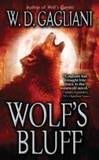
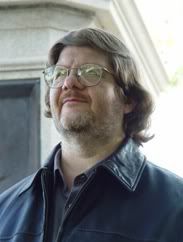
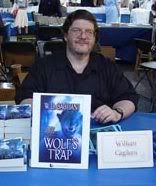
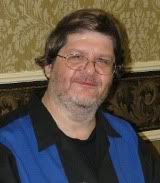
Author and lycanthrope enthusiast W.D. Gagliani is on a mission: To get werewolves the respect they deserve. Long considered the distant third cousin to the seemingly more popular, more visible vampire and zombie, the werewolf is often relegated to the supporting cast of the classic monster crowd. While werewolves once took center-stage and inspired terror in the days of Lon Chaney Jr. and Universal Monsters, today they’re often found doing yeoman’s work as bodyguards (True Blood), as objects of unrequited love (Twilight), or as the mortal enemies of the vampire (Underworld). Even Oscar-winning filmmaker Benicio Del Toro couldn’t get audiences howling again with his much-touted, big-budget remake of The Wolfman earlier this year.
But Gagliani will argue the point that werewolves deserve a comeback, and he’s poised to deliver it with the latest installment of his Nick Lupo series from Leisure Books, Wolf’s Bluff. He’s carved quite a lycanthropic niche for himself following the misadventures of his werewolf-homicide detective, creating a complex underworld full of shapeshifting terror and excitement.
Gagliani was eager to sit down with Dark Scribe Magazine to make the case for his beloved, albeit often misunderstood, furry, sharp-clawed member of the iconic monster squad. In this insightful sit-down, he discusses the inevitability of one’s dark side, reminisces about the early paternal influences on his work, and refutes the supporting class membership of lycanthropes in popular culture.
Dark Scribe Magazine: Tell us a little about the new book, Wolf’s Bluff.
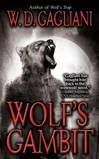
W.D. Gagliani: It's the third book in a series about Milwaukee homicide cop Nick Lupo, who also happens to be a werewolf. It comes after Wolf's Gambit, which was the sequel to Bram Stoker Award nominee Wolf's Trap, which introduced the character. Matter of fact, Gambit-Bluff and next year's Wolf's Edge form a loose trilogy in which Lupo faces danger from a certain government contractor. Some of that book is ripped from the headlines, some of it is based on my parents' actual experiences in WWII Italy under German occupation, and some of it is pure fantasy. Well, lots of it is pure fantasy! But meanwhile Wolf's Bluff is the middle book in the Wolfpaw arc, picking up where Gambit left off after Lupo was forced to face the fact that he's not the only werewolf. And these other werewolves are pretty scary dudes with roots that go back a long way.
Dark Scribe: What is it about the werewolf that interests you?
W.D. Gagliani: The whole concept of the beast within as a symbol of everyone's dark side. I think we all have a dark side, a side that comes out to play when others can't see us. It probably leads us to the petty evils in the world, and maybe even the great evils. Of course some of us are at least tormented by the evil we do, and others revel in it. But really, forgetting about werewolves for a second, what is it that makes humans hurt others? I like trying to explore that, though I'm constrained by having to tell an entertaining story at the same time and have to take shortcuts. Writing about werewolves, one expects a certain amount of carnage, so I have to offer some up because it is, after all horror — but I consider the books horror/thriller/crime blends and try to pace them the same way, along with presenting usually two parallel stories showing Lupo in the present and in his distant past. Next year's Wolf's Edge presents his father and grandfather's stories, as they relate to the present-day events. Gets a little science-fictiony there, for a minute. But don't worry, there's plenty of horror.
Dark Scribe: The vampire is a perennial favorite, the zombie craze shows no sign of dying — yet werewolves seem to have gotten a lukewarm reception and haven’t quite ignited the same mania as other iconic monsters. Why do you think this is? Do you see any signs of werewolf mania on the horizon?
W.D. Gagliani: I tend to disagree that there's been a lukewarm reception in some areas. Though Del Toro's The Wolfman movie had a disappointing reaction, the low-budget Dog Soldiers was a huge cult hit, werewolves are about to take both the Twilight and True Blood franchises to new howling heights, and other cult films like Ginger Snaps also helped lay the groundwork for a werewolf renaissance. Underworld, too, helped popularize lycans. When I wrote Wolf's Trap, absolutely no one was doing werewolves, but I feel its success at Leisure spawned more wolves, at least there: Ray Garton's novels, and one from Thomas Tessier, and J.F. Gonzalez with a reprint, and now Jeff Strand has one coming, and they've taken three more from me, so some readers must have responded positively. Plus, in the years since I started Trap (1993) a whole new paranormal romance market with werewolves who are also hunky guys started and took over half of the romance section in bookstores. Sure, they're slugging it out with vampires, who still win on sheer numbers, but you can walk down the aisle and count lots of wolves and moons on romance covers. So I think the night of the werewolf is coming. And I like to think I had a small part in its beginning.
Dark Scribe: What is it about Detective Nick Lupo that keeps you interested in him as a protagonist?
W.D. Gagliani: He's not like vampires, for instance, many of whom seem sort of smug and quite happy to go about their blood-sucking ways. He's a werewolf — so for one thing, it's messier. Raw meat and intestines and all that. Lycanthropy isn't for neat-freaks! Plus he's a reluctant monster, and he recognizes that he has done some terrible things. Control has been an issue for him, with the moon first controlling his change, and then the creature he carries inside controlling him. Through the books, he both succeeds and fails at controlling his internal wolf. I like his tragic sense of loss and his anger and the fact that he's sometimes incapable of doing the right thing though he intends to and means well. I like the fact that he's conflicted, but not in that sort of gothic, brooding way. He's a wolf in a china shop. He messes up. He's done some more terrible things in his past than he can even really remember, though they seemed like the "right" things to do at the time. My new tagline for him might read: "He's a good guy, but he's getting over it."
I should get this off my chest. I've taken some crap for my protagonist's name, Nick Lupo, "lupo" being the Italian word for "wolf." Sure, I guess it's a little on the cheesy side, but we certainly have a tradition of using names that somehow reflect our characters. Start with Dickens and Shakespeare, if you want. But some recent examples include "Louis Cyphre" and "Harry Angel" in William Hjortsberg's novel Falling Angel, and a werewolf named "Wolf" in King and Straub's The Talisman. Nick Knight in the TV show Forever Knight (he's a cop, he's a knight-errant, and it puns with "night" because he's a vampire), which was certainly an inspiration to me, as well. Anyway, as I explored Lupo's past, I intended to give him a sort of destiny signaled by his name — and having the opportunity to write at least three more books about him allowed me to bring that destiny to the fore. So the sometimes visceral, mocking reaction I've had in some reviews to his name sort of surprised me, as did the complaints about his music tastes and details — about which, by the way, I've had incredibly positive mail from readers. If I'd made him a big fan of punk or jazz, I think I'd have been allowed to skate, but since it was the reviled progressive rock, some critics took shots. But I had so much great mail from prog-heads who loved it, and others who thought it was great he didn't listen to the usual stuff, that I'm glad I did it.
Dark Scribe: What are some of your favorite books and movies featuring lycanthropes?
W.D. Gagliani: Books — the absolute best is The Wolf's Hour, by Robert McCammon, and one that definitely influenced me. It's set in WWII, and my own books have led me to that venue, though not in an effort to copy or repeat, but to celebrate some of my parents' experiences as kids living through the German occupation in Italy, the Allied bombings of their city, and their witnessing of rough partisan justice on the streets as the Germans retreated in front of the Allied advance. I've reluctantly tended to avoid reading too many of my contemporaries' werewolf novels in order to keep as much in my own cabbage patch as possible, so to speak. In terms of movies, Dog Soldiers, The Howling, [and] Ginger Snaps are all good. The Wolfen isn't really about werewolves but gets the vibe. There's a 70s movie of the week, Moon of the Wolf, that did it for me as a kid. It's very atmospheric.
Dark Scribe: When you set out to write Wolf’s Trap, had you already envisioned a series?
W.D. Gagliani: No. In fact, I half-intended to kill Nick Lupo at the end. I envisioned a much darker, downbeat ending. The book's original editor wanted a more upbeat ending, and I'm glad I made that work. I decided, though, that at the end of all my novels, Lupo – or someone close to him – will lose something important or pay dearly for some mistake or have his soul dragged to hell by perpetrating some negative action that will lead to greater problems later. I still enjoy the downbeat aspect of even a positive ending! How's that for twisted? I like painting Lupo and his people into corners, and then sometimes they tell me how to get them out of trouble, and it's messy…not at all sugar and spice. It's supposed to be horror, after all.
Dark Scribe: What are the challenges of writing a multi-book narrative? In what ways is it easier than a stand-alone novel, for example?
W.D. Gagliani: I've sold each book individually, so I'm lucky that it has developed as a series, but if Leisure decides to let Lupo go, then the multi-book narrative ends. So I don't know when I’m plotting one book whether I'll get to continue Lupo's adventures. I hope so, because even I was surprised by what happens at the end of Wolf's Edge, which is due next year. Actually, in the current new release, Wolf's Bluff, some characters also took things into their own hands. I hope readers will be surprised, because I was. But I like to let them choose their way logically, at least in the context of what they know in their world, and I try to balance that with surprise. Only readers will know if it works.
Dark Scribe: You craft a beautiful tribute to your late father, Gilberto Dario Gagliani, on your website. Was your father a fan of your work? What do you think he’d say about your work if he were alive today?
W.D. Gagliani: Thanks for that — I really appreciate it. I wanted to say something different from the ordinary about him. He was quite a character. Like Nick and his father, Frank Lupo, my dad and I didn't always see eye to eye. He was a very traditional Italian. So, you see, there's a bit of autobiography in the books, things to do with growing up in an Italian-American household, for instance. My dad always encouraged my reading and writing. He introduced me to Jules Verne when I was young, and therein lays the basis of many of my favorite genres. Eventually, he would come to the illogical conclusion that I was reading too much and put me to work every chance he could, and that was his dark side, I guess. He was stern, but never mean. In any case, he never got to read Wolf's Trap. It came out in the small press edition right in the middle of the progression of his illness, and he was no longer able to do things like read for fun. But he'd read almost all my short stories to that point, and he encouraged me. I remember after we first saw Raiders of the Lost Ark, he said: "You should write things like that." I agreed, although by then I was taken by horror thanks to Stephen King. But I was as big a fan of crime and thrillers, and fantasy and science fiction, too, so it was natural for me to want to blend genres. He was always full of advice and I think he secretly had always wanted to write his own life's adventures – of which there were many as a young sailor traveling the world in the 50s and 60s – and he was tickled that some of his stories and experiences ended up in my stories. As to my work today, I think he would think the violence is okay, but he'd be disturbed by all the sex. He was very straight-laced and would have found it extreme, even when it isn't. He'd advise me to cut, cut, cut!
Dark Scribe: It seems that despite the warnings of a revolution, the advent of eBooks and eReaders is upon us. What are your own thoughts, as a writer, about the digital evolution of reading?
W.D. Gagliani: Well, I've just released a straightforward thriller – Savage Nights – to Kindle (in March) and just ordered my own Kindle reader three days ago. So I guess I'm aboard. Actually, I was aboard a long time ago — originally I published my story collection, Shadowplays, as an eBook back in 2000. It sold enough copies to maybe order a couple pizzas. At work a decade ago, we had bought a Rocket eBook Reader, one of the first, just to check out. No one liked it much, but there was a sense that their time would come. I think Amazon was brilliant in its leadership and made the Kindle not only viable, but a bestseller. And now publishing backlists on Kindle is a great career move, in terms of income. They just raised the author royalty to 70%, which is outstanding — but of course you really have to hustle to push the work. The nice thing is, it's there forever — the book that sells a dozen copies this month could potentially sell hundreds next month. It's a bit of a crapshoot. It's like the Wild West out there, with so many authors going indie, but I think the market will continue to grow as the devices compete: the Kindle, the Nook, the Sony, the new Kobo, and so on — not to mention the iPad and all the Smartphone users who can read eBooks on their devices and want to. [Competition] — that's the key. The potential is for millions of sales, as the pool of users grows exponentially. I always point interested people to Joe Konrath's blog if they want to take a crash course in all things e-publishing. By the way, Savage Nights is like the Liam Neeson movie Taken on steroids — it was written about a year before the movie came out and it takes you much, much farther into the darkness. And, since it's about sexual slavery and some very shady, violent people, it's really not for the faint of heart. I'd call it shocking, in fact.
Dark Scribe: What’s next for W.D. Gagliani, the writer? Another Nick Lupo tale on the horizon?
W.D. Gagliani: I'm plotting Wolf's Cut right now, seeing where I can take Lupo after he's faced down his big enemy, the government contractor that gave him so much trouble for three books. Now that he knows werewolves (besides him) exist, his whole world can change — if there are werewolves, then what else might be out there? I want to stick with the noir crime and thriller aspects of the series, though. Maybe steer closer to pure horror.
I've had several very successful collaborations with my friend, writer David Benton. They've all been short stories so far, and we've had some great sales: to the Hot Blood series, to the Malpractice anthology, to the German anthology Masters of Unreality, and to the eZine Dead Lines. Now we're taking our collaboration to new heights, heading off into a fantasy/horror/adventure series for middle grade readers. We have an agent shopping the first book now and the second is nearly finished and a third is plotted. Very exciting stuff!
Dark Scribe: Last question…give us your best werewolf joke.
W.D. Gagliani: I don't know about best, but here's a Gagliani original: Werewolf walks into a restaurant. Waiter takes one look at him and says, "We don't serve the likes of you." After he's done eating the waiter, the werewolf says, "Apparently you do."
]]>Fem(inism) Fatale: Lisa Morton on Women in Horrorhttp://www.darkscribemagazine.com/feature-interviews/feminism-fatale-lisa-morton-on-women-in-horror.htmlDark Scribe Magazine2010-07-28T12:00:53Z2010-07-28T12:00:53ZBy, Désirée I. Guzzetta
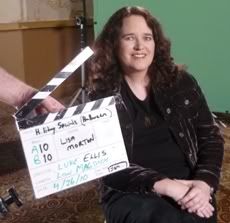
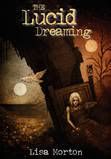
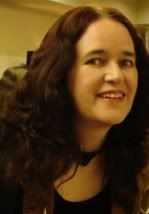
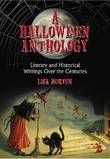
Lisa Morton is something of a renaissance woman in the horror field. She’s won three Stoker Awards in three different categories: Short Fiction in 2006 (Tested), Nonfiction in 2008 (A Hallowe’en Anthology), and Long Fiction in 2009 (The Lucid Dreaming). She also picked up a 2009 Black Quill Award for Best Dark Genre Anthology (for editing Midnight Walk). She’s written and/or produced several films, including Meet the Hollowheads and Tornado Warning. Her nonfiction work showcases her expertise on Asian cinema, actress Ann Savage, and Halloween. In fact, she was recently interviewed by the History Channel for an upcoming documentary about the spooky holiday.
On top of all that, she’s written, produced, and/or directed several small theater productions; worked as a television critic and Associate Editor for Horror magazine; and did film stints as a modelmaker, photographer, miniatures coordinator, and more.
A native Angeleno who spent many nights as a child building monster models with her dad and watching horror movies with her mom, Morton’s favorite genre to read surprisingly wasn’t horror, but science fiction. Despite dressing as a monster every Halloween (“It was the one night of the year it was okay to be a little girl who liked monsters,” she says), her desire to write in the horror genre wasn’t sparked until she was in her twenties and discovered Dennis Etchison’s brand of character-focused, urban scare. A steady diet of Philip K. Dick and other SF writers gave way to Etchison, Theodore Sturgeon, and Roberta Lannes. Her favorites nowadays include Sarah Langan, Bentley Little, Gary Braunbeck, and Alexandra Sokoloff.
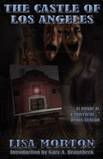
The Castle of Los Angeles, her new novel, focuses on Beth Ortiz, a young director who opens a new theater in a building dubbed “The Castle,” a deliberate reference to the classic Gothic novels Morton mines for tropes to warp while tackling issues of identity and monstrous femininity from a feminist perspective.
Morton’s feminism, in fact, informs all her work and her views on the dismal state of women in certain segments of horror fiction. Dark Scribe Magazine recently caught up with Morton at one of her favorite local haunts, a diner where the pie is sky high and everyone knows your name. Relishing a plate of comfort food (roast turkey with all the trimmings), the normally soft-spoken Morton became quite animated addressing what she sees as hypocrisy and inequality when it comes to women and the small press; authors who decry racism and homophobia, yet write indulgently misogynistic horror; and readers who believe women can’t write effective horror.
Dark Scribe Magazine: Why do you think so few women are published by horror’s small press? Is there a glass ceiling when it comes to horror? Some kind of old boys’ network?
Lisa Morton: Part of the problem with the small press is that it has decided to pursue what it thinks is cutting-edge fiction, and too often in the horror genre, cutting-edge fiction means excessive sex and that translates to excessive scenes of rape and mutilation of women. Obviously, there aren’t a lot of women who want to write that. I certainly don’t — for one thing, it’s BORING. I think that’s part of the reason you don’t see more women trying to break into the small press. They look at it and they just think, “Why would I bother?”
Dark Scribe: I notice a lot of what’s labeled “transgressive fiction” is the same way — a lot of sex and violence and violent sex. It does get boring and if you’re a female reader, you don’t want to keep reading constantly about the different ways that women can be debased.
Lisa Morton: I’m very disappointed that more small press publishers don’t take the leaps beyond that. I think they have a safe audience, but it’s a very small audience. Most of these things come out in editions of 300 books or less. Why not find something different? Why not expand the borders of the genre? There are a few small presses that are doing that now. Chizine is doing it up in Canada, Dark Scribe is doing more of it, Bad Moon is doing more of it.
Dark Scribe: Why is the small press so important to you? A lot of people would be focusing on mainstream and breaking into the mainstream press.
Lisa Morton: (laughing) I’m focusing on that, too! Part of it is just technical. You can’t sell a novella anywhere else, and I love the novella form; I love the idea of writing something that’s only 20,000 words because I tend to be a very terse writer. I like that idea of using the small press for things that you can’t do with the majors, the odder forms like the novella or the things that might be non-acceptable or not marketable to major publishers, like The Lucid Dreaming. The fact that my heroine is a violent paranoid schizophrenic — I’m not going to get that in at HarperCollins.
Dark Scribe: Why do you think that women’s issues are less important than some other issues to horror writers? Some horror writers readily decry racism or homophobia, yet seem to have no problem writing rape scenes where women are brutalized.
Lisa Morton: I’ve seen male readers on message boards, not writers, who say, “Well, of course there’s a lot of rape in these stories because it happens in real life and it’s disturbing.” Dude, so are about 8 billion other things!
Dark Scribe: There are other ways to be scary than to pop eyeballs at people.
Lisa Morton: (laughing) Or to cut off a woman’s leg and fuck the stump.
Dark Scribe: Why do you think it’s easier for some to write what you call the “fuck the stump” style of horror?
Lisa Morton: It doesn’t involve any real imagination. There are templates for it because it’s done very much, and I think unfortunately, there’s a market for it. There is an audience, men, I’m assuming not many women, who like to read this sort of thing, and the fact that it keeps getting published and bought tells me that there’s people who keep reading it. I don’t know; I prefer not to think that these people are all wildly misogynistic, but there’s undoubtedly got to be some of those.
Dark Scribe: What can female writers do to counteract this?
Lisa Morton: By writing better than the men, writing more imaginatively, and writing scary things. I recently had a female critic review The Castle of Los Angeles and she said something that I thought was very interesting. She loved the book but said, “I don’t usually like horror by women authors, but I really like your stuff,” and I thought, “Wow, that’s a really interesting comment on about three different levels.”
Dark Scribe: There seems to be a pervasive, albeit small, belief by readers of horror that women don’t write horror as well as men. Why do you think they believe that?
Lisa Morton: Well, part of it is that they haven’t made the effort to seek out and read more female writers. When you’re busy consuming the next Ed Lee or Brian Keene novel, you’re not likely to go out and try to find the latest work by Sarah Langan or Alex Sokoloff or Rhodi Hawk or Lisa Tuttle, or any of the other women who are published in different markets.
Dark Scribe: Do you think that attitude is encouraged by male writers?
Lisa Morton: Oh, yes! For example, there’s a certain male writer who’s immensely popular among the smaller press crowd. I tried to read three of his books, and in every one, he perpetually refers to nearly every female character as “bitch.” That is misogynist. I wouldn’t write a novel in which I referred to every male character repeatedly as “dick.” I think it would be, among other things, very silly. I actually complained to someone about that once: “Jesus, at least call her a ‘cunt,’ a ‘pussy,’ or a ‘whore’ or ‘slut,’ anything!” It’s boring after awhile. When you’re reading male writers who refer to a female character over and over as “bitch” and then proceed to take these characters and have them raped and mutilated and murdered repeatedly, yeah, you kind of put a pattern together.
Dark Scribe: This goes back to a topic I brought up earlier, that is, why do you think women’s issues are still not being heard after all these years?
Lisa Morton: Women are not entirely without blame here, either. A lot of women have found a tremendous amount of success in the paranormal romance or urban fantasy thriller, and they’re being published by big publishers. Why would you want to go and be published by these guys who are doing 300 copies when your publisher just printed a hundred thousand of your new book? I was part of a brief-lived group for awhile that was out to serve and promote female horror writers. And within that group, I heard a lot of women complaining about not receiving the same kinds of attention or options that male writers got, and yet when they wrote, they wrote paranormal romances. I didn’t see a lot of effort being made there to break out of that very traditional female role.
Dark Scribe: What can female horror writers do to overcome the stigma that they aren’t as good as male horror writers?
Lisa Morton: Like I said, the obvious answer is write better, write more imaginatively, and write things that are genuinely transgressive. I don’t know why this notion of pushing the envelope or breaking taboos has come to mean nothing but grotesque sex. How about political taboos? Social taboos? Why are there so few horror stories written about abortion? Why are there so few written about right- or left-wing politics? Or about unjust wars? There’s a pat, snide answer which most horror fans would give you, which is, “I’m not interested in reading about that.” Well, you would be if it was written properly, if it was written in a way that really did shock you into thinking about it!
Dark Scribe: Like what you’re doing in The Lucid Dreaming and The Castle of Los Angeles.
Lisa Morton: Well, I’m being kind of obvious about a few things, too. A story I wrote that’s been reprinted a number of times now is a zombie story called "Sparks Fly Upward" — it’s about abortion very specifically. It ends up with the climax of the story revealing that abortion is not murder because an aborted fetus does not come back as a zombie. So it answers that question once and for all. I had one or two people get very upset by that story, tell me they thought it was preachy and over-the-top and I should never have published it. I consider that a great success.
Dark Scribe: By the way, I love that your protagonist in The Castle of Los Angeles is half-Mexican American. Was there a reason for that?
Lisa Morton: Yes. I think that too many horror writers focus on middle-class heterosexual white people, and I’m really tired of that. I’ve grown up in L.A., I’m around people who aren’t like me every day, I think that’s great, and I don’t know why more writers don’t use that. I also wanted to play with the idea that Beth had never been entirely comfortable with her own identity, and it made sense to me that if she’s a classical L.A. person, she would combine Latin heritage with white.
Dark Scribe: What advice would you give a woman who is just embarking on her own horror writing career?
Lisa Morton: Network, get out and meet people, be fearless, don’t be afraid to tackle these bigger issues, don’t be afraid to write rough.
Dark Scribe: What do you mean, “write rough”?
Lisa Morton: Don’t limit yourself to the paranormal romance, which is an easy sell for a lot of women. But you know what, if you’re making money off that, it’s hard to say don’t write it.
For more information on Lisa Morton, visit her official author website.
]]>Lee Thomas: Transcending Literary Closetshttp://www.darkscribemagazine.com/feature-interviews/lee-thomas-transcending-literary-closets.htmlDark Scribe Magazine2010-04-03T22:28:04Z2010-04-03T22:28:04ZBy, Vince A. Liaguno
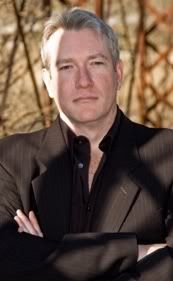
For a horror writer, it doesn’t get much better than Bentley Little declaring you “a worthy successor to Clive Barker.” But such comparison to the most successful openly gay horror writer probably holds some added weight if you’re a horror writer – who just happens to be gay himself.
And while everyone wears a label and everyone has a label to give, what’s most remarkable about Lee Thomas’ work is that it transcends a potentially audience-limiting aspect (here sexual orientation) to reach readers of all persuasions with the profound humanity at its core. That Thomas can so ably mine the rich vein of sexual identity to uncover its underlying horrors is what earns him the comparison to Barker and sets him apart as one of the newer crop of dark fiction writers merging traditional horror with a decidedly literary aesthetic.
Thomas flung open the doors to his literary closet with Stained, his 2004 debut novel that went on to win the Bram Stoker Award for Superior Achievement in a First Novel. Since then, he’s written three more widely-acclaimed novels (Parish Damned, Damage, and The Dust of Wonderland – winner of the Lambda Literary Award for Science Fiction/Fantasy/Horror), been a fixture in award-winning anthologies (Inferno, Unspeakable Horror: From the Shadows of the Closet), and even penned several young adult titles under the pseudonyms Thomas Pendleton (Lurker, Mason) and Dallas Reed (Shimmer).
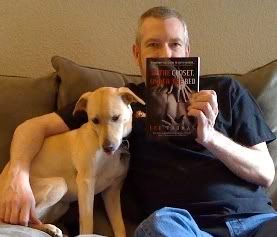
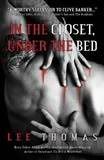
With his latest title, his first ever short story collection called In the Closet, Under the Bed, Thomas has added to his long list of accomplishments and accolades with more rave reviews — as well as a second Lambda Literary Award nomination and a spot on the Bram Stoker Awards final ballot (his fourth).
Dark Scribe Magazine recently sat down for a long-overdue chat with the affably candid dark scribe about the state of queer horror, homophobia in horror, and that delicate balance between blurbs and sexual favors.
Dark Scribe Magazine: Welcome to DSM, Lee. It’s about time we got around to having you here, eh?
Lee Thomas: Absolutely! Thank you. Glad to be here.
Dark Scribe: So, tell our readers something about your new short story collection.
Lee Thomas:In the Closet, Under the Bed collects 15 of my queer-themed horror stories, ranging from titles that appeared very early in my career like “Healer” and “Anthem of the Estranged,” to more recent stories making their debut in the collection like “Crack Smokin’ Grandpa,” and “Tears to Rust.” The stories vary in tone from blood-drenched extreme horror to more psychological, quiet pieces, covering a range of themes that touch on gay experiences. A different version of the collection was originally bought by an imprint of Haworth Press a few years back, but the imprint went belly up, so I shopped around for another publisher, and I think I found a good one.
Dark Scribe: Where did the title for the new collection come from?
Lee Thomas: The title was a natural. As noted in the collection’s first story, “All the Faces Change”: “When Tim was a boy, he knew where the monsters hid; they were in the closet and under the bed.” Any child will tell you those places are where the beasties live, and even as adults we can look back and remember the creatures our imaginations put there. Additionally, I had been writing a lot of short fiction that looked at closeted men, because let’s face it they set themselves up as victims. I mean all of that secrecy. If a hetero-married guy is having same sex relationships on the side, it’s unlikely they’re telling people where they are going or who they are with, and if something extraordinary or terrifying happens to them who can they confide in? Often enough their indiscretions leak back into the family in some way, affecting more lives than their own. There’s a lot of good stuff to mine there. So the title works nicely on a couple of levels.
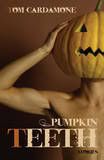
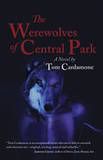
Dark Scribe: Tom Cardamone and Jameson Currier – both of whom also have new short story collections out – were recently interviewed and we asked them to pick a favorite story from their respective collections. Your turn: Favorite story from In the Closet, Under the Bed — and why?
Lee Thomas: Ugh! It’s like trying to pick the cutest puppy from a variety of breeds. If pressed, I’d have to go with “An Apiary of White Bees,” because there are a lot of elements to it, and I think I managed to balance them to good effect in a relatively short piece.
Dark Scribe: The collection has been very well-received, recently being named a finalist for both this year’s Bram Stoker Awards and the Lambda Literary Awards and getting rave reviews from both horror and LGBT outlets alike. What’s your response to the reaction?
Lee Thomas: The reception has been great and has spawned much dancing in and around these parts. You never know how any project is going to be received, and one like this – which is hardly common for the genre – brings a high level of risk with it. I will admit to some amusement in regard to the straight-up horror reviews as they invariably have language that suggests, “It’s gay, but it’s still good,” as if they are mutually exclusive terms. Ha! Most of the reprinted stories (all but one) were originally published in mainstream horror markets, so it’s not like I’m introducing something radically inappropriate for genre. It’s a shame we’re still at a point where these distinctions have to be made, but I’m glad both reviewers and readers are enjoying the collection.
Dark Scribe: Yet despite solid reviews and awards consideration, single-author collections just aren’t high on traditional publishing’s radar, unless your name is King. Why do you think that is? Is the short story now a niche market?
Lee Thomas: If you find out, text me. I’d really like to know myself. In most things attention spans are shrinking, so you’d think shorter works would increase in appeal. That doesn’t seem to be happening. Instead we’re seeing a television approach to storytelling with so many books being installments of a series. I imagine readers find comfort in the familiar, following characters they like through a variety of scenarios. Often times, collections are just the opposite with little connecting the pieces, so it’s like starting over with each story. I’m not sure why that is daunting or unappealing for readers.
Dark Scribe: You seem equally at ease in the short story and novel formats. Do you have a preference for one over the other? What are the unique challenges you face when working in each?
Lee Thomas: I came to short stories late. I was writing novels before I explored the short form. Novels give me enough room to move around and dig through layers. Plus I have a broad range of characters reacting to events in different ways, bringing enough perspectives to really illuminate an idea. In some ways short fiction is where I experiment, playing with structure, point of view, and language. They’re exercises I do to strengthen my longer work, and while the results aren’t always successful, they get my head into new spaces and force me to be succinct. I find them more difficult word for word than novels, but the results can be satisfying. Novellas are playtime for me. I’ll have a few of them out this year, depending on production schedules. While I’m still focusing on characters and atmosphere, my novellas tend to be more visceral – bloodier and faster-paced.
Dark Scribe: Let’s talk blurbs for a minute. You’ve racked up some impressive blurbs for your work, including some from genre favorites like Bentley Little, who actually called you “a worthy successor to Clive Barker.” Many in the industry dismiss blurbs as writers trading hand jobs. Any thoughts?
Lee Thomas: Though incredibly grateful for the quote, I’ve neither met nor spoken to Bentley, so I hope he’s not holding his breath on that handjob.
Blurbs are weird things. If your book doesn’t have any, readers will wonder what’s wrong with it, but if you go on with five pages of the things, especially if they come from authors no one has ever heard of, it sends a message of desperation. Two of the first blurbs I received in my career – for my novel Stained – were unsolicited, and I think that added to their credibility. Both Tom Piccirilli and Jack Ketchum read the book on their own and sent along some very kind words that they gave me permission to use. That was amazing and really useful because I hate asking for blurbs. Even now, I have a real problem approaching writers to read my work.
That noted, I think blurbs can be misleading. You read some of the quotes out there and then read the book they’re praising and you wonder how an author you respect so highly can endorse a project that is so obviously not what they promised. Granted, they could be seeing something in the work a particular reader doesn’t. It’s a tough call. I think it’s great that established authors take the time to read and recommend a work – particularly if it gives a boost to new writers – but that doesn’t mean I’m going to agree with their assessment of it.
Like reviews, readers have to take blurbs with grains of salt. If they see an author name they admire, that should get them to read the cover copy to see if the story interests them and then maybe sample a page or two to see if the writing is working for them. Blurbs are recommendations not guarantees, and I think readers can use them as part of their buying decision.
Dark Scribe: You maintain a fairly active online presence, on social networking sites like Facebook and LiveJournal. Some writers (i.e. Little) avoid it like the plague; others (Brian Keene comes to mind) have come to master the art after some well-publicized public skirmishes. How does a writer successfully balance the need to be out there with the need to be true to one’s own moral compass?
Lee Thomas: I don’t know that I’ve done it successfully, because of that whole moral compass thing. I’ve turned off some colleagues and probably a publisher or two with my positions on certain issues. There’s definitely a “play nice” mentality out there, and a lot of writers serve their careers by keeping their heads down. I don’t work that way. Problems don’t get solved if people turn a blind eye. We don’t advance; we simply wallow. I mean it’s not like I’m prowling the web looking for trouble. I’ve had very few public conflicts, but they are invariably over something I believe in strongly. If I lose the favor of a few people here or there, I can’t worry about that.
What does work and is generally very successful for social media-ists is using their forums as information portals, linking to and commenting on various outside stories. These can be specific to the publishing industry, writing advice, upcoming films, professional wrestling, knitting or NASCAR – whatever interests the author. Not only does it mute the glare of self-promotion (which is generally the focus of these things) but it also adds opportunities to build dialogues. Like-minded folks will begin to see these writers as a valuable resource and keep a close eye on their posts, and one can build a decent following in the social media community, which has grown so much, it’s probably the strongest promotional device out there these days – and it’s free.
Dark Scribe: DSM recently hosted its first ‘Queer Horror’ month. As an out gay writer, what are your thoughts on the state of queer horror fiction right now?
Lee Thomas: We’re in a good place right now, but then we haven’t really had great representation in the past, so up is the only direction available. We have authors like Clive Barker, John Saul and Douglas Clegg to thank for showing that coming out didn’t mean career death, and now we’re seeing something of a boom. You already mentioned Jim [Currier] and Tom [Cardamone] – both of whom are creating excellent fiction. Joel Lane from the UK, is pretty much brilliant and often includes queer characters in his work. More people should be reading these guys. David Thomas Lord’s Bound in Blood and its sequel made a huge splash and crossed over to the mainstream. You’ve added to the canon with The Literary Six, and Steve Berman has utilized queer characters in his work for years, much of it appearing in mainstream anthologies. Hal Bodner is making a name for himself with queer horror erotica, and Rob Dunbar released his collection Martyrs and Monsters – which has considerable queer content – early in 2009. His book is on the Bram Stoker Award ballot right next to In the Closet, Under the Bed. And speaking of the Stoker Awards, let’s not forget last year’s winner for anthology, a queer-themed book called Unspeakable Horror. That represented a great stride forward. Straight writers are also doing a much better job with queer characters as exemplified by Joe R. Lansdale’s long running Hap and Leonard series, Peter Straub’s Tim Underhill character. Brian Keene’s Dead Sea, Stephen King’s Cell, and a host of others. These are just the folks off the top of my head. I’m sure there are many new writers pushing through the veil, creating powerful horror stories with queer characters, and in time we’ll see them emerge. Also important to note is the fact we have publishers devoted to queer lit and many of them will consider dark fiction. Alyson has published a number of horror and horror-adjacent titles, including my novel The Dust of Wonderland. Berman’s Lethe Press handles all manner of speculative lit, and there’s a new outfit called Dark Scribe that seems open to the concept. Ha!
Dark Scribe: How do you define queer horror?
Lee Thomas: I really wish I didn’t have to. It would be nice to just say “This is a great story. Read it!” but we’re a culture of buzzwords and categorizations, so I suppose I should come up with something. Queer horror is dark and disturbing fiction, utilizing GLBT characters in a way that explores universal themes, while grounded in the realities of queer life. How’s that?
Dark Scribe: Horror and homophobia. Reality or perception?
Lee Thomas: Of course it’s real, though I don’t think it’s rampant. Early in my career, an interviewer asked me this question, and I was all rose-colored glasses about the whole thing. I hadn’t seen discrimination or to my knowledge experienced it, because my career was building rather nicely, and I didn’t think that would be possible in a homophobic atmosphere. But since then I’ve seen some blatant nastiness that shattered those rosy specs, and I’m less-than-tolerant of it (Please see the above regarding public conflicts).
Let’s work on the definitions though. “Homophobia” has become a catchall phrase, basically meaning anything anti-GLBT. Technically that’s not what the word means. What we see a lot of is bias, not abject loathing and repulsion, and this prejudice may be the result of homophobia, or it could be ignorance, or it could be economic in basis. I know that trying to sell gay-themed books to “straight” publishers is difficult, not because they loathe the gay community, but because the sales numbers on previous gay-themed works have not been particularly high. Whether they’ve put any actual promotion dollars behind those titles or not, who can say? This is an economic prejudice, and it applies to a number of minority groups. Of course, publishers are more than happy to have books “with” gay characters (and that’s a great step) but they run to the hills when faced with books “about” gay characters, because they just don’t believe there is a market – outside of erotica – to support them. Maybe they’re right, but by making this judgment they are perpetuating the problem – effectively silencing new voices that might crossover. Further, this excuse makes a great wall for the genuinely homophobic to hide behind.
Adding to the problem, horror is a very conservative genre with a number of conservative people involved, which is why quite a bit of the work feels so tired. The protection of the status quo is one of the oldest themes in genre, but many writers (and editors) don’t seem to realize that the status quo has shifted in the last thirty years. As such the perception of normalcy that colors the work is rather narrow, and we’re offered the same character dynamics and themes time and again. This is problematic in that it reinforces outdated parameters for horror lit. So we have to keep publishing and introducing queer material until it’s not seen as a novelty or a threat, and eventually we can drop the label “queer horror” and get on with things.
As for genuine homophobia, it doesn’t surprise me that it exists, because it is an ignorant, fear-based response and human beings are terribly susceptible to such things, but I am surprised to find it in a community that is supposed to be well read. It’s actually kind of shocking in that context. Worse yet are the writers who turn their heads the other way, make excuses for the behavior, or defend the wrong-doer, simply because it serves their careers to do so. It’s a shame that people – and I’m a person so I’m not above the statement – let a “dream” hold so much power over their humanity.
Dark Scribe: You also write for the young adult market under the name Thomas Pendleton. Has there been any pressure from the publishers you work with in those markets to, shall we say, curb your gay enthusiasm?
Lee Thomas: Oh, I’m going to get in trouble for this. Yes, and I’m angry and embarrassed I let it happen. A book I proposed to an editor centered on a gay teen. Well, the editor liked the story but not the gay component, so she asked that I “straighten” the character out. It was a disaster. Thematically it just wasn’t as powerful or as interesting. It was my fault. I should have fought harder.
In the editor’s defense, actual horror for teens – something that doesn’t include twinkly, dreamy vampires – is a tough sell. She had a lot riding on the book, so I don’t blame her in the least. I don’t like it, but I get it. From my standpoint, I won’t do it again.
Dark Scribe: How important is the inclusion of LGBT characters and themes in your work?
Lee Thomas: Pretty damn, I’d say. It should be obvious that I loved horror novels and movies growing up but when it came to gay characters, they just weren’t there – not in any positive or substantive way. You’d run across a good one here or there, like Dana in King’s The Stand, but for the most part gays were presented as sinister reprobates or self-loathing depressives just waiting to be victimized. These were representations the society at large understood and accepted, which brings me back to the whole status quo discussion above.
After seeing Barker dipping his toes in the subject matter with his Books of Blood and then diving in head first with Sacrament, I realized that there was room for and a need for these kinds of stories in the horror genre, and not just for queer audiences. I don’t think it’s necessary to preach to the converted so much at this point, though my work obviously resonates with gay readers. It strikes me that we need to get our stories in front of new audiences, and the way to do that is to emphasize the universal aspects of a story – making them relevant to the human condition beyond the queer experience – so that they are accepted and enjoyed by mainstream readers. In doing so, we address and hopefully break down a lot of the misinformation and yeah… fear… that people have of the GLBT community.
I guess I’m lucky. I always considered myself a horror writer and just happened to write about gay characters here and there. As such, I made inroads into the horror community, and they seemed just as accepting of my stories with queer content as those without. That’s wonderful, because I don’t want to write one thing or the other exclusively. In fact, I have a good number of short stories and novellas appearing in various markets this year, half a dozen at least, and only two of them have gay protagonists. It wasn’t planned that way. Those were just the stories I wanted to tell, and in two of those instances, I tried the stories with gay characters and they just didn’t work.
Further, there’s a rich vein of material there. Despite having a number of folks (noted above) writing horror with queer themes and characters, it remains a drop in the bucket when compared to the majority of horror offerings, which are predominantly hetero-focused. There are experiences and characters I have access to that other writers don’t, so if I can use these and integrate them into stories I create something fresh. The greatest challenge is to show the emotions and needs driving these characters in such a way that their stories can be enjoyed by all readers, regardless of sexual orientation.
Dark Scribe: You may not remember this, but in response to a criticism you once shared with me regarding my first novel, you said, “Whenever I'm working on a project, I'm conscious of the ‘pink glasses’ I wear, and when those lenses start shading characters inappropriately, I have to take them off and get my butch on.” Can you remember a particular story or novel you were working on when that happened to you? What advice do you have for other gay authors on how to “get their butch on”?
Lee Thomas: Ha! I said that? Well I think my point was in regard to a straight character you had written, who was just a bit too fabulous (correct me if I’m wrong). And yes, in my first published novel, Stained, I had to be really vigilant about the pink glasses, particularly in regard to my main character Ted.
Many years ago, I was reading a great novel by a well-known author, but it felt a bit off. He was a straight writer, writing from a gay male point of view, yet his descriptions of women were eroticized, whereas his descriptions of men were not. It didn’t strike me as a big deal, but it stuck with me, and I started keeping an eye out for this kind of gaff in my own work.
In any case, it’s Creative Writing 101. A writer has to get out of his own head and into the heads of the characters he’s creating; they aren’t all going to think the way the writer does. If they do, there’s a problem. For gay writers it should be relatively easy to fashion straight characters. We grow up surrounded by a predominantly straight aesthetic in the media and in life, so it’s easy to mine innumerable sources for material.
Dark Scribe: We hear you’re co-chairing next year’s World Horror Convention in Texas. Tell us what your planning committee has in store for the attendees so far.
Lee Thomas: Pain and degradation! Our guests are the new stars of the genre, people like Joe Hill, Sarah Langan, Steve Niles and Vincent Chong. These folks are creating incredible, visionary work and setting the groundwork for the next wave of mainstream horror. Plus Brian Keene will be holding a business seminar for writers, and Joe R. Lansdale hisownself will act as Toastmaster for the event. Also, Black Static Magazine is sponsoring the World Horror Convention Short Story Contest, which will get underway later this year. We’ll be announcing at least one more guest of honor and more special events as the date draws near. Folks can keep track of the goings on at the convention's website.
Dark Scribe: Not to sound like Sinatra here, but any regrets thus far in your accomplished career?
Lee Thomas: Right now, the only regret I have is waiting so long to approach publishing. I was a “closet” writer until my mid-thirties. I wasn’t very interested in publishing. I’d finish writing a novel and tuck it away in a box and then move on to the next one. When you work like that, you miss an incredible opportunity for feedback that can help your writing improve, and you also ingrain some bad habits. I think I’m doing okay, but yeah… I should have started younger.
Dark Scribe: The obligatory question: What’s next for Lee Thomas, the author?
Lee Thomas: I’m still shopping a couple of queer-themed horror novels, so no big news on that front, yet. I have quite a bit coming down the pike on the novella and short fiction side of things. Forthcoming releases include short fiction in the anthologies Dead Set (23 House), Darkness on the Edge (PS Publishing), Horror Library Vol. 4 (Cutting Block Press), Armageddon Lightshow (Bloodletting Press) and Best Gay Stories 2010 (Lethe Press). My novellas The Black Sun Set (Burning Effigy Press) and Focus, (co-written with Nate Southard) will also appear later this year. There are a couple more short stories and at least one novella also scheduled, but they haven’t been announced, so I’m keeping quiet. On the non-fiction front, my essay “Swapping Head: Hellbent” will appear in the Butcher Knives & Body Counts book from… well… you know (Dark Scribe Press).
Dark Scribe: What’s your secret drag name? Come on, drop the butch and fess up.
Lee Thomas: I am the Divine Miss Holly Wood. Best recognize!
For more information about Lee Thomas, visit his official author website.
Visit our virtual bookstore to purchase a copy of In the Closet, Under the Bed.
Want to win an autographed copy of In the Closet, Under the Bed? Enter here!
]]>Over the Haunted Rainbow: A Conversation with Jameson Currierhttp://www.darkscribemagazine.com/feature-interviews/over-the-haunted-rainbow-a-conversation-with-jameson-currier.htmlDark Scribe Magazine2010-02-28T15:19:51Z2010-02-28T15:19:51ZBy, Vince A. Liaguno
Jameson Currier found horror by living through it — and surviving it. As one of a group of gay writers chronicling the AIDS crisis in the 1980’s and early 1990’s that included Armistead Maupin, Randy Shilts, Paul Monette, Andrew Holleran, and David Leavitt, Currier came to prominence by focusing on the lives of gay men and their personal experiences with the epidemic. His stories, novels, and non-fiction work of that time period – including his debut short story collection Dancing on the Moon (Viking, 1993), Lambda Literary Award-nominated novel Where the Rainbow Ends (Overlook Press, 1998), and articles for The Los Angeles Times and The Washington Post, among others – committed to page the routine everyday fear, anxiety, and grief gay men of the time experienced in between hospital visits and funeral homes, between post-coital self-reproachment and self-examinations for telltale bruises.
In an interview with the author last year in Windy City Times, writer Wayne Hoffman summarizes Currier’s writing:
“The breadth of his personal experience is evident in his writing, which is moving without resorting to melodrama, familiar without feeling clichéd. In the new book's [Still Dancing (Lethe Press, 2008)] title story, for instance, he describes a man who has lost many friends to AIDS as feeling ‘like a boy lost at an amusement park who can't find his family and doesn't understand why they are not where they should be.’ It's a characteristically vivid yet unsentimental description of what it's like to wake up and find that your entire chosen family, your whole support system, is suddenly gone — and many people who survived the worst years of the epidemic will likely find that Currier has, once again, put into words the things that they've felt for years.”
And while horror writers of the time were exploring how everyday encounters with classic cars and kindly St. Bernards turned into life-and-death battles with nebulous supernatural evils, Currier was finding the horror in the everyday realities of blood tests and looking at one’s own body in the mirror and how these previous daily banalities could bring unfathomable terror and their own life-and-death battles of an entirely different kind.
Although protease inhibitors and gay issues du jour like marriage equality have now relegated the deadly disease to history in the larger public consciousness, Currier still feels the impact of the virus’ lingering aftereffects. So it’s no surprise then that AIDS has morphed into a ghost itself in Currier’s latest work, The Haunted Heart and Other Tales (Lethe Press, 2009), a collection of short stories through which readers encounter ghosts of many kinds. Indeed, it’s the specter of AIDS that visits more than one of the characters in Haunted Heart, which was recently named Editors’ Choice for Best Dark Genre Single-Author Collection in DSM’s Black Quill Awards.
Dark Scribe Magazine recently caught up with Jameson Currier to explore how his seemingly unconventional route to the genre fiction scene has been more well-traveled than one might think, how 9/11 factored in, and the process of putting together an award-winning short story collection.
Dark Scribe Magazine: Tell us about The Haunted Heart and Other Tales.
Jameson Currier: It’s a collection of gay-themed ghost stories — traditional narrative ghost stories with gay protagonists and gay ghosts in contemporary settings and addressing issues of relevance to the gay community.
Dark Scribe: Explain the process of putting together a collection like this. How did you select the stories for the collection?
Jameson Currier: I wanted all the stories to reflect a haunted aspect of a gay relationship – a deeply felt, passionate relationship between gay men – and that made them much harder to construct and write and select than I had imagined. These are not scary, spooky stories but heartfelt psychological ones. Many of them also required me to do a great deal of historical research. “The Country House” summons up the spirits of two gay lovers from the Civil War – refugee soldiers from an army camp. “The Bloomsbury Nudes” revolves around the artist Duncan Grant and his drawings and lovers and is infused with art history as well details of the “black arts” of Aleister Crowley and his society, so I had to do a lot of reading to make that historically accurate, as well as fly to London to make sure that I was depicting the Bloomsbury neighborhood and buildings correctly. “A Touch of Darkness” uses the sodomy trials in the colonial era as the source of its gay haunting, so it required me to study a number of historical maps of eastern Long Island to pinpoint the exact location of the house and reference historical texts about the Hamptons, where the story is set. But I’ve always been something of a closeted gay historian, so there was a great deal of pleasure and pride in finding these sorts of unclaimed stories to use as the basis of these hauntings. I had originally thought that the collection would be thirteen stories – you know, because it’s such a quirky, odd, queer number – but after eight years of writing these stories they seemed to feel collected at twelve. I had thought about including “Ghosts,” a long AIDS-themed novella that was included in my first collection of stories – Dancing on the Moon – as the thirteenth story, but in the end I decided to only include the newer work.
Dark Scribe: If you had to pick a favorite story from the collection, which would it be and why?
Jameson Currier: Not the favorites game! I’m very proud of all the stories in the collection, because I think that each one stretched and educated me as a writer. “Death in Amsterdam” is the kind of story I would never have written unless I embarked on creating this kind of collection. It’s an old-school suspenseful story in its construction and owes a lot of inspiration to Daphne DuMaurier and Thomas Mann. Some of the stories sat in my head for years – like “The Vision” and “The Man in the Mirror” – which is dangerous because you never know when you start to put them on paper if they will turn out the same way, but I’m very pleased with how readers are responding to them. “Wait!” took five years to write because the ending never seemed right to me until one morning I had one of those “Eureka!” moments – which generally doesn’t happen when I write a story because by the time I start writing I usually have it carefully mapped out. Others are the distillation of hundreds of pages of drafts – “The Incident at the Highlands Inn” is really a novel that I spent over a year writing about an abusive gay relationship that ends in tragedy. It is based on a true story, but when it occurred to me how to write it as a ghost story – as the progression from being human into becoming a ghost – I was able to write it easily and quickly because the plot and the characters were already fully fleshed out in my mind. I’m very happy every time I re-read “The Woman in the Window,” because I see that it was a turning point in my writing style because of its longer narrative plot and over the years I have come to regard those families depicted in it as my families. “The Bloomsbury Nudes” is one of the most complex short stories I have written and I’m proud of all of its details and history. And there are a handful of my own stories that bring me to tears every time I read them and “The Haunted Heart” is one of them. I turn into a sobbing mess probably mid-way through that story. The relationship of the composer and waiter is based on guys I knew, and it is a summation of many years of many fears and desires. I think it also captures the complexity of how survivors of any tragedy move on with their lives.
Dark Scribe: This is your first, full-blown foray into the horror/speculative fiction realm. What prompted the new direction at this point in your writing career?
Jameson Currier: After 9/11 a lot of my book reviewing and feature writing markets dried up and I began to struggle with what sort of fiction I should write next. As a writer I have consciously tried not to repeat myself – rewriting the same story over and over – so I began looking for something different to write and that might expand beyond the boundaries of my own life. I was inching into a science fiction story or a mystery when I re-discovered my boyhood copy of the Modern Library edition of Famous Ghost Stories edited by Bennett Cerf while I was in Atlanta visiting with my parents. I read “The Phantom Rickshaw” by Rudyard Kipling and “The Willows” by Algernon Blackwood and was blown away by their literary merit and suspenseful crafting. But I think M.R. James’s “The Mezzotint” had the biggest impact because it made me put the book down and go, “this is what I want to try to do next.”
Dark Scribe: The cover art for the collection is stunning. Tell us who did the artwork and something about the artist.
Jameson Currier: My original intent was to do my own illustrations for each of the stories and I did drawings for all twelve stories – when “The Man in the Mirror” was first published in the gay speculative fiction magazine Icarus, it also included the artwork I had drawn for the story. I used elements from each of the story illustrations to create a composite piece of art for use on the cover of The Haunted Heart and Other Tales. But my drawing talents are very limited and the final product I created for the cover looked too cartoonish and more like the cover of a boy’s adventure book. The two elements I felt that were absolutely necessary for the cover – a feeling of a sweeping, haunted romance and a gay relationship — were missing from it. It was really hard to let go of that concept of my illustrating my own stories, but I knew I had to be edited out of the picture, and I decided not to include any of my illustrations with the stories because I also realized that the art might influence how the stories would be interpreted. Even before I had started working on my own illustrations I had seen Richard Taddei’s paintings on the website of the Leslie-Lohman gallery and followed them to his own [artist] website, and his paintings had produced an immediate, emotional and passionate response in me because they were gorgeous and complex — and I had always thought one of his paintings would be perfect for the cover of this book. When I finally bit the bullet on the limitations of my own drawing talents, I emailed him and asked if he would consider doing a painting for a book cover and I was delighted when he agreed. Since then, I’ve seen many of his paintings in person in his studio or at galleries and they are exquisite. I am actually thrilled to say that I also now own the painting Richard created for the cover — and I know that every time that I admire it that I never, in my wildest dreams, could have ever painted something that brilliant myself.
Dark Scribe: You were one of a handful of important gay writers chronicling the AIDS crisis – which some would argue was true horror – in their work at the height of the disease. How did this earlier focus in your writing inform what you’re doing now?
Jameson Currier: I began writing as therapy as a way to navigate my own fears of becoming ill. I remember around 1982 and 1983 standing in front of a mirror and worrying about freckles and whether or not they were Kaposi’s sarcoma lesions because so little was known. This might seem silly now, but then, it wasn’t. There were no blood tests for HIV then. Friends were running to doctors because they were breaking out in sweats at night or because their tongue was coated white. It was such a suspicious and maddening time. This was true fear – that your health and youth could just be ripped away from you – the same kind of fear you could experience if you were on an airplane and you heard an engine stop working. It was impossible to control. And this fear never relented. It was always there. And there were days when I had to put it all on paper in some kind of way so that it wouldn’t sit and fester in my mind. I was working in the Broadway theater at that time and I had a lot of co-workers who had symptoms and then became ill and died. What I was witnessing was a change in who I was and the communities that I was a part of. I had to write my thoughts down in order to keep myself from going mad. By the late 1980s, after I had been the care partner for a good friend who had died, I experienced a mental breakdown, where I had to take all the pieces of my psyche apart and put them back together. Since then I’ve realized that the epidemic will always be a part of my history and one of the reasons I must write is to keep telling of the unfortunate tragedies – and miracles – of these times. Even if this is not specifically spelled out in every story or book I write, it is there, always a part of my consciousness and who I am today — a survivor.
Dark Scribe: Having survived a global health crisis that claimed many in an entire generation of gay men, is horror now a way of dealing with the specters of the AIDS epidemic and those lost so young to it?
Jameson Currier: I’ve noticed an interesting phenomenon that many AIDS writers who are still writing today have inched their way into the horror genres, whether or not they have specifically accepted that labeling – Michael Cunningham wrote a ghost story as part of Specimen Days and I believe he is at work on a slasher screenplay called Beautiful Girl. Dale Peck, who wrote Martin and John, has also written Body Surfing. Andrew Holleran became obsessed with Mary Todd, and his novel Grief was in many ways a ghost story. But I also think that this is reflective of each of us as writers also becoming older men and therefore more involved in spiritual issues and the thought of an afterlife. I know while I was at work on these new stories that I had to confront the idea many times of whether I believed in ghosts. And I do — but I also see it as an infinite and connected spiritual plane, where ghosts reside along with angels and fairies and demons and ghouls and other unseen energy types.
Dark Scribe: Who are some of the writers who most inform your own writing?
Jameson Currier: I consume a vast amount of books and I read not only for pleasure but to be inspired and to study craft and technique and many times when I am writing a story and stuck I will take a paragraph from another author’s novel or short story and type it into my computer, in order to find the structure, voice, character and details of what was created. I would say I am more an admirer of a specific work than I am an admirer of a specific writer, because many times subsequent works by the same author will disappoint me. That said, I would say in short fiction I will read anything by Alice Munro, Ann Beattie, and Stephen King. Yes, Stephen King. There is a terrific amount of craft behind everything he writes, which I think is also part of the reason behind his spectacular popularity, but I particularly admire his short fiction. Novels – I would probably address the ones that speak to me as a gay man – The Swimming Pool Library by Allan Hollinghurst is one of sexiest books I have ever read, and A Single Man by Christopher Isherwood is the gay man’s version of Mrs. Dalloway. For the ghost stories in The Haunted Heart and Other Tales, I read hundreds of ghost stories looking for inspiration and technique. Rising to the top were always stories by M.R. James, Edith Wharton, and a relatively unknown writer to me before named May Sinclair.
Dark Scribe: Fantasy time. You’re stranded on a desert island and can only have one book, one CD, and one movie with you. Which would you choose?
Jameson Currier: Favorites time again! Oh no! Well, The Lover by Marguerite Duras is really a novella, but I have to say it is one of the most evocative reads I have ever experienced. If I were to be stranded on a desert island at the age I am now, which is well beyond fifty, I would want a short book that would produce a emotionally satisfying read for its own narrative – the story of a young French girl involved with an older Asian man as told by the woman many years later – as well as for its ability to summon up moments and memories of my own life – as it was and as I desired it to be – and this book could do all that.
I think if I had one movie it would have to be an action thriller that I could watch over and over, and there is a World War II submarine movie called U-571 that I have watched too many times already. I can watch and watch this movie and never be bored. Go figure.
If I had one CD it would be The Way We Were by Barbra Streisand, the album she made that released around the time of the movie, not the movie soundtrack. I think her voice is at its most expressive and emotional on this album in songs like “What Are You Doing the Rest of Your Life,” “My Buddy,” and, of course, the title track. I can’t imagine how my life would have evolved if I had never heard her voice. And, yes, I believe I have redeemed myself as a gay man with this list with this last selection! (laughs)
Dark Scribe: What are you working on now?
Jameson Currier: I’m polishing the last paragraphs of a new novel that will release this spring, The Wolf at the Door, which is set at a haunted gay-owned guesthouse in New Orleans. It’s not a horror story per se, but more of a comic hallucination of an overworked man who drinks too much and thinks he is seeing ghosts and angels and all sorts of other spirits. I hope that it’s regarded as the kind of spiritual adventure of, say, A Christmas Carol or It’s A Wonderful Life. I think Avery, the main character in the novel, comes close to who I am today, a funny, boozy, aging gay man, but this was also another story that required me to do a lot of historical research — this time on New Orleans and its history of slavery and the fact that there were many freed slaves who owned slaves themselves. And I have outlined several new ghost stories which I see as a sort of sequel book to The Haunted Heart, but right now, most of my time is being spent on finishing a draft of a new novel called The Third Buddha, which is set in Manhattan and Afghanistan post 9/11. It’s a large, complex literary endeavor which I hope will provide the same sort of reading experience that Where the Rainbow Ends created. This time, instead of the Book of Job for inspiration, I have used the story of The Good Samaritan, recasting and retelling it during a time of crisis and within a clash of religions and cultures. It’s required me to do a massive amount of research on Afghanistan. I hope it can represent what it means to be an articulate gay activist and citizen of the world.
Dark Scribe: What’s one thing that your readers would be surprised to know about you?
Jameson Currier: That I adored Avatar in the same way that I adored The Lord of the Rings. Here is an amazingly detailed and complex world being presented to the viewer. That movie looks like they spent over $200 million on it and I think it will resonate many years in the future because it’s like taking a trip to another world. I consider it a true event.
Dark Scribe: What scares Jameson Currier?
Jameson Currier: Not having a decent book to read on a plane, not enough time off from the day job to write, and no booze in the house when I really, really need it!
For more information about Jameson Currier, visit his official author website.
]]>Tom Cardamone: The Joys of Failed Normalcyhttp://www.darkscribemagazine.com/feature-interviews/tom-cardamone-the-joys-of-failed-normalcy.htmlDark Scribe Magazine2010-02-21T21:21:29Z2010-02-21T21:21:29ZBy, Vince A. Liaguno
Tom Cardamone’s writing style blends the nightmarish terrain of Clive Barker with the fetishistic sexual violence of Dennis Cooper to create wholly singular worlds in which normalcy and disturbing collide like two rush-hour commuter trains packed with passengers. Safe to say that while Cardamone’s fiction may not agree with those weak of stomach, those with a penchant for imaginative storytelling that pushes the limits of convention and stretches the mind's eye to distortion will find literary nirvana.
Yeah, Tom Cardamone’s fiction is a bit out there. But ask him if he minds that assessment and he’ll probably tell you it’s a compliment.
But, having just crossed the threshold of 40, the NYC-based speculative fiction writer isn’t interested in compliments on the normalcy of his life or career – whether discussing his long-term survival in the city that never sleeps or his humble beginnings writing reviews of books that chronicled the gay Asian experience for earlier incarnations of the Lambda Book Report. No, he wants to hear that his writing hits an uncomfortable nerve somewhere deep in the recesses of those subconscious dark sides.
And while Cardamone aims for nerves of a different kind in his periodic gay erotica outings, like his 2008 novel The Werewolves of Central Park and short story contributions to the anthologies Country Boys: Wild Cat Erotica, Best Gay Erotica 2008, Backdraft: Firemen Erotica, and Madder Love: Queer Men and the Precincts of Surrealism, it’s in discussing his darker stuff that one can almost imagine his eyebrows raise, then lower, in serious consideration of the ramifications of good versus evil and how the lines between the two get blurred when we surrender to the notion that both exist within each of us.
In his first collection of dark speculative fiction, Pumpkin Teeth (Lethe Press, 2009), Cardamone offers up a mix of thirteen original and previously published tales, ranging from “Suitcase Sam” – a twisted gay variation on (well, OK, complete contortion of) Boxing Helena – to the Greg Araki-esque “Mishima Death Cult.”
“I always knew what I would title my first short story collection,” Cardamone writes on his author website. “Most every story is a story of transformation, but I am fascinated by this particular bent of anthropomorphism, that not only do we project ourselves onto things, but then we become terrified of them, never realizing it’s the human qualities that are so frightening.”
Dark Scribe Magazine decided to launch ‘Queer Horror’ month by sitting down with the frighteningly not frightening Cardamone to discuss the influences that informed his unique writing style, the discovery of the gay experience, and why he’s perfectly fine with having his work called “perfectly strange.”
Dark Scribe: How did you select the stories for Pumpkin Teeth? Were you limited to a certain number — if so, how did you make the final selections?
Tom Cardamone: Years ago, I’d read Nabokov’s A Baker’s Dozen and thought that thirteen was a perfect number of stories for a collection, or at least for me if I was ever lucky enough to cobble one together. When the publisher approached me about putting Pumpkin Teeth together, I gathered all my published work that had a dark speculative theme, then added stories that were unpublished or linked to anthologies that, sadly, went under, so they never had that chance to bloom in the moonlight.
Dark Scribe: If you had to pick a favorite story from the collection, which would it be and why?
Tom Cardamone: Oh, tough! I’m really partial to “Lightning Capital”, the first story. It’s a tale of a boy who can suddenly turn to lightning, and this illuminates his coming out process. I think it’s a favorite because I thought it up in the 11th grade and was sitting in my apartment one afternoon and realized I’d never bothered to write it down. So zap! It just poured out of me, after two decades I finally typed it out.
Dark Scribe: You worked in both the novel and short story formats. Which do you prefer and why?
Tom Cardamone: A short story is a great way to release the pressure of writing a novel. I write my best stuff when I need a reason to avoid finishing a book. I’m much more into novels, rarely read short stories, but when I do, if it’s the right author, I’m just so there, you know? Patricia Highsmith is a forgotten master of the form; I happened to be reading a collection of her work when I finally got serious about the short story.
Dark Scribe: How would you describe your work — queer horror, speculative fiction?
Tom Cardamone: Perfectly strange. I’d say that’s what I’m aiming for. I do want the normalcy that envelopes and ultimately fails my characters to be visible, tangible...I love the elements that Norman Rockwell surrounds his subjects with. I do the same thing, or try too, but my stories also feature tentacles pulling at the edge of the canvas.
Dark Scribe: What separates queer horror from, say, straight-up horror with gay characters?
Tom Cardamone: Straight people’s lives have trajectory, gay people have discovery.
Dark Scribe: When did you first realize that you wanted to be a writer? What was your first professional sale?
Tom Cardamone: Always, I always knew and just craved this. I remember putting down an Edgar Rice Burroughs John Carter of Mars novel when I was like ten and just thinking, “I want to build worlds.” It took me years to gather the courage to write, though, more so to publish. It really was linked to my coming out, I couldn’t really write until I was out. My first published story was “Mishima Death Cult” with Velvet Mafia. The editor there, Sean [Meriwether], was great with advice and subsequently published more of my work. So if you’re reading this Sean, thanks!
Dark Scribe: Who are some of the writers who most inform your own writing?
Tom Cardamone: John Varley opened a lot of doors for me when I was young, so did Octavia E. Butler, and Geoff Ryman. Shout outs to Philip K. Dick are rather passé’ now, but I was trading his books with potheads when all the good shit was way out of print and forgotten. At that time his stuff was considered to be on the same level as acid. Of course Genet and Rechy’s City of Night informed my idea of the queer landscape, that we don’t just have closets, we own cities. And I haven’t seen this noted anywhere, but William S. Burroughs really can sculpt a perfect sentence. Some of his books are all broth and nothing solid and then bam! – he nails it. Look for his nails. They’re sharper than anyone else’s.
Dark Scribe: All-time favorite book?
Tom Cardamone: Oh, Lanark by Alasdair Gray. It’s the only book I’ve ever encountered where the character ages as we do in real life: utterly surprised that it’s happening and happening so damned quickly.
Dark Scribe: What are you working on now?
Tom Cardamone: I’m finishing up a queer fantasy novella and I’m in talks with a publisher to edit a speculative anthology – I’ll give you a hint, if anyone liked my short story, “River Rat,” you’ll like this book; this spring, a book I’ve edited, The Lost library: Gay Fiction Rediscovered, comes out. Over the years I’d asked gay writers I know to write about that one gay novel or short story collection that mattered to them, affected their lives, but had slipped out of print. Some of the books these writers turned me on to were just astounding. I just created a Facebook page for it if anyone wants to check it out.
Dark Scribe: Which movie – past or present – best describes your life thus far?
Tom Cardamone:The Hunger.
Dark Scribe: What’s one thing that your readers would be surprised to know about you?
Tom Cardamone: I can ride a unicycle.
Dark Scribe: Your interview kicks off ‘Queer Horror’ month here at Dark Scribe Magazine. How would you define queer horror?
Tom Cardamone: Our experiences can lead us to the shadows and from the shadows. That Nietzsche line, “When you stare into the abyss, the abyss stares into you.” Well, gay people uniquely dance on the edge of that abyss, some by choice, some by horrible circumstance, but weirdly, we don’t just stare into it, we wink at it.
For more information about Tom Cardamone, visit his official author website.
]]>The Technicolor Terror of John Eversonhttp://www.darkscribemagazine.com/feature-interviews/the-technicolor-terror-of-john-everson.htmlDark Scribe Magazine2009-11-29T19:25:21Z2009-11-29T19:25:21ZBy, Vince A. Liaguno
Although you’d think a novelist spends day and night hunched over a laptop, John Everson is something of a creative dabbler. In fact, it’s not uncommon to find him assuming one of many artistic roles at any given time: as a musician laying down tracks in his home studio; as a digital artist creating small press book covers; as an editor putting together cutting-edge anthologies; as a business owner operating the small press he co-founded in 2006; as a weekend horticulturist; or even as an aficionado of 1970’s European grindhouse fare. Fortunately for his growing fanbase of readers, these myriad pastimes don’t distract him from creating the dark fiction for which he’s best known, having penned the Stoker Award-winning novel Covenant (2004), its follow-up Sacrifice (2007), and his latest, the giallo-esque The 13th (2009).
Dark Scribe Magazine caught up with Everson for a baker’s dozen of questions in between stops on his latest promotional tour. In his first DSM sit-down, the dark scribe discusses his gory new novel, numerological superstitions, and why he doesn’t worry about crossing lines.
Dark Scribe Magazine: Tell us about your latest book, The 13th.
John Everson:The 13th centers around Castle House Lodge, an old hotel that was once a rich man’s resort destination. But after years of deterioration and a dark history of mass homicide, it was abandoned to the mountainous terrain on which it was hidden — until Dr. Barry Rockford buys the property and reopens it as a remote asylum for mentally broken pregnant women. When David Shale, a failed Olympic cyclist takes a job as a groundskeeper for the asylum, he starts noticing strange things are afoot — macabre patient artwork, a red X on the basement door, and a glimpse at a girl through an upstairs window who looks strangely like his missing girlfriend…
Dark Scribe: The book is being released in two different editions?
John Everson: I wrote The 13th for Leisure Books – it was my first novel sold directly to them. But I’ve always had strong ties to the small press (Covenant and Sacrifice, my first two Leisure releases were both first released by Delirium Books). Don D’Auria, my editor at Leisure, was fine with me working with the small press to do a limited hardcover edition of The 13th. So Necro Publications, which issued my short story collection Needles & Sins a couple years ago, put out the limited hardcover. Travis Anthony Soumis, the artist who did the Needles & Sins cover (the art of which is also a prominent part of my web presence) did the evocative art for Necro’s edition of The 13th as well.
Dark Scribe: The covers for both editions have a very giallo quality to them. Are there giallo elements in the story itself?
John Everson: There is some influence there. Though it’s not written as a classic killer giallo story, I immersed myself in a ton of European ‘70s horror films in the months prior to writing The 13th. I didn’t write much during that period, I just camped out on weekends with films from Dario Argento, Lucio Fulci, Mario Bava, Jean Rollin and more. I definitely tried to capture some of the “Technicolor blood” feel of that era of film when I started on The 13th.
Dark Scribe: Were there any books or films that influenced The 13th?
John Everson: The creepy old lodge, the strange ceremonies in the basement, the healthy doses of nudity and blood… I blame it all on a strong diet of ‘70s grindhouse and Euro-horror.
Dark Scribe: Why do you think the number 13 gets such a bad rap?
John Everson: People love superstition. We always look for “meaning” in things that goes beyond what we see. So once somebody picks something to “curse” with a meaning… it sticks. Why is 7 lucky? Why is 666 the number of the beast? Why is 69 the best number on earth? Ancient cultures ascribed meaning and found power in numbers; as if the additive aspects of numbers work in some metaphysical sense. There are theories that some of the superstitions revolving around the number 13 come from the lunar calendar — it is the number after the natural division of 12, an even division of the year. There are 12 days of Christmas, and 12 months, and 12 apostles… to go beyond that is somehow… evil! There is even a phobia name for fear of 13 — Triskaidekaphobia. Go figure. I’d live on the 13th floor in a heartbeat. Trouble is, even in a modern 21st century culture… we won’t name the 13th floor that. How sackcloth and ashes is that?
Dark Scribe: A quote from our own review of the book: “Everson frequently writes stories that involve demons, kinky sex, and ritualistic murders. In his previous novels, he managed to walk the tightrope and keep the story from digressing into misogyny. If Everson didn’t cross that line this time, he certainly stopped just short of it.” There are persistent misogyny claims leveled at the horror genre in general. Are you aware of this aspect of your work when you write — and how do you keep from crossing that line?
John Everson: I’m aware of the fact that a number of my lead characters are male, as being male is what I know, and that they share some of my own natural strengths and weaknesses. In general, they find themselves trying to save somebody that they love (and thus, by my own sexual predilections, said victim is naturally female).
I think there are a number of factors that contribute to this “woman as victim” aspect of horror. First, women are the lifegivers, the “mother”. What is more heinous and horrible than to destroy the font of life? Men, biologically, serve only one purpose — to service the mother and procreate the race. Nothing more. So the worst sin is to destroy a woman.
Layered on top of that is the social philosophy that women are the weaker sex (they’re not) and thus make better “victims” of any horrific plot. Certainly they tend to scream better than men.
Layer on top of that that the majority of horror writers are men, who by nature of their sex are more likely to pit their evil construct against their natural opposite – a woman – and thus have a hero (patterned after their male selves) try to save her...and you have layer upon layer of reasons for women to be the “victim” in a horror story. If the majority of horror writers were women, I’d hazard that there might be far more hapless male victims in the genre than females. Though even then, the women writers might be swayed by the core human concern that I voiced first — women are our procreative center, no matter who is writing the story. And putting that center –and by extrapolation, all of our survival – in peril is our race’s deepest taboo and fear.
As far as crossing lines? I don’t worry about lines when I’m writing. I tell the story that begs to be told. Nothing more, nothing less.
Dark Scribe: How is The 13th different from Covenant and Sacrifice?
John Everson: My first two novels were connected, and played off a constructed mythology of the Curburide — a race of succubic demons who thrive on sex and violence. Both novels deal with attempts to protect our world from an incursion of the Curburide. With The 13th, I again deal with an occult backdrop, but this time from a more historical mythology. Ba’al and Astarte both play into this text, because they are connected with fertility, war and debauchery.
Dark Scribe: Of your three full-length novels, which one would you most like to see adapted for the big screen?
John Everson: I’d love to see The 13th adapted because it’s a really fun, fast story and there are copious amounts of sex and blood...however, for the same reason, I think it may be difficult to shoot. Nobody is likely going to focus on the nudity and blood in a way that truly puts the story on the screen. Sacrifice, which also has a fair amount of sex, blood and action, would make a good film, I think, because it involves ritual erotic murders — but it would be easier to show “less” of those than the book’s text does and still follow the story. There’s a bloody orgy in The 13th that would definitely get an NC-17 rating if it was shot faithfully.
Dark Scribe: Your bibliography also includes three short story collections to your name – Needles & Sins, Vigilantes of Love, and Cage of Bones & Other Deadly Obsessions. If you had to pick one story from each collection as a personal favorite, which ones would you pick and why?
John Everson: Tough question! There are more than 50 stories between those books, including my first piece every published…and I have to narrow to three?
Cage of Bones was my first collection, released by Delirium in 2000, and I have to mention two stories from that book – “Pumpkin Head” was my favorite reprint in the book, and has remained one of my most popular stories – it’s been printed a handful of times, including a French translation. The story works well because it plays off the rampant, try-anything lusts of a teenaged boy with the spooky trappings of Halloween. The other story in the collection that I really love is “Bloodroses,” the closer. I wrote that one after the book was basically done; when the cover artist turned in this gorgeously dark cover with roses, a woman’s face and barbed wire, I really wanted to do something to capture the dangerous allure of the art. That’s where “Bloodroses” came from and I think it’s one of my best stories overall. Since Cage of Bones has been out of print so long, it was reprinted in Needles and Sins. I really enjoy performing both of those stories at live readings.
From Vigilantes of Love, my favorite is probably “Calling of the Moon.” It was a quiet dark urban fantasy inspired by a woman from England who I met on a plane on the way to San Francisco a few years ago. She told me all about how the full moon has always kept her awake, since she was a child. It “called to her” every month and she’d be awake all night. I took that “call” a step further and set the story in one of my favorite cities, San Francisco, since that’s where I was headed when I met her, and where I wrote a good portion of the text. It ended up getting an Honorable Mention in the Year’s Best Fantasy & Horror anthology that year.
Finally, from Needles & Sins, my pick would be “Letting Go.” That story was on the Bram Stoker ballot last year, and is one of my favorites because while it’s set in this strange limbo that merges the trappings of both heaven and hell simultaneously, it’s really a personal story; letting go of people, things, jobs…is something I’m really bad at.
Dark Scribe: You do quite a bit of touring in support of your books. What’s your oddest book signing experience and the strangest item you’ve ever been asked to sign?
John Everson: Ha — you’ve been following my Twitter feed! The strangest things I’ve signed are the hands of two high school girls, and the back of a crumpled receipt that a guy pulled out of his pocket in Indianapolis — while he was hanging around in a Borders, he couldn’t afford to buy a book. But he thought it was really cool to meet an author.
I’ve met a lot of really, um, off-center, people along my bookstore stops. It seems like every store has at least one “character” there every night. And they always have a story to tell. I’ve heard about hauntings, been given an impromptu course in the damage that Oriental martial arts and fighting stars can do, and one guy last fall told me about how his wife had been hit-on by Adolf Hitler.
There are a lot of interesting stories out there. Some of them are probably even true. And some of them are colored by glasses that you and I will never wear. And wouldn’t want to.
Dark Scribe: What’s your favorite part of the writing process? Least favorite?
John Everson: My favorite is when I am working on a scene and it just...flows. The times when I really get lost in the narrative and the world around me disappears in favor of the world I’m writing about. Those are the times that my fingers can’t type fast enough and when they are over, I mourn being forced to return to the here and now.
The least favorite is proofing. I really don’t like reading my work over and over again — when I’ve written it, for me it’s done, and I hate revisiting! I generally don’t watch movies or read books a second time...so it’s a pulling teeth process to lock me to the manuscript editing phase.
Dark Scribe: You were first published in 1994. In the ensuing 15 years, what have you seen change the most in the world of publishing — both for the better and for the worse?
John Everson: Obviously the Internet has changed a lot about publishing, both in terms of ease of access and promotion. Not surprisingly, that’s a double-edged sword; the “filter” of good editing has probably been eroded by the ease of access, and the amount of promotion via email and social networks has gotten so overwhelming that it’s hard to tell what is worth checking out.
For me, I miss the small communities that used to spring up around small press print magazines. They each used to really have singular identities and every time you stumbled on one and got a copy via mail order, it was like discovering a secret society. Each quarter when magazines like Figment, Terminal Fright, Crossroads, Grue, Dead of Night, and others hit my mailbox, I’d drop everything and sit down and leaf through to see what was going on in all of the hidden “pools” of horror. While the Internet has made it easier for the community to interact and correspond...to me it has also encouraged a homogeneity of sorts. Some of the joy in reading and writing for magazines of the ‘90s was being a part of a small “club”. That’s really gone forever now, I think.
Dark Scribe: What can you tell us about your next book, Siren?
John Everson: I just turned in the novel to Leisure last month, actually. It will be out next summer. Siren is the story of Evan, a guy who is deathly afraid of the water. So afraid that his paralysis stopped him from saving his son from drowning a year before. He’s been living a walking death ever since, until one night, as he walks along the beach considering suicide for the umpteenth time, he hears this amazing song coming from the rocks by the bay. When he approaches, he realizes the singer is nude, and when she sees him, she dives away, not to resurface. When she returns the next night, he learns her name is Ligeia...and before long, he is completely entranced by her beauty, music and eroticism. But Evan never wanted to cheat on his wife, and when his conscience prevails and he tries to say goodbye, he finds the leaving won’t be easy. Because there is nothing worse than a woman scorned...nothing worse except a pregnant woman scorned. And Ligeia is going to have Evan’s baby…
Siren really plays off the most horrible fear of fatherhood, as well as the deadly allure of lust coupled with a strong dose of music — which has always been one of the most important things in my life. I’m really proud of this book, and can’t wait until people can read it. Of course first...this month, I’m anxious to see what people think of The 13th!
For more information about John Everson, visit his official author website.
]]>Tobias Hill: Secrets & Revelationshttp://www.darkscribemagazine.com/feature-interviews/tobias-hill-secrets-revelations.htmlDark Scribe Magazine2009-11-10T12:59:30Z2009-11-10T12:59:30ZBy, Vince A. Liaguno
Tobias Hill has a secret. Lots of them, in fact. The award-winning poet-turned-novelist (with the occasional detour as journalist, essayist, and rock critic) has developed something of a niche for himself with the recurrent themes of secrecy, revelation, and obsession in his work. His latest novel, The Hidden (released last month by Harper Perennial), sets these same motifs against the backdrop of southern Greece where a team of close-knit archeologists dig for traces of a formidable ancient power. It’s sex, lies, and soil sifters for the literary-minded.
Dark Scribe Magazine connected with the 39-year-old London-born scribe for a transatlantic chat about his new book, the bearings of age on his work, and the toxicity of secrets.
Dark Scribe Magazine: Tell us about your new book, The Hidden.
Tobias Hill:The Hidden is the story of an outsider, an innocent imagining himself loved and in love with people he doesn't fully understand. That’s a story that has always mattered to me. Most writers are outsiders themselves. You can see that reflected in a long line of novels — The Beach, The Lord of the Flies, Le Grand Meaulnes, Great Expectations.
The Hidden is also a book about terror. Extremism is what I set out to write about. I suppose one of the questions I want people to ask, as they read, is ‘What is hidden, here?’ And there are several answers, but one of them is, ‘Terror’.
Dark Scribe: What was your inspiration for the novel? Were there any cinematic or literary works that influenced you during the writing process?
Tobias Hill: John Fowles’s The Magus and Donna Tartt’s The Secret History were magnets: they attracted and repulsed me. Or I repulsed them: I needed to keep both at arm’s length while I wrote Ben’s story. The concerns of the three novels are very different, but their landscapes and characters echo one another. They cover the same ground but go three different ways.
Dark Scribe: How extensive was your research for the book — ancient Spartan culture, archeological digs, the geography of Greece?
Tobias Hill: Extensive. There are writers who favor invention almost to the exclusion of research, but I’m not one of them. I do envy them. The opening scene of Jim Crace’s Being Dead is an example of how good that kind of writing can be: it precisely details the physical decomposition of the protagonists, and is absolutely convincing, yet Crace didn’t bone up on the scientific facts of decay to write the passage. Ian McEwan’s Enduring Love contains a similar example of the power of invention, a fictional psychological paper on erotomania which purports to be genuine - and might as well be, since reviewers and even psychiatrists believed it to be so. The best writing doesn’t need to be factual to be true.
Dark Scribe: Who was the hardest character to write?
Tobias Hill: The hero, Ben Mercer. He was difficult because he’s neither good nor heroic – he’s amoral, and a coward, for a long time – but I wanted the reader to be willing to travel along with him.
Dark Scribe: The uncovering of secrets and its aftermath seems to be recurrent them in your fiction. The Hidden begins with a quote from Sir John Dalberg-Acton: "Every thing secret degenerates". What is it about the concept of secrecy and revelation that makes for a compelling theme in your thrillers?
Tobias Hill: Is it a thriller, though? I don’t set out to thrill. The last thriller I enjoyed was Michael Jackson’s. Thriller is a shelf mark, like Romance or Self-Improvement; there are some books that sit comfortably with all that, but not all. Shelf marks can be misleading. Does Jane Austen rest easy in Romance? Is Graham Greene loitering down in Crime? (Mind you, I was in Heathrow last weekend and saw The God Delusion in Fantasy and Science Fiction, so perhaps I should count myself lucky).
Secrecy and revelation: I’m interested in the why of the secrecy, and the how of the revelation. Why people keep things from those around them, and what happens when their concealments or deceptions are discovered. At the heart of The Hidden is a group of friends who share a secret. In a way the story is that of the secret; the slow spread of its toxicity.
Dark Scribe:The Hidden interweaves the lead character’s thesis notes chronicling ancient Spartan history with the main storyline. How difficult was it to interweave these historical elements within the action proper – and did you have any concerns about this type of narrative slowing down the book’s pacing? If so, how did you avoid that?
Tobias Hill:The Hidden starts at a creep, then bit by bit it gains momentum, until by the end the reader is moving very – almost uncontrollably – fast. This is done to bring the reader closer to Ben, who doesn’t realize until too late that he’s in deep in something he has no place in. By the time of Ben’s realization events are moving so quickly that he doesn’t have time to think: it’s too late for him to really contemplate escape. That’s how I want the reader to feel.
Dark Scribe: You have quite an accomplished background in poetry and short fiction, including four poetry collections – Year of the Dog (1995), Midnight in the City of Clocks (1996), Zoo (1998) and Nocturne in Chrome & Sunset Yellow (2006) – and an acclaimed short story collection, Skin (1997), which won both the 1997 Macmillan/PEN and Ian St. James Awards. How much does that early work in poetry, in particular, inform your prose?
Tobias Hill: Most of my life I’ve felt more at home with poetry, but that’s changing. It might have something to do with getting older. I feel as if I’m only just beginning to understand what the novel is capable of. I also think, myself, that many poets produce their best work when they’re young (not all, but most), whereas the very best novels are often written when authors are older (not always, but often). The lyric impulse is youthful, but the novel benefits from patience and knowledge. There’s also a gender issue here: many female novelists only have a chance to hit their stride after they have had children. Although that may be changing. Very slightly.
In a day to day way, poetry and the novel are also different for me. When I write poetry I walk — walk all day, given the chance. I listen to people, watch people, talk to people, and it all goes in, as does the rhythm of walking. The novels are...less wholesome. I sit at home, in raggedy house clothes, and write for as long as I can bear to do so. I write novels sluttishly, scuzzily, grumpily, grouchily, and with brain-grinding slowness. A page put to bed is a good day's work for me; half a page is reason to be cheerful. Sometimes it’s not like that — there are days when I surf along for ten hours, and that’s a joy. But it can’t all be surfing, or there’d be nothing but surface. The hard days are the ones that matter.
Dark Scribe: How difficult was it moving from verse to prose? Were you focused on paring down the language and/or did you find a way to integrate both forms of writing?
Tobias Hill: That sounds like I’ve packed my bags and quit Motel Poetry for Novel City. I’d never do that. I think poetry is the cutting edge of writing: it’s where the great advances are made, and it’s where time and place are most precisely reflected.
I don’t pare down my writing when I’m writing fiction. What’s to pare? I don’t write poetry that’s hyper-rich or difficult: I don’t think poetry should be those things. So in those terms the distinction isn’t a big one for me. There’s good writing and bad; writing that’s worth reading and writing that isn’t. The form or genre is beside the point.
Dark Scribe: I read somewhere that you once edited Edgar Allen Poe?
Tobias Hill: He’s an interesting writer, wild and innovative. It’s lucky he’s graduated to the Classics shelf mark, otherwise he’d be all over the shop and nobody would ever find him, would they? A writer like Poe needs a shelf mark all to himself. At the moment I’m editing Mishima, who is Poe’s opposite - subtle, smooth, consistent — but equally powerful.
Dark Scribe: You also spent some time working in journalism, with a three year gig as rock critic for London’s Sunday Telegraph. Care to name drop a bit? Share a juicy anecdote about the debauchery of the rock and roll set?
Tobias Hill: It’s all a blur of debauchment. I still have the hangover. There were famous people involved, so maybe it’s worth something.
Dark Scribe: Will you be traveling to the United States to promote The Hidden? If so, which cities are you most looking forward to visiting?
Tobias Hill: Sparta, Tennessee. Time to check out the bluegrass.
Dark Scribe: What can you tell DSM readers about the next Tobias Hill novel? Anything in the works?
Tobias Hill: London. Three families, three decades. There’s a line of Emerson’s at the beginning: “Cities give us collisions.” I’m writing about those collisions.
Dark Scribe: Last question. Are all secrets meant to be uncovered? Or are some things better left buried beneath modern society?
Tobias Hill: The power of hiding ourselves from one another is mercifully given, for men are beasts, and would devour one another but for this protection.
Look for Tobias Hill's official author website, coming soon!
 If you haven’t heard of Final Girls, out today from Dutton (a boutique imprint of Penguin Group), you’ve likely spent the first half of the year living in a bubble. Easily the buzziest book since Gone Girl, the hubbub that heralded Final Girls started with a mere tweet from a little-known author named Stephen King, who called it the "first great thriller of 2017" and compared it to Gone Girl by Gillian Flynn. Quite an endorsement from quite the writer indeed.
;) Riley Sager: People sometimes forget that publishing is, at its core, a business. And the pseudonym was a business decision suggested by my agent. I’ve had books published under both my real name and another pen name. In both instances, sales were less than stellar. When I turned in Final Girls, my agent immediately suggested a pseudonym, mostly because everyone prefers a shiny, new, unknown author to one with several books and middling sales under his belt. She thought a pseudonym was the best way to make Final Girls a success. I agreed. As for the name Riley Sager, we wanted something gender neutral to add to the mystery of my identity while also giving a nod to the fact that many Final Girls in the movies have a gender-neutral name. (Hello, Sidney!) I chose Sager because it’s my maternal grandmother’s maiden name and my agent liked the way it sounded. Riley is a mash-up of my parents’ first names—Ray and Linda.
Riley Sager: People sometimes forget that publishing is, at its core, a business. And the pseudonym was a business decision suggested by my agent. I’ve had books published under both my real name and another pen name. In both instances, sales were less than stellar. When I turned in Final Girls, my agent immediately suggested a pseudonym, mostly because everyone prefers a shiny, new, unknown author to one with several books and middling sales under his belt. She thought a pseudonym was the best way to make Final Girls a success. I agreed. As for the name Riley Sager, we wanted something gender neutral to add to the mystery of my identity while also giving a nod to the fact that many Final Girls in the movies have a gender-neutral name. (Hello, Sidney!) I chose Sager because it’s my maternal grandmother’s maiden name and my agent liked the way it sounded. Riley is a mash-up of my parents’ first names—Ray and Linda.