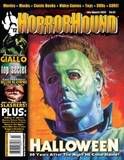
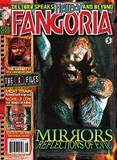
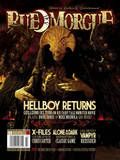
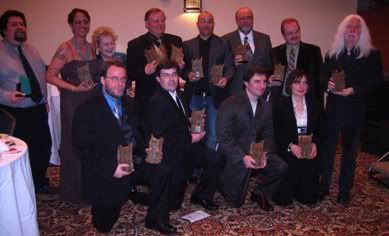
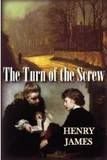
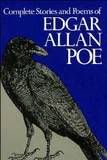
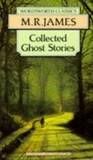
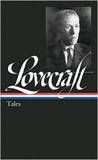
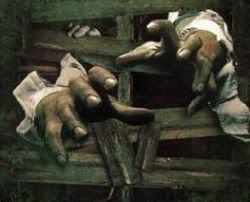
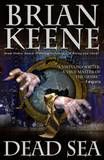
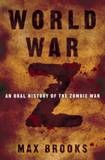
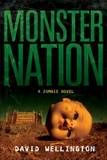
<?xml version="1.0" encoding="UTF-8"?>
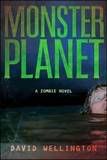
<!--Generated by Squarespace Site Server v5.0.0 (http://www.squarespace.com/) on Thu, 24 Jul 2008 15:58:04 GMT--><feed xmlns="http://www.w3.org/2005/Atom" xmlns:dc="http://purl.org/dc/elements/1.1/"><title>Feature Articles</title><subtitle>Feature Articles</subtitle><id>http://www.darkscribemagazine.com/feature-articles/</id><link rel="alternate" type="application/xhtml+xml" href="http://www.darkscribemagazine.com/feature-articles/"/><link rel="self" type="application/atom+xml" href="http://www.darkscribemagazine.com/feature-articles/atom.xml"/><updated>2008-07-15T13:30:22Z</updated><generator uri="http://www.squarespace.com/" version="Squarespace Site Server v5.0.0 (http://www.squarespace.com/)">Squarespace</generator><entry><title>Grading the Horror 'Zines</title><id>http://www.darkscribemagazine.com/feature-articles/grading-the-horror-zines.html</id><link rel="alternate" type="text/html" href="http://www.darkscribemagazine.com/feature-articles/grading-the-horror-zines.html"/><author><name>Dark Scribe Magazine</name></author><published>2008-07-15T11:19:09Z</published><updated>2008-07-15T11:19:09Z</updated><content type="html" xml:lang="en-US"><![CDATA[<p><strong><em>By, Vince A. Liaguno</em></strong></p><p>We all have those cherished childhood memories of eagerly tearing through the latest issue of <em>Famous Monsters</em> or <em>Fangoria</em>. We devoured every morsel of information about upcoming releases, thrilled at how complex special effects were executed, and marveled at gory movie stills. For many of us, those childhood reading habits have carried over into adulthood. Horror magazines are a connection to the genre we love. </p><p>But in the ensuing years since <em>Famous Monsters</em>&nbsp;and <em>Fangoria</em>&nbsp;became staples of our monthly reading piles, a few notable players in the horror entertainment business have emerged and now compete for our hard-earned reading dollars. So which ones measure up? And how do these pulse-pounding periodicals stack up against one another?</p><p><em>Dark Scribe Magazine</em> recently sat down with&nbsp;current&nbsp;copies of <em>Fangoria</em>, <em>Rue Morgue</em>, <em>GoreZone</em>, and <em>HorrorHound </em>to grade their efforts. Who emerged top of the class &ndash; and who should be sent back for some remedial work? </p><p>&nbsp;</p><p><strong><span class="full-image-float-left"><img style="width: 124px; height: 160px" alt="thCover-HorrorHound.jpg" src="http://i26.photobucket.com/albums/c138/VLiaguno/thCover-HorrorHound.jpg" /></span>Report Card: <em>HorrorHound</em></strong></p><p><strong>Who?</strong> <em>HorrorHound</em>, published by Jeremy Sheldon, is the new kid on the block with just a dozen issues under its belt. </p><p><strong>Status:</strong> Student</p><p><strong>Visual Appeal: </strong>For a relatively new publication, <em>HorrorHound</em> has the look of a seasoned pro. From its visually appealing covers to its glossy interiors, the magazine invites readers in. Graphic design work and layout is remarkably top-notch for a fledgling publication. <u>Grade</u>: A</p><p><strong>Content:</strong> <em>HorrorHound</em> boasts the strongest retro vibe of its competitors. In Issue #12, there is a fascinating look back at the prolific VHS distributor Vestron Video; an impressive 12-page retrospective on the iconic <em>Halloween</em> film franchise; and another 5 pages devoted to the staff&rsquo;s picks for the most underrated slasher films of the 1980&rsquo;s. <u>Grade</u>: A+</p><p><strong>Variety:</strong> There&rsquo;s much more between the pages of <em>HorrorHound</em> than retrospectives, including: current movie and TV news, convention reports, DVD releases, extensive feature articles on horror-related toys and collectibles, video games and comic books, and even a unique film-related travelogue that features location shots from various genre films &ndash; then and now. <u>Grade</u>: B+ </p><p><strong>Writing:</strong> Editors Nathan Hanneman and Aaron Crowell share primary writing responsibilities and perhaps therein lies the biggest weakness with <em>HorrorHound</em>. The grammar is cringe-worthy at times and the spelling and usage is atrocious in spots (&ldquo;exasturbated&rdquo; for &ldquo;exacerbated&rdquo;, &ldquo;drones&rdquo; instead of &ldquo;droves&rdquo;, &ldquo;Never the less&rdquo; instead of &ldquo;nevertheless&rsquo;). Maybe instead of a &ldquo;proof writer&rdquo; the magazine would benefit from the services of a competent proof<em>reader</em>. Worse, the magazine welcomes outside submissions, but pays writers with byline credit and sample issues. <u>Grade</u>: C-</p><p><strong>Bibliophile Appeal:</strong> With such a broad spectrum of topics covered, it&rsquo;s puzzling why there&rsquo;s not a book review or author interview in sight. The creative forces behind the magazine are clearly aiming for a diverse audience &ndash; with everything from films, toys, comics, and video games covered &ndash; yet gloss over this important aspect of the genre. <u>Grade</u>: F</p><p><strong>Summary:</strong> <em>HorrorHound</em> has something its competitors don&rsquo;t seem to have &ndash; heart. Lots of it in fact. The magazine gets major kudos for acknowledging that there&rsquo;s an entire audience of horror fans over the age of 30 with fascinating and lovingly detailed retrospectives. That said, with a cover price of $6.95, readers expect some of that same attention paid to the writing and deserve a more professional presentation. DSM&rsquo;s advice: buy a few freelance pieces at professional rates to add some flavor and polish to the writing. Invest in a seasoned proofreader. Acknowledge that horror fans read, and include some book reviews and author interviews. Tap into your major strength &ndash; the retrospective &ndash; and do a spread on Richard Laymon or Bentley Little or that other guy named King. The results will be phenomenal. A little fine-tuning and a few tweaks in the right direction and we predict that <em>HorrorHound</em> could become <em>the</em> face of horror-related entertainment magazines. </p><p><strong>Outlook:</strong> Tremendous potential. Watch out <em>Fangoria</em>!</p><p>&nbsp;</p><p><strong><span class="full-image-float-left"><img style="width: 117px; height: 160px" alt="thCover-Fangoria.jpg" src="http://i26.photobucket.com/albums/c138/VLiaguno/thCover-Fangoria.jpg" /></span>Report Card: <em>Fangoria</em></strong></p><p><strong>Who?</strong> <em>Fangoria</em>, published by the Starlog Group, is the veteran of the group. With 275 issues and counting, this Godfather of horror magazines is by far the slickest, most well-established in its field.</p><p><strong>Status:</strong> Tenured Professor</p><p><strong>Visual Appeal:</strong> <em>Fangoria</em> boasts one of the best covers in the industry, with an always gruesome cover shot dominating its central frame and its (now iconic) left-hand film strip of smaller images and grabby headlines. What we like best about <em>Fangoria&rsquo;s</em> covers is the magazine&rsquo;s loyalty to its own brand &ndash; a visual consistency that&rsquo;s as well-worn and comfortable as Pamela Voorhee&rsquo;s turtleneck sweater. Interiors feature fantastic high-resolution film stills on glossy pages and outstanding layout work. <u>Grade</u>: A+</p><p><strong>Content:</strong> The magazine has made a name for itself covering all aspects of horror filmmaking and its contents reflects the ever-changing industry trends. One thing is consistent: <em>Fangoria</em> is an equal opportunity PR machine with films of every budget &ndash; from blockbuster to bargain basement &ndash; receiving generous coverage. In the 1980&rsquo;s, the magazine lavished three- and four-page spreads on every low-budget slasher flick that came out of Canada; today, those same lavish spreads are bestowed upon every direct-to-DVD title. <em>Black Christmas</em> or <em>Black Sheep</em>, <em>Fangoria</em> has it covered. <u>Grade</u>: A</p><p><strong>Variety:</strong> <em>Fangoria&rsquo;s</em> content is heavily skewed in the direction of film and is, surprisingly, the least well-rounded of the lot in terms of all-around horror entertainment. Peripheral horror-related entertainment &ndash; video games, comics, and books &ndash; are relegated to five pages or so per issue, with a monthly retrospective accorded another two pages. 90% film, 10% everything else. <u>Grade</u>: B-</p><p><strong>Writing:</strong> Longtime Editor Anthony Timpone and Managing Editor Michael Gingold do a remarkable job putting out a consistently well-written magazine month after month. <em>Fangoria</em> has roughly fifteen professional writers contributing feature articles, interviews, and film set reports in each issue. It&rsquo;s a well-paying market for writers skilled (and industry connected) enough to crack it, and the financial commitment to quality shows. <u>Grade</u>: A</p><p><strong>Bibliophile Appeal:</strong> <em>Fangoria </em>dedicates (2) out of its (81) pages in Issue #275 to dark genre fiction reviews. While not impressive from a percentage standpoint, the 5-6 reviews each month are substantive and well-written. Author interviews are infrequent at best. <u>Grade</u>: B-</p><p><strong>Summary:</strong> After 25 years, <em>Fangoria&rsquo;s</em> current $8.99 cover price is still one of the best bargains in town for first-class coverage of horror films. While the old adage says not to tinker with what&rsquo;s not broken, reliable &lsquo;ole <em>Fango</em> could benefit from an injection of fresh ideas and a gradual broadening of its subject matter within the horror genre. It&rsquo;s all becoming a bit rote and routine. The editors would be wise to tear a page from <em>HorrorHound&rsquo;s</em> playbook and acknowledge the genre&rsquo;s loyal (read: aging) readers with some more retrospective features. And come on, <em>Fango</em> - would it kill you to include one author interview per issue?</p><p><strong>Outlook:</strong> With both the talent and the bankroll, <em>Fangoria</em> needs to take a risk by broadening its editorial horizons a bit and reaching out to the horror genre&rsquo;s diverse readership <em>not</em> interested in the proliferation of direct-to-DVD titles covered in their (deservedly) hallowed pages.</p><p>&nbsp;</p><p><strong><span class="full-image-float-left"><img style="width: 120px; height: 160px" alt="thCover-RueMorgue.jpg" src="http://i26.photobucket.com/albums/c138/VLiaguno/thCover-RueMorgue.jpg" /></span>Report Card: <em>Rue Morgue</em></strong></p><p><strong>Who?</strong> <em>Rue Morgue</em>, published by Marrs Media, is the lone Canadian entry in the horror magazine fold. With an impressive longevity of its own (80 issues to date), the monthly publication has grown slowly and steadily since it debuted in 1997. </p><p><strong>Status:</strong> Adjunct Professor</p><p><strong>Visual Appeal:</strong> As the most stylish publication in the group, <em>Rue Morgue</em> boasts a monthly color-coordinated cover that&rsquo;s decidedly more artistic in concept and favors subtlety over flash. Glossy interiors are distinctly gothic in tone and definitely set a mood. Flipping through the pages of <em>Rue Morgue</em> is like strolling down a fog-enshrouded, cobblestoned alleyway in old London. <u>Grade</u>: A</p><p><strong>Content:</strong> Reading <em>Rue Morgue</em> is like wandering through a flea market in print. There is a nice balance of features that range in age appeal, with enough current movie news, features, and reviews to keep readers up-to-date and enough retrospectives to evoke feelings of nostalgia in spots. <u>Grade</u>: A</p><p><strong>Variety:</strong> If <em>Fangoria</em> can be faulted for its limited scope, <em>Rue Morgue</em> is a bit guilty of over-ambition at times with subject matter that tries to be too all-encompassing. Aiming to go beyond mere horror in entertainment, <em>Rue Morgue</em> includes a healthy dose of horror in culture as well &ndash; resulting in coverage of everything from horror on the Internet, horror-themed music and bands, a travelogue that examines the horror spots at various destinations around the world, and a monthly compilation of macabre facts and statistics. Not to say the variety is bad, per se, but readers are often left with a feeling of sampling versus satiation. <u>Grade</u>: A-</p><p><strong>Writing:</strong> Like <em>Fangoria&rsquo;s</em> editorial team of Timpone and Gingold, <em>Rue Morgue</em> Editor-in-Chief Jovanka Vuckovic and Managing Editor Dave Alexander know their way around a magazine. Nearly two dozen contributors add as much diversity to the magazine&rsquo;s writing style as to its table of contents. Polished and professional at times, casual and conversational at others, the writing is generally a mixed bag that (thankfully) falls squarely in the respectable category. <u>Grade</u>: A-</p><p><strong>Bibliophile Appeal:</strong> <em>Rue Morgue</em> lays claim to the largest section of editorial space dedicated to books &ndash; four pages (out of 70 in Issue #80). And while the coverage ranges from marginal capsule synopses to more weighty reviews, the magazine acknowledges its horror readers and never makes them feel second-class. In addition, the magazine often features author interviews &ndash; ranging in size and scope depending upon the writer&rsquo;s status and body of work. Readers get an occasional bonus &ndash; as in the current issue &ndash; when the magazine includes interviews with screenwriters. <u>Grade</u>: A-</p><p><strong>Summary:</strong> <em>Rue Morgue</em> is the closest thing horror fans can find in a horror entertainment magazine that meets the definition of &ldquo;well-rounded.&rdquo; It&rsquo;s a classy production on all fronts with no stone left unturned in the realm of horror entertainment. Good intentions aside, the magazine seems cluttered at times and much of the culture pieces feel extraneous. Pare down a bit. There&rsquo;s an underground vibe to the magazine that at once renders it as authentic as they come while detracting from its otherwise mainstream sensibilities. Good reaching for great.</p><p><strong>Outlook:</strong> A consistently solid revolutionary poised to overthrow <em>Fangoria&rsquo;s</em> throne - if it doesn&rsquo;t overstuff the pot. </p><p>&nbsp;</p><p><strong><span class="full-image-float-left"><img style="width: 112px; height: 160px" alt="thCover-GoreZone.gif" src="http://i26.photobucket.com/albums/c138/VLiaguno/thCover-GoreZone.gif" /></span>Report Card: <em>GoreZone</em></strong></p><p><strong>Who?</strong> <em>GoreZone</em>, the UK version of <em>Fangoria </em>that launched in September of 2005. Currently at 33 issues and counting.</p><p><strong>Status:</strong> Teaching Assistant</p><p><strong>Visual Appeal:</strong> As slick and flashy as its US counterpart, but with about as much feeling as an 80&rsquo;s music video. Movie stills are actually crisper than those in <em>Fango</em> (if that&rsquo;s even possible) but the layout work (large font, unusual line spaces and gaps between paragraphs, and triple columns) distracts a bit. <u>Grade</u>: B</p><p><strong>Content:</strong> With a cover price of $8.99, the pickings are meager in this slim 56-page tome. Major release films (<em>Prom Night</em>, <em>The Ruins</em>, <em>Shutter</em>) get impressive multi-page treatment. Issue #30&rsquo;s 5 &frac12; page feature on European horror is also substantive, as is the five-page profile of Dimension Extreme. Other features include: movie news, DVD reviews, an interview with SFX artist Dave Bonneywell, a trio of video game reviews, two uneven columns by resident scream queens, and even a how-to guide on making your very own fake intestines. <u>Grade</u>: B</p><p><strong>Variety:</strong> Little. Mainly movies with a smattering of &ldquo;other.&rdquo; <u>Grade</u>: C</p><p><strong>Writing:</strong> Conversational tone of the writing here lends itself more to fanzine than magazine. Although there&rsquo;s more finger-flipping commentary going on than straight-ahead journalism, Editor Bryn Hammond does a respectable job of keeping it all together &ndash; like the sensible president of a raucous fraternity. <u>Grade</u>: B- </p><p><strong>Bibliophile Appeal:</strong> <em>GoreZone</em> dedicates a single page to coverage of dark genre fiction. Three books were reviewed in the issue we considered for this article. Writer Garry Charles does great work with his limited editorial space. <u>Grade</u>: C+</p><p><strong>Summary:</strong> A poor man&rsquo;s <em>Fangoria</em>, albeit edgier. <em>GoreZone</em> is like a teenager &ndash; chock full of out of control hormones and growth spurts but capable of genius with a little Ritalin. Reminded us a bit of <em>Fango</em> in training pants.</p><p><strong>Outlook:</strong> A promising work in progress.</p><p>&nbsp;</p><p><strong>DSM's Bottom Line:</strong> Although you can't go wrong with the steadily reliable <em>Fangoria</em> or the stylistic approach of <em>Rue Morgue</em>,&nbsp;or even the&nbsp;bolder <em>GoreZone</em>, &nbsp;<em>HorrorHound</em> (technical demerits notwithstanding)&nbsp;marches to the head of our class here. The&nbsp;unadulterated&nbsp; enthusiasm and affection for the horror genre&nbsp;of everyone involved is infectious. Even the features that wouldn't ordinarily grab our interest were so visually appealing and written with such heart that we couldn't help but read. <em>HorrorHound </em>is one underdog that ably recaptures what&nbsp;readers love best about the horror genre. Now if only they'd include something for book lovers(!).</p><p>To learn more about the magazines covered here and for subscription information, visit them online:</p><p><em><strong><a href="http://www.horrorhound.com/">HorrorHound</a></strong></em></p><p><em><strong><a href="http://www.fangoria.com/">Fangoria</a></strong></em></p><p><em><strong><a href="http://www.rue-morgue.com/">Rue Morgue</a></strong></em></p><p><em><strong><a href="http://www.gorezone.co.uk/">GoreZone</a></strong></em></p>]]></content></entry><entry><title>Live From Salt Lake City...It's the 2007 Stoker Awards!</title><id>http://www.darkscribemagazine.com/feature-articles/live-from-salt-lake-cityits-the-2007-stoker-awards.html</id><link rel="alternate" type="text/html" href="http://www.darkscribemagazine.com/feature-articles/live-from-salt-lake-cityits-the-2007-stoker-awards.html"/><author><name>Dark Scribe Magazine</name></author><published>2008-04-07T15:08:11Z</published><updated>2008-04-07T15:08:11Z</updated><content type="html" xml:lang="en-US"><![CDATA[<p><strong><em>By, John R. Little</em></strong></p><p>The winners of the 2007 Bram Stoker Awards were announced at a banquet on Saturday, March 29, as part of the World Horror Convention in Salt Lake City. Each year, The Horror Writers Association (HWA) holds a banquet to honor the nominees and winners for superior achievement in horror and dark fantasy. There are eight categories, and the winners this year were: </p><ul><li><strong>Novel: </strong><em>The Missing</em>, by Sarah Langan (Harper) </li><li><strong>First Novel: </strong><em>Heart-Shaped Box</em>, by Joe Hill (William Morrow) </li><li><strong>Long Fiction: </strong><em>Afterward, There Will be a Hallway</em>, by Gary A. Braunbeck (from the anthology, <em>Five Strokes to Midnight</em>, Haunted Pelican Press) </li><li><strong>Short Fiction: </strong><em>The Gentle Brush of Wings</em>, by David Niall Wilson (from his collection, <em>Defining Moments</em>, Sarob Press) </li><li><strong>Anthology: </strong><em>Five Strokes to Midnight</em>, edited by Gary A. Braunbeck and Hank Schwaeble (Haunted Pelican Press) </li><li><strong>Collection (tie): </strong><em>Proverbs for Monsters</em>, by Michael A. Arnzen (Dark Regions Press) and <em>5 Stories</em>, by Peter Straub (Borderlands Press) </li><li><strong>Nonfiction: </strong><em>The Cryptopedia</em>, by Jonathan Maberry and David F. Kramer (Citadel Press / Kensington) </li><li><strong>Poetry (tie): </strong><em>Being Full of Light, Insubstantial</em>, by Linda Addison (Space and Time) and <em>Vectors: A Week in the Death of a Planet</em> (Dark Regions Press), by Charlee Jacob and Marge Simon </li></ul><p style="text-align: center" align="center"><span class="full-image-float-left"><img style="width: 389px; height: 236px" alt="StokerWinners-Classof2008.jpg" src="http://i26.photobucket.com/albums/c138/VLiaguno/StokerWinners-Classof2008.jpg" /></span></p><p style="text-align: left" align="left">&nbsp;</p><p style="text-align: left" align="left">&nbsp;</p><p style="text-align: left" align="left">&nbsp;</p><p style="text-align: left" align="left">&nbsp;</p><p style="text-align: left" align="left">&nbsp;</p><p style="text-align: left" align="left">&nbsp;</p><p style="text-align: left" align="left">&nbsp;</p><p style="text-align: left" align="left">&nbsp;</p><p style="text-align: center" align="center"><strong><sub>The Stoker Class of '07...(Top row, from left) Mark Worthen, Linda Addison, Marge Simon, Weston Oche,&nbsp;Rocky Wood, John R. Little, Mort Castle, and Del Howison.&nbsp; (Bottom row, from left) Gary A. Braunbeck, Robert Fleck, Hank Schwaeble, and Sarah Langan.</sub></strong></p><p style="text-align: left" align="left">&nbsp;</p><p style="text-align: left" align="left">There were several other important presentations at the ceremony as well: </p><ul><li><strong>2008 World Horror Convention Grandmaster Award </strong>: Robert McCammon </li><li><strong>HWA&rsquo;s Lifetime Achievement Award (tie): </strong>John Carpenter and Robert Weinberg </li><li><strong>HWA&rsquo;s Richard Laymon Award: </strong>the HWA Web Team (Mark Worthen, Steve Dorato, and Christopher Fulbright) </li></ul><p>The actual awards ceremony was the highlight of the evening, which started with a well-orchestrated dinner for the 170 attendees. The tables were decorated with handmade tombstones with horror-related images, as well as postcard-sized versions of the covers of all the nominated books. </p><p>After dessert and coffee, the awards ceremony started with a welcome statement by Charlene (Charlie) Harmon, chair of WHC 2008. Harmon was a gracious and very popular chair throughout the weekend. </p><p>Next, HWA President Deborah LeBlanc took the stage to welcome everyone as well. Her talk covered many of the recent achievements of the organization and hinted at even better things to come. </p><p>Jeff Strand kicked the ceremony into high gear with a <a href="http://www.youtube.com/watch?v=CIkr1WqvwOw">hilarious monologue</a>&nbsp;covering various topics from how it feels to lose a Stoker to his idea of the perfect pitch (to a captive Don D&rsquo;Auria of Leisure Books, who sat in the middle of the audience). The biggest laughs were for his suggestion to break the Stoker categories into sub-divisions. As examples he suggested: <em>Best Zombie Novel, Trapped in One Location</em> and <em>Best Zombie Novel, Cross-Country Trek</em>. </p><p>The presentation of the awards took just over an hour, with most of the winners present, eager to accept their Stokers. <span class="full-image-float-right"><img style="width: 195px; height: 259px" alt="StokerAward2008.jpg" src="http://i26.photobucket.com/albums/c138/VLiaguno/StokerAward2008.jpg" /></span></p><p>Each of the categories was memorable in their own way. Marge Simon accepted a Poetry award for her collaboration with Charlee Jacob. Simon praised Jacob and commented that she was in a great deal of physical pain and would be pleased when she found out their book had won. </p><p>Gary A. Braunbeck&rsquo;s moving acceptance speech for his novella was the emotional high point of the evening. He described how the story was inspired by his daughter who died as a young child more than two decades ago and who still inspires his writing. The audience was entranced. You can see the speech <a href="http://www.youtube.com/watch?v=vuLz9Aszoac">here</a>. </p><p>For the highly anticipated category of Superior Achievement in a Novel, the presenters were F. Paul Wilson and Simon Clark, who gave a terrific <a href="http://www.youtube.com/watch?v=o3_777jQ_qw">introduction</a>,&nbsp;with Wilson calling this year&rsquo;s convention <em>Sarah Langan-con</em>, since everywhere he went, there she was. Although this was mixed in with equally funny intros for the other nominees, the audience was unaware that Wilson made a bigger fuss for Langan, since he had peeked inside the winner&rsquo;s envelope ahead of time and knew she&rsquo;d won. For her part, Langan was characteristically humble and completely speechless, totally caught by surprise by her win.&nbsp;Her&nbsp;<a href="http://www.youtube.com/watch?v=m61I7yhfzuw">acceptance speech</a>&nbsp;capped a perfect evening. </p><p>Whew. </p><p>My own journey to the one hour award ceremony started almost a year ago. The HWA asked for a volunteer to work as the Stoker Coordinator, and I jumped in with both feet. The horror field has been good to me, and this was the opportunity to give something back. </p><p>The first major decision was already underway when I came on board. After successfully holding the 2007 Stoker event in conjunction with the Toronto World Horror Convention, the HWA was working out an agreement to hold the 2008 banquet at the Salt Lake City World Horror Convention. Charlie Harmon was very keen on having the Stokers at her con, and I began working out some broad strategies with her. </p><p>Through the course of the planning, I sent or received more than 3,000 e-mails. (Yes, I kept them all.) About half of them were detailed e-mails between myself and Charlie to plan the HWA presence at WHC. </p><p>In addition to the actual Stokers, the HWA involvement in the convention included author signings, panel discussions, koffeeklatches, the traditional After Stoker party, and many other smaller events. </p><p>Perhaps the biggest innovation of the night was that the entire ceremony was broadcast live on the Internet by a local Salt Lake City radio station, iSCIFI.tv. </p><p>I had approached several well-known people and organizations in the horror field early on, hoping to find somebody to broadcast the show. For one reason or another, none of those initial contacts worked out, and I almost lost hope, putting the Internet broadcast on the back burner in favor of more pressing issues. A couple of months before the banquet, though, author David Niall Wilson e-mailed, nudging me into taking one last look. Dave was nominated for three Stokers this year but was unable to attend. That was incentive enough for me to do whatever I could to find a way to broadcast the event. </p><p>After a few more false leads, Charlie Harmon led me to iSCIFI.tv, who I contacted. They were willing to take a shot and spent quite a lot of time working out the details with me. Practice runs worked well, but disaster seemed to strike two days prior to the banquet. iSCIFI.tv was broadcasting interviews from WHC. They sucked every kilobyte of bandwidth from the hotel, crashing their webcam equipment. </p><p>Uh-oh. It was not good news. Less than 48 hours before the Stokers, and the broadcast was looking very iffy. Somehow, Jeff and Christine Norris of iSCIFI.tv pulled a few miracles out of their hats and the broadcast went forward. They did a tremendous job under difficult and stressful conditions. Afterward, they quickly archived the footage for later viewing (including the clips in this article). </p><p>Almost a hundred people watched the Stokers live that night, which wasn&rsquo;t bad since the show didn&rsquo;t start until after 11:00 p.m. Eastern time. Since then, countless numbers have viewed clips of the show, and the vast majority of the feedback has been extremely positive. It&rsquo;s likely that a live broadcast will be considered for all future Stoker banquets. </p><p>It felt great to hear that not only David Niall Wilson, but at least two other winning authors watched the award show live and could celebrate with their peers and fans from their own homes. </p><p>Another great decision in the planning process was to invite Jeff Strand to be the Master of Ceremonies for the night. Jeff is best known for his humorous horror novels and his monologue was perfect. Jeff bridged the awards with witty commentary throughout the night. </p><p>In the eight Stoker categories, there were 45 nominees. For each who would not be present at the ceremony, I asked them to select somebody to accept on their behalf in the event they won. It worked out well, but if the stars had lined up differently, I would have accepted five different awards, since several authors asked me to accept, not knowing who else was attending. I did get to accept for Peter Straub, which was a great honor. </p><p>There was one last oddity to this year&rsquo;s awards: when the final ballot was announced on February 15, I was delighted to find that I was nominated myself in the category of First Novel. Normally, the Stoker Coordinator knows the winners weeks prior to the banquet, in order to have the trophies engraved. I was in the awkward position of expecting an e-mail letting me know if I&rsquo;d won, long before anyone else would know. </p><p>I knew it would be difficult to wander around WHC, pretending not to know the results of my category. </p><p>Fortunately, Lisa Morton volunteered to take care of the engraving, so I wouldn&rsquo;t have to see the results until they were announced. That way, I could sit and fret and enjoy the suspense along with the other nominees. Lisa also worked with me behind the scenes all year, providing advice and guidance. </p><p>After the Stokers, there was opportunity for photos and the After Stoker party provided a way for everyone to congratulate the winners and commiserate with the other nominees. </p><p>The next day, it was finally time to go home. My wife and I left Salt Lake City on the Sunday night, only 24 hours after the Stokers, but with the stress of the show now past, it felt like the awards were a million years earlier. </p><p>Until we got to the airport. </p><p>We carried four Stoker trophies with us, to mail to winners who had been unable to attend. These were packed in the goodie bags from the con. The awards are big and heavy, molded into haunted houses. As they rolled through the x-ray machine at security, four guards huddled around staring at the image. </p><p>&ldquo;What&rsquo;s that?&rdquo; </p><p>&ldquo;Its says &lsquo;Horror.&rsquo;&rdquo; </p><p>All of a sudden, the four guards all looked at me. I wondered if they were carrying weapons. After a few tense moments and harsh questions, they let us carry the Stokers on the plane, and they were promptly shipped to their rightful owners the following day. Just for a few moments, it felt like I was a character in a Jeff Strand story. </p>]]></content></entry><entry><title>Ten Essential Works of Horror</title><id>http://www.darkscribemagazine.com/feature-articles/ten-essential-works-of-horror.html</id><link rel="alternate" type="text/html" href="http://www.darkscribemagazine.com/feature-articles/ten-essential-works-of-horror.html"/><author><name>Dark Scribe Magazine</name></author><published>2007-11-26T16:30:42Z</published><updated>2007-11-26T16:30:42Z</updated><content type="html" xml:lang="en-US"><![CDATA[<p><em><strong>By, William I. Lengeman III</strong> </em></p><p><strong><span class="full-image-float-left"><img style="width: 71px; height: 132px" alt="EssentialCastle.jpg" src="http://i26.photobucket.com/albums/c138/VLiaguno/EssentialCastle.jpg" /></span>1. Horace Walpole (1717-1797)</strong> <br /><strong><em>The Castle of Otranto </em>(1764) </strong></p><p>In his wide-ranging essay, Supernatural Horror in Literature, H.P. Lovecraft called <em>The Castle of Otranto</em> &ldquo;thoroughly unconvincing and mediocre&rdquo; and &ldquo;tedious, artificial and melodramatic.&rdquo; Modern-day readers not accustomed to Walpole&rsquo;s archaic style might tend to agree. The kicker, Lovecraft asserts, is that Otranto &ldquo;was destined to exert an almost unparalleled influence on the literature of the weird.&rdquo; </p><p>First loosed on the world on Christmas Eve, in 1764, Otranto, which was essentially one of the first haunted house stories, was framed as a rediscovered ancient manuscript that told of various ghastly events taking place in a medieval castle. </p><p>One of the first Gothic novels, Otranto was followed by numerous imitators, that ranged from competent to downright <span class="full-image-float-right"><img style="width: 77px; height: 107px" alt="EssentialHorace.jpg" src="http://i26.photobucket.com/albums/c138/VLiaguno/EssentialHorace.jpg" /></span>abysmal. One scholar estimated that more than two thousand Gothics were released in a three-decade span beginning in 1790. </p><p>Walpole, who wrote numerous other now forgotten works, bought an English castle early in life and spent the next fifty years or so adding onto it and turning it into a tourist attraction. The story of Otranto was said to have come from Walpole&rsquo;s dream of an ancient castle and a giant hand encased in armor, a gimmick that turns up, in slightly altered fashion, in the story. </p><p><strong><span class="full-image-float-left"><img style="width: 95px; height: 160px" alt="thEssentialFrankenstein.jpg" src="http://i26.photobucket.com/albums/c138/VLiaguno/thEssentialFrankenstein.jpg" /></span>2. Mary Shelley (1797-1851) <br /></strong><strong><em>Frankenstein </em></strong><strong>(1818) </strong></p><p>Quick, name a literary work by Percy Shelley or his pal, Lord Byron - probably two of the better-known poets of their day. Okay, skip that question. Now, name something by Shelley&rsquo;s wife, Mary. </p><p><em>Frankenstein</em> is one of the earliest and arguably one of the most influential horror novels of all time and yet most contemporary readers &ndash; conditioned to modern-day excess - will probably not find the book all that horrifying. </p><p>No need to recount the basic premise of the novel &ndash; that of a scientist who broaches one of the ultimate taboos. Although, for those who base their knowledge of <em>Frankenstein</em> on James Whale&rsquo;s classic 1931 film, it bears mentioning that Hollywood threw out virtually everything Shelley wrote, except the premise and the title. Purists looking for a more faithful recreation of Shelley&rsquo;s book should turn to Kenneth Branagh&rsquo;s 1994 filmed adaptation. </p><p>The idea for <em>Frankenstein</em> supposedly came to Shelley in a dream. She and her husband, Byron and a few others were spending a cold, rainy summer in a Swiss villa, amusing themselves by reading spooky stories and attempting to devise their own. </p><p>An interesting note is that just a few years after Shelley&rsquo;s book appeared - in 1818 - it made its way to the stage, where it became a perennial favorite. Thomas Potter Cooke, one of the first thespians to attain renown as Frankenstein&rsquo;s creation, was probably as famous, in his day, as that other incarnation of Frankenstein&rsquo;s monster &ndash; Boris Karloff. </p><p><strong><span class="full-image-float-left"><img style="width: 97px; height: 159px" alt="thEssentialChristmasCarol.jpg" src="http://i26.photobucket.com/albums/c138/VLiaguno/thEssentialChristmasCarol.jpg" /></span>3. Charles Dickens (1812-1870) <br /></strong><strong><em>A Christmas Carol (Being A Ghost Story of Christmas) </em>(1843) </strong></p><p>If his epitaph is to be believed, Charles John Huffam Dickens was &ldquo;one of England&rsquo;s greatest writers.&rdquo; Best known for a number of classic novels that lacked supernatural content, Dickens also turned out numerous ghost stories and, as a magazine editor, did as much as anyone to popularize the notion of ghost stories as fictional constructs. </p><p>Dickens had fallen on hard times prior to writing <em>A Christmas Carol</em>. If the work he called &ldquo;this Ghostly <span class="full-image-float-right"><img style="width: 138px; height: 191px" alt="EssentialCharlesDickens.gif" src="http://i26.photobucket.com/albums/c138/VLiaguno/EssentialCharlesDickens.gif" /></span>little book&rdquo; isn&rsquo;t the best-known ghost story ever written, then it&rsquo;s certainly near the top of the list. </p><p>As for it&rsquo;s protagonist, one Ebenezer Scrooge, he may or may not be the most miserable bastard ever rendered in prose &ndash; at least until the end of the story &ndash; but he certainly ranks up there with the worst of them. </p><p>As is the case with so many other great works of horror - <em>Frankenstein</em>, <em>Dracula</em> and Stevenson&rsquo;s <em>Dr. Jekyll and Mr. Hyde</em> - most of us probably know Dickens&rsquo; story from one of the many movies that appeared over the years, most notably those in which crusty old Mr. Scrooge was portrayed by Alastair Sim, George C. Scott or Patrick Stewart. </p><p><strong><span class="full-image-float-left"><img style="width: 111px; height: 179px" alt="EssentialJSLeFanu.gif" src="http://i26.photobucket.com/albums/c138/VLiaguno/EssentialJSLeFanu.gif" /></span>4. J. Sheridan LeFanu (1814-1873) <br /></strong><strong><em>Best Ghost Stories of J.S. LeFanu </em></strong><strong>(1964) </strong></p><p>Though he is not very widely read today, Joseph Thomas Sheridan Le Fanu, an Irish journalist and fiction writer, was well known in his day for his many novels, most notably <em>The House By The Churchyard</em> (1861) and <em>Uncle Silas</em> (1864). LeFanu also wrote a number of supernatural tales, which were collected in several volumes. </p><p><em>Best Ghost Stories </em>brings together sixteen of Le Fanu&rsquo;s supernatural yarns, including Squire Toby's Will, An Authentic Narrative of a Haunted House, The Haunted Baronet, An Account of Some Strange Disturbances in Aungier Street and Mr. Justice Harbottle. </p><p>Also included are Le Fanu&rsquo;s best-known stories &ndash; Carmilla and Green Tea. The former, which predated Stoker&rsquo;s Dracula by almost a quarter of a century, is about a seemingly immortal vampire who is eventually dispatched by the now standard device &ndash; a stake through the heart. In Green Tea, Le Fanu pulls off the tricky feat of making a monkey seem menacing. </p><p>M. R. James offered high praise for E. F. Benson, a fellow ghost story writer, but reserved his loftiest accolades for LeFanu, whom he regarded as the unrivaled master of supernatural literature, even going so far as to preside over a 1923 reissue of his stories. </p><p><strong><span class="full-image-float-left"><img style="width: 100px; height: 163px" alt="EssentialJekyllandHyde.jpg" src="http://i26.photobucket.com/albums/c138/VLiaguno/EssentialJekyllandHyde.jpg" /></span>5. Robert Louis Stevenson (1850-1894) <br /></strong><strong><em>The Strange Case of Dr. Jekyll and Mr. Hyde </em></strong><strong>(1886) </strong></p><p>If you insist that horror literature must contain an element of the supernatural, then <em>Dr. Jekyll and Mr. Hyde</em> probably doesn&rsquo;t belong on this list. </p><p>Scottish author Robert Lewis Balfour Stevenson was a sickly child who spent much time in bed, exercising his imagination by writing stories. This tendency continued into adulthood when he became well known as an essayist, poet and author of fiction and travel books. </p><p>It&rsquo;s a toss-up as to which of Stevenson&rsquo;s books is more popular &ndash; <em>Treasure Island</em> or <em>Jekyll &amp; Hyde</em>. Like its predecessor, <em>Frankenstein</em>, and <em>Dracula</em>, which came along about a decade later, Jekyll was supposedly based on a dream. </p><p>More a tale of science gone wrong than a horror yarn, Jekyll is, nonetheless, not without its horrific elements as the respected Dr. Henry Jekyll uses a drug to unleash his dark half and a drug to reign it back in. Over time Mr. Edward Hyde, his alter ego &ndash; or perhaps, more correctly, his id - begins appearing without the benefit of drugs and proceeds to make a mess of Jekyll&rsquo;s world, with disastrous results. </p><p>Like so many other classic horror tales, Jekyll was a fertile source for cinematic adaptations. These began as early as began in 1908 and number upwards of thirty, depending on who&rsquo;s counting. </p><p><strong><span class="full-image-float-left"><img style="width: 100px; height: 165px" alt="EssentialDracula.jpg" src="http://i26.photobucket.com/albums/c138/VLiaguno/EssentialDracula.jpg" /></span>6. Bram Stoker (1847-1912) <br /></strong><strong><em>Dracula </em></strong><strong>(1897) </strong></p><p>Humankind can be divided into two groups &ndash; those who thrive on vampire literature and those who wouldn&rsquo;t care if they never heard the &ldquo;v&rdquo; word again. <em>Dracula</em> was by no means the first fictional vampire tale, but it goes without saying that Stoker&rsquo;s novel is the seminal fictional work on vampirism. Lovecraft called it &ldquo;almost the standard modern exploitation of the frightful vampire myth.&rdquo; </p><p>At its essence, <em>Dracula</em> is a tale of good versus evil, albeit evil of a rather cultured and seductive sort. The story is yet another that is so well known that it doesn&rsquo;t need to be summarized. </p><p>There are various theories on the genesis of <em>Dracula</em>. Stoker claimed, like Mary Shelley, that the idea for his greatest work came from a dream. Incidentally, one of the first fictional vampire tales, The Vampyr, was spawned during the same fateful summer that Mary Shelley dreamed up <em>Frankenstein</em>. </p><p>Other theories posit that Stoker was influenced by Le Fanu&rsquo;s vampire, Carmilla. M. R. James, who chided Stoker&rsquo;s work for its excesses, claimed that it was inspired by The Vampire of Kring, an 1856 magazine article. </p><p>Though he wrote other notable works, such as <em>The Jewel of Seven Stars</em> and <em>The Lair of the White Worm</em>, Stoker was ultimately a one-hit wonder. But what a smash hit it was. </p><p><strong><span class="full-image-float-left"><img style="width: 107px; height: 160px" alt="thEssentialTurnofScrew.jpg" src="http://i26.photobucket.com/albums/c138/VLiaguno/thEssentialTurnofScrew.jpg" /></span>7. Henry James (1843 &ndash; 1916) <br /></strong><strong><em>The Turn of the Screw </em>(1898) </strong></p><p>Henry James, an American-born author who became a British citizen late in life, was a prolific writer who turned many well-known novels, short stories and plays, and a considerable amount of literary criticism. Best known as a &ldquo;straight&rdquo; writer, James took a detour into horror in 1898, with <em>The Turn of the Screw</em>, though whether or not the occurrences in the story are of supernatural origin is still a matter of some debate. </p><p>The tale of a governess charged with tending to two orphaned siblings, the story takes a grim turn when what are apparently the spirits of two deceased servants begin making themselves known. </p><p>Lovecraft&rsquo;s praise for the work, which first appeared in serial form in Collier&rsquo;s Weekly, was something of a backhanded compliment. He remarked that James &ldquo;triumphs over his inevitable pomposity and prolixity sufficiently well to create a truly potent air of sinister menace,&rdquo; and goes on to say that he &ldquo;is perhaps too diffuse, too unctuously urbane, and too much addicted to subtleties of speech to realise fully all the wild and devastating horror in his situations; but for all that there is a rare and mounting tide of fright.&rdquo; </p><p><strong><span class="full-image-float-left"><img style="width: 107px; height: 160px" alt="thEssentialPoe.jpg" src="http://i26.photobucket.com/albums/c138/VLiaguno/thEssentialPoe.jpg" /></span>8. Edgar Allan Poe (1809-1849) <br /></strong><strong><em>Complete Stories and Poems of Edgar Allan Poe </em></strong><strong>(1984) </strong></p><p>H. P. Lovecraft was generous with his praise for Edgar Allan Poe, noting that it is &ldquo;hard for any mature and reflective critic to deny the tremendous value of his work,&rdquo; and going on to say, &ldquo;to him we owe the modern horror-story in its final and protected state.&rdquo; </p><p>The sometimes-jumbled facts of Poe&rsquo;s short life &ndash; and more so of his death, apparently after a drunken binge &ndash; tend sometimes to overshadow his contributions to supernatural literature. Though he was plagued throughout his short life by the ills of drug addiction, alcoholism and depression he was surprisingly productive, working as an editor for several magazines, turning out a great body of literary criticism, pioneering in the field of the detective story and turning out some of the all time great works of macabre fiction and poetry. </p><p>Poe preferred to work in the shorter forms. His only crack at a lengthier yarn, <em>The Narrative of Arthur Gordon Pym</em>, appeared in 1838. That work and the rest of his fiction and poetry are collected in this 832-page volume, which first appeared in 1966 and was reissued almost two decades later. </p><p>Included are all of the better known Poe tales and poems, such as The Masque of the Red Death, The Fall of the House of Usher, The Purloined Letter, Murders in the Rue Morgue, The Cask of Amontillado and The Pit and the Pendulum, just to name a few. </p><p><strong><span class="full-image-float-left"><img style="width: 93px; height: 160px" alt="thEssentialMRJames.jpg" src="http://i26.photobucket.com/albums/c138/VLiaguno/thEssentialMRJames.jpg" /></span>9. M.R. James (1862-1936)<br /></strong><strong><em>Collected Ghost Stories </em></strong><strong>(1999) </strong></p><p>In 1934, Clark Ashton Smith, no slouch in the field of speculative literature, wrote that Montague Rhodes James &ldquo;is perhaps unsurpassed in originality by any living writer.&rdquo; Seven decades later, novelist Michael Chabon waxed equally effusive, calling James&rsquo; short story, Oh, Whistle and I&rsquo;ll Come to You, My Lad, &ldquo;one of the finest short stories ever written.&rdquo; </p><p>Though he is widely considered to be one of the greatest spinners of ghostly yarns ever, James&rsquo; pen wasn&rsquo;t pressed into the service of supernatural literature until he was in his thirties. A respected scholar of antiquities, he wrote the stories he is so famous for as a diversion, primarily to entertain friends at what became an annual ritual - the recitation of a new story to rapt audiences every Christmas Eve. </p><p>Among James&rsquo; most memorable ghost stories are Casting the Runes, The Mezzotint, A Warning to the Curious, and the aforementioned Oh, Whistle and I&rsquo;ll Come to You, My Lad &ndash; a work whose title alone drips with subtle menace. </p><p>James&rsquo; stories have been appeared in numerous anthologies and collections over the years. This volume brings together the contents of the four ghost story collections published in his lifetime and adds four previously uncollected stories &ndash; for a total of 31 stories in all. </p><p><strong><span class="full-image-float-left"><img style="width: 98px; height: 160px" alt="thLovecraftTales.jpg" src="http://i26.photobucket.com/albums/c138/VLiaguno/thLovecraftTales.jpg" /></span>10. H. P. Lovecraft (1890-1937) <br /></strong><strong><em>Tales </em></strong><strong>(2005) </strong></p><p>By virtually anyone&rsquo;s standards, Howard Phillips Lovecraft was something of an odd bird. He spent most of his life in his hometown of Providence, Rhode Island, in the company of two elderly aunts, and engaged his various scholarly interests, while producing a substantial number of &ldquo;weird&rdquo; tales. </p><p>Lovecraft has been called the most important American horror writer since Poe, but not everyone would agree with that statement. Lovecraft is still revered and reviled &ndash; sometimes even in the same sentence &ndash; for his distinctive style and what are perceived as the excesses of his writing. </p><p>Many of Lovecraft&rsquo;s lurid tales were churned out for the pulps of the day &ndash; most notably Weird Tales &ndash; for the princely sum of something like a penny a word. In choosing to issue a volume of his work, the Library of America puts this pulp writer on a par with such luminaries of American letters as Emerson, Faulkner, James, Poe and Steinbeck, just to name a few. </p><p>Like his predecessor &ndash; Poe - whom he admired greatly, Lovecraft preferred to work in the shorter forms. In <em>Tales</em>, editor Peter Straub has gathered twenty-two of Lovecraft&rsquo;s stories - some 850 pages worth - including such perennial favorites as Rats in the Walls, The Colour out of Space, The Call of Cthulhu and At the Mountains of Madness. </p>]]></content></entry><entry><title>The Literary Renaissance of the Zombie</title><id>http://www.darkscribemagazine.com/feature-articles/the-literary-renaissance-of-the-zombie.html</id><link rel="alternate" type="text/html" href="http://www.darkscribemagazine.com/feature-articles/the-literary-renaissance-of-the-zombie.html"/><author><name>Dark Scribe Magazine</name></author><published>2007-09-13T16:07:30Z</published><updated>2007-09-13T16:07:30Z</updated><content type="html" xml:lang="en-US"><![CDATA[<p style="text-align: center" align="center"><em><strong><span class="full-image-float-left"><img style="width: 250px; height: 202px" alt="TheRisingHands.jpg" src="http://i26.photobucket.com/albums/c138/VLiaguno/TheRisingHands.jpg" /></span></strong></em></p><p style="text-align: left" align="left"><em><strong>By, Chad Helder</strong></em></p><p style="text-align: left" align="left">The evolution of any iconic monster from the horror genre usually goes something like this: shadowy origins deeply-rooted in European folklore, a variety of literary appearances over the last few centuries (with at least a couple of Victorian novels), followed by numerous film appearances dating from the 1930&rsquo;s onward, which then ultimately leads to a pop-culture explosion including everything from video games to breakfast cereals. However, the zombie genre breaks this typical pattern. </p><p>The modern horror genre finds roots in a variety of folktale traditions. For example, the vampire and the werewolf both began in folklore, and even the proverbial &ldquo;slasher&rdquo; resembles the stories found in late 20 <sup>th</sup> century urban legends. Unlike the ever-ubiquitous vampire, which sprouted from folklore traditions and mutated into numerous literary and filmic incarnations, the modern zombie genre finds its true origin in a single film, <em>The Night of the Living Dead</em> . From there, the zombie infested modern cinema with unlimited variations. But now something fascinating has happened: at the same time that the zombie pop-culture explosion encompasses comic books, video games, and big-budget movies, zombies <span class="full-image-float-left"><img style="width: 104px; height: 160px" alt="thdeadsea.jpg" src="http://i26.photobucket.com/albums/c138/VLiaguno/thdeadsea.jpg" /></span>now have crossed the boundary from film into literature and created a brand-new zombie literary genre (pioneered by writers like Brian Keene, Max Brooks, and David Wellington), which adds up to a complete aberration from the normal pattern &ndash; this is exciting stuff. While zombie books proliferate in the publishing houses, new and innovative forms of zombie-lore are emerging through internet-based publishing like blogs, PODs, and online web-serials, well outside the mainstream world of publishing. Kind of fitting, considering how it all began with a low budget zombie flick well outside the mainstream world of filmmaking. In a way, it&rsquo;s almost like zombies are making their way backwards into a kind of digital folktale. After all, what is self-publishing but a king of storytelling from the people, outside the industry mainstream. </p><p>Kyle Bishop, in his essay entitled &ldquo;Raising the Dead: Unearthing the Nonliterary Origins of Zombie Cinema,&rdquo; makes a strong case for the birth of the zombie genre, not in folklore like the werewolf and the vampire, but in Romero&rsquo;s <em>Night of the Living Dead</em> . Of course, there is the zombie folklore from voodoo culture (Bishop also provides ample background on this subject), as well as numerous &ldquo;zombie&rdquo; films from the 1930&rsquo;s like <em>White Zombie</em> , but <em>Night of the Living Dead</em> truly gave birth to something original, something that numerous writers are now trying to duplicate in print (and follow in new directions). We&rsquo;re talking about the overwhelming zombie horde that multiplies exponentially and spells the end of civilization, whether they can run or not. Kyle Bishop argues: &ldquo;Most classic monsters &ndash; from ghosts to vampires to werewolves &ndash; have their origins in folklore, and the zombie is no exception. However, whereas those other creatures have cross-cultural mythologies, the zombie remains a purely American monster...In addition, creatures such as Dracula passed through a literary tradition on their way to the silver screen, but the zombie did not.&rdquo; With this in mind, it is fascinating to see this new uprising of zombie literature appear in response to the cult following of zombie cinema. </p><p>While there is no question about the hunger of mainstream audiences for all kinds of zombie media, the question of why so many writers feel compelled to offer their own literary rendering of this cinematic phenomenon remains. Why in this new century has the zombie become so prominent? What does the zombie mean anyway? From my view, zombies represent a variety of societal anxieties that seem to have taken a foothold in the new century, and there is something about the relentless zombie horde that captures the imagination of writers as much as the passion of audiences. </p><p>To begin to answer the question of what the zombie horde means, I want to turn to a new literary voice with two zombie <span class="full-image-float-right"><img style="width: 277px; height: 180px" alt="48807_brooks_max.jpg" src="http://i26.photobucket.com/albums/c138/VLiaguno/48807_brooks_max.jpg" /></span>masterpieces to his credit, Max Brooks, author of <em>The Zombie Survival Guide</em> , which might at first appear to be simply a postmodern parody, and <em>World War Z: An Oral History of the Zombie War</em> . In his brilliant <em>World War Z</em> , Brooks offers a global manifestation of apocalyptic <span class="full-image-float-left"><img style="width: 105px; height: 160px" alt="thWorldWarZ.jpg" src="http://i26.photobucket.com/albums/c138/VLiaguno/thWorldWarZ.jpg" /></span>anxiety. Whether you view this as symbolically representative of impending environmental catastrophe, the possibility of nuclear devastation, or a virus run amok, this is terrifying stuff. These two works deal with zombie anxiety on a local and a global scale. </p><p>Zombie anxiety itself has many levels. Having your own body bitten, eaten, and taken over, as well as losing your own individual identity is horrifying enough, but this is compounded by seeing your loved ones taken over. Zombie stories are preoccupied with losing loved ones. On top of this, the breaking down of society and the ensuing chaos magnifies the nightmare. &ldquo;Zombies, Mr. Brooks said, are the perfect goblin for such times, in part because they suggest broad social collapse, when anyone &ndash; a policeman, a nurse, a friend &ndash; can turn into a force of evil. With a werewolf or vampire, all the evil is concentrated on a single creature; with zombies, the evil is everywhere.&rdquo; It&rsquo;s easy to understand this apocalyptic anxiety with rampant terrorism and nuclear arms on the loose. Warren St. John writes in the <em>New York Times</em> , &ldquo;It does not take much of a stretch to see the parallel between zombies and anonymous terrorists who seek to convert others within society to their deadly cause. The fear that anyone could be a suicide bomber of a hijacker parallels a common trope of zombie films, in which healthy people are zombified by contact with other zombies and become killers.&rdquo; Zombies perfectly embody this anxiety through a nightmarish metaphor &ndash; this is how nightmares work after all, but zombies are more complex than they initially appear. </p><p>Nothing expresses anxiety about trouble in the homeland more than a zombie invasion, and this is what Max Brooks&rsquo; serio-comic <em>Zombie Survival Guide</em> demonstrates. From the dawning of Romero&rsquo;s seminal <em>Night of the Living Dead</em> , the rules of how to defend yourself (the upstairs strategy versus the downstairs strategy) has become an integral part of the genre, <span class="full-image-float-right"><img style="width: 107px; height: 160px" alt="thZombieSurvival.jpg" src="http://i26.photobucket.com/albums/c138/VLiaguno/thZombieSurvival.jpg" /></span>and Brooks&rsquo; handbook takes this to brilliant extremes &ndash; ultimately reminiscent of training manuals on how to survive a nuclear explosion. Guidelines and strategies for defending your immediate home (like the farmhouse in <em>Night of the Living</em> <em>Dead</em> ) &ndash; domestic defense against the undead &ndash; suggests the guidelines and strategies for building your bomb shelter from the previous era of the Cold War. Despite the satirical nature of <em>Zombie Survival Guide</em> , Brooks tells <em>Rolling Stone</em> , &ldquo;I&rsquo;m not being ironic&hellip; I was terrified of zombies as a kid. I think it&rsquo;s their viral nature that makes them so scary. Fighting them is like trying to negotiate with AIDS.&rdquo; He reiterates this viral theme in an interview with <em>Publisher&rsquo;s Weekly</em> : &ldquo;Zombies don&rsquo;t act like a predator; they act like a virus, and that is the core of my terror. A predator is intelligent by nature, and knows not to overhunt its feeding ground. A virus will just continue to spread, infect and consume, no matter what happens. It&rsquo;s the mindlessness behind it.&rdquo; In the sense of mindlessly over-consuming, zombies act like a monstrous reflection of the human race, which could possibly be the most frightening connection of all. </p><p>Underneath themes of post 9-11 anxiety and societal collapse, the zombie apocalypse story also shares the most primal themes with the horror genre: &ldquo;Because anyone can potentially become a zombie, these films deal unabashedly with human taboos, murder, and cannibalism.&rdquo; I think it is a combination of current societal anxieties in combination with the most elemental concerns of the horror genre that fuels the need for so many horror writers to attempt the genre. </p><p><span class="full-image-float-left"><img style="width: 107px; height: 160px" alt="thMonsterNation.jpg" src="http://i26.photobucket.com/albums/c138/VLiaguno/thMonsterNation.jpg" /></span><span class="full-image-float-left"><img style="width: 107px; height: 160px" alt="thMonsterIsland.jpg" src="http://i26.photobucket.com/albums/c138/VLiaguno/thMonsterIsland.jpg" /></span><span class="full-image-float-left"><img style="width: 107px; height: 160px" alt="thMonsterPlanet.jpg" src="http://i26.photobucket.com/albums/c138/VLiaguno/thMonsterPlanet.jpg" /></span>David Wellington&rsquo;s horror project, a series of zombie novels blogged on his website, utilized the blog craze (helped along by RSS feeds and email lists) and resulted in publication of his zombie novels, <em>Monster Island</em> , <em>Monster Nation</em> , and <em>Monster</em> <em>Planet</em> , proving that cyber-writing and traditional publishing can co-exist together. And of course it helps to be writing about something as culturally relevant as zombies. Wellington expresses his theories on the popularity of the zombie: &ldquo;the generic quality of zombies allows readers to project their particular fears onto them, and writers to personalize their zombies, which are otherwise blank slates. In some books, zombies can think or talk; in others they simply babble nonsense and are thoughtless.&rdquo; The Zombie has a revolving meaning, depending on the context and the particular aims of the writer. </p><p>Like David Wellington, whose work bridges the gap from blog-serial to mainstream publication, a self-published zombie book entitled <em>Day by Day Armageddon</em> , originally a best-selling book on self-publishing house Lulu.com, has been picked up by Permuted Press. </p><p>These projects typify the growing popularity of the zombie genre with aspiring horror writers, a reflection on the genre&rsquo;s timely cultural relevance and visceral, primal power (the common thread among all works of horror). Bishop argues that the absence of a zombie literary tradition (until now) implies that the zombie is primarily suited to the screen: &ldquo;The zombie genre does not exist prior to the film age because of its essentially visual nature; zombies do not think or speak &ndash; they simply act, relying on purely physical manifestations of terror.&rdquo; Even though film zombies do offer a powerful visual impact, the established writing careers of zombie masters Brian Keene and Max Brooks, as well as upcoming writers like David Wellington, prove that a new zombie literary genre is born and here to stay. The horror genre is perpetually fueled by a combination of film, literature, folklore, and other pop-culture storytelling (video games, comic books, etc.), and in the digital age where urban legends are transmitted through email messages and blogs, it is no wonder that many aspiring writers make an attempt at the difficult and fertile zombie genre through PODs and blogs, and this kind of web storytelling (just like the old-fashioned kind of folktales &ndash; ranging from the derivative to the innovative) ultimately becomes an integral part of the horror genre. </p><p>Bishop, Kyle &quot;Raising the Dead: Unearthing the Nonliterary Origins of Zombie Cinema,&quot; <em>Journal of Popular Film &amp;</em> <em>Television</em> 33.4 (2006): 196-205.<br />Bourne, J. L. <em>Day by Day Armageddon</em> (Lulu, 2005).<br />Brooks, Max. <em>World War Z</em> (New York: Crown, 2006).<br />Brooks, Max. <em>The Zombie Survival Guide</em> (New York: 3 Rivers, 2003).<br />Eaton, Lance. &quot;Zombies Spreading like a Virus,&quot; <em>Publisher's Weekly</em> 2 Oct. 2006: 57.<br />Edwards, Gavin. &quot;Max Brooks,&quot; <em>Rolling Stone</em> 19 Oct. 2006: 100.<br /><em>Night of the Living Dead</em>, dir. George Romero, Image Ten, 1968. <br />St. John, Warren. &quot;Market for Zombies? It's Undead (Aaahhh!),&quot; <em>New York Times</em> 26 Mar. 2006: 91.<br />Wellington, David. <em>Monster Island</em> (New York: Thunder's Mouth, 2006).<br />Wellington, David. <em>Monster Nation</em> (New York: Thunder's Mouth, 2006).<br />Wellington, David. <em>Monster Planet</em> (New York: Thunder's Mouth, 2007).<br /><em>White Zombie</em>, dir. Victor Halperin, perf. Bela Lugosi, Edward Halperin Prod., 1932 </p>]]></content></entry></feed>