Drawing First Bloodhttp://www.darkscribemagazine.com/drawing-first-blood/en-US2025-05-01T05:04:47ZSquarespace V5 Site Server v5.13.594-SNAPSHOT-1 (http://www.squarespace.com)Gothic Belle: Meet Rhodi Hawkhttp://www.darkscribemagazine.com/drawing-first-blood/gothic-belle-meet-rhodi-hawk.htmlDark Scribe Magazine2010-07-28T14:53:33ZNew BloodBy, Vince A. Liaguno
It’s hard to believe that nature aficionado and would-be adventurer Rhodi Hawk could sit still long enough to pen her weighty debut novel, A Twisted Ladder (Tor/Forge, 2009). But the banjo-playing, road trip-loving Texas belle is both disciplined and dedicated to the craft that’s earned her high praise from industry stalwarts like F. Paul Wilson and Joe Lansdale.
As the self-described “compulsive traveler” prepares for the mass market release of A Twisted Ladder this month, the one-time transcription linguist in US Army intelligence has already wrapped the second installment of her ambitious six-part series. And although her fictional world drips with gothic moodiness, the woman behind the words is decidedly affable and high on life.
Hawk took some time to sit down with Dark Scribe Magazine to discuss her adventures on the road promoting A Twisted Ladder, why no man should be an island onto himself in the publishing business, and why her parents are her favorite readers.
Dark Scribe Magazine: So, we’re a few months late to the party, but tell us a little about A Twisted Ladder.
Rhodi Hawk: It’s a Southern Gothic thriller that follows two threads, one that runs from 1912-1927 on a homestead along the Mississippi River, and one set in modern day. The story centers around a New Orleans psychologist, Madeleine LeBlanc , whose father is schizophrenic and whose brother has just committed suicide. But, she’s starting to uncover signs that there may be something more to the recurrence of mental illness in her family, something that leads her down a path into the darkest, most extraordinary reaches of the human psyche.
Dark Scribe: The book seems to defy genre labels, easily fitting into everything from suspense to mystery to horror to thriller – all with decidedly gothic trappings. Have the cross-genre elements of the book helped or hurt? Which audience has seemed to gravitate most to the book?
Rhodi Hawk: Me, I think horror is the best category, and it seems that it was ultimately presented to the world that way, too. But I’ve received emails from fans who read everything. I think most people read all kinds of books across different genres. I know I do.
Dark Scribe: You’ve been out on the road heavily promoting A Twisted Ladder. Have you been surprised by who your readers are – or are the fans attending your signings exactly who you had expected them to be?
Rhodi Hawk: The fans seem to be a pretty broad mix. I don’t have any short stories out and A Twisted Ladder is my first book, so most of the folks who came to the signings hadn’t read any of my work yet. I’ve been learning about my readers after the fact, mostly from those who get in touch with me online or by sending me books to sign. The time spent “touring” was actually a five-month road trip that was thinly disguised as a book tour. The route zigzagged all across the US. I did in-store signings on Saturdays, and during the other six days of the week I would drop in on random bookstores to sign stock, or I’d call in for the odd radio interview. But mostly I went exploring. I would often wake up in the mornings with no idea where I was going to be that night. Sometimes I wasn’t even sure whether I wanted to head east or west, just so long as I made it to the next Saturday signing. Facebook friends sometimes voted me in one direction or another. It was a unique opportunity to formulate the backdrop of the sequel, which focuses on drifters and the homeless, because there I was, going from place to place with my banjo and my dog, meeting all sorts. Being on the road is isolating and liberating—both can be good for a writer. But I admit I’m glad to be settled down again.
Dark Scribe: You’re an avid traveler, so a book tour seems right up your alley. What has been your favorite place to visit while promoting the book and why?
Rhodi Hawk: You know, I have to say that Kentucky was my favorite. Strange things came together when I went to Kentucky. First off, the day I woke up in Shepherdsville, KY, I found that my dog Maggie had broken her front teeth and they were horribly infected. There was a veterinarian in town who fixed her up, but he recommended she lay low for a few days. So I stayed. It turned out to be so much fun! It just so happened that the Bourbon and Bluegrass festival was going on in nearby Bardstown. I play the banjo and for once during the journey, didn’t have to drive, so the bourbon-bluegrass combo was perfect. That corridor down below Louisville is called “the bourbon trail” because of all the distilleries along the way. Also, there were miles and miles of trails for me to jog in the mornings (sometimes that’s a challenge on the road), with limestone hills and spring-fed caves. Just luscious, beautiful countryside.
Dark Scribe: What has been your favorite encounter with one of your readers to date?
Rhodi Hawk: Probably my parents. The day my book was released we had a huge party in New York, but I myself had no books. My things were already packed away into storage so I had no physical address where my publisher Tor could send my author’s copies. So when my parents came to the party, I asked them not to buy a book because I wanted to give it to them as a gift, and I thought one way or another I’d be able to get my hands on some copies. Secretly, though, I was nervous about them reading it. I mean, there’s s-e-x in there! Well, the road trip was much more frenetic than I’d expected and I never did get my author’s copies, so I figured I’d just buy one along the way to give to them. But when my route finally brought me down to Texas, they’d already bought and read a copy. I was weirdly relieved that it was all over with without my even knowing. They were great.
Dark Scribe: Back to the book for a moment. How long did A Twisted Ladder take you to write? I understand the International Thriller Writers awarded you a scholarship along the way?
Rhodi Hawk: It took seven years. And yes, it won the scholarship award from the International Thriller Writers Association, which was really exciting. The competition was tough.
Dark Scribe: The book has garnered some hefty praise by genre heavyweights like Tess Gerritsen, F. Paul Wilson, Joe Lansdale, and Sarah Langan – among others. We’re going to put you on the spot a bit, by asking which of the blurbs you’ve received from established writers is the most meaningful?
Rhodi Hawk: The quote from F. Paul Wilson meant a lot to me, because he’d acted as sort of a mentor. He actually redlined the manuscript when I sent it to him for a blurb! The things I learned during that (quite painful, actually) process brought my writing to a new level.
Dark Scribe: How does so much positive notice for a debut novel influence the writing of your second novel, or does it? Is there any pressure to “live up” to such words of high praise – or can you tune it all out?
Rhodi Hawk: I’m delighted it’s been so well received. Putting a book out, you have no idea whether it’s going sell or hit dead air. But the second book has come fairly easily. I think it’s just because I know exactly how the story goes.
Dark Scribe: Your bio lists “transcription linguist” as your first writing job. Tell us a little about that.
Rhodi Hawk: Yeah, that was kind of a joke in the bio. It was many years ago, when I was in the US Army and Uncle Sam sent me to the Defense Language Institute of Monterey, CA to learn Polish. Being a transcript linguist doesn’t really have much to do with being a writer. It’s just transcribing a series of codes in a foreign language, and it doesn’t involve actually cracking the code so the messages seem pretty meaningless. But up until that point I’d done nothing but wait tables and run cash registers, so for me it was the first time I sat down at a desk and got paid to write anything, meaningless codes or otherwise.
Dark Scribe: Who was your favorite Twisted Ladder character to write – and why?
Rhodi Hawk: I liked writing Chloe. She never had any obligation to be good or bad, so she evolved into her own thing. She’s a survivor.
Dark Scribe: Time for our favorite game here at DSM. You’ve been granted power – and an unlimited budget – to cast the roles for the big-screen adaptation of A Twisted Ladder. Who’s getting what roles?
Rhodi Hawk: I can see Morgan Freeman as Daddy Blank and Miss Beyoncé Knowles as Madeleine.
Dark Scribe: We have quite a few aspiring writers who read this particular column with great interest. What would you say is the best piece of writing advice you’ve received – and from whom?
Rhodi Hawk: Show up every day. Meaning, sit down at the same time every day to write. I can’t even tell you who said this to me first, because the advice is so spot-on that everyone pretty much agrees that it’s the best thing you can do for the writing.
Dark Scribe: How important would you say that networking is to the success of launching a writer’s professional career?
Rhodi Hawk: Oh, it’s very important. On the road to publication, it helps to make contacts that lead to finding an agent or an editor. The thing about networking, though, that I think is the most undervalued among aspiring writers, is the fact that you really benefit from the fellowship. You get to hear each others’ war stories. You get to learn anything about craft, publication, promotion, sales, goals, broadening your base of readers, or whatever aspect of the process most interests you. You get to help out other writers who are working to get where you are, too.
Dark Scribe: We hear through the grapevine that when you’re not writing or traveling, you can be found in the kitchen. Is this true?
Rhodi Hawk: Ha! Yes, I love to cook. And fiddle with other things in the kitchen.
Dark Scribe: We’ve got to ask the requisite question, no doubt on your readers’ minds: What’s next for Rhodi Hawk? Can you give us some tantalizing morsels about the next book?
Rhodi Hawk: Yes, the next book is the sequel to A Twisted Ladder. There will be a total of six books in the series. I’m also collaborating on a project with Sarah Langan, Alexandra Sokoloff, and Sarah Pinborough.
Dark Scribe: Finish this sentence: If I wasn’t writing, I’d be _________.
Rhodi Hawk: ...outside.
For more information about Rhodi Hawk, visit her official author website.
]]>The Ripples & Repercussions of Paul G. Bens Jr.http://www.darkscribemagazine.com/drawing-first-blood/the-ripples-repercussions-of-paul-g-bens-jr.htmlDark Scribe Magazine2009-12-02T10:42:29ZNew BloodBy, Vince A. Liaguno
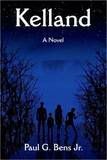
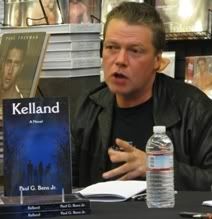
If variety is the spice of life, then Paul G. Bens Jr. is living la vida loca. Far from your typical literary success story, Bens has taken a twisting, turning path to his critically-acclaimed debut novel, Kelland (Casperian Books). With more incarnations than the book’s titular character, this former Hollywood casting agent turned film studio paralegal spent his formative years as a boy scout and an altar boy, wholesome enterprises that somehow led to career stops at as a bartender, a film producer, a file clerk, and (“for a second-and-a-half”) an actor. Even the literary leanings of the native Kentuckian – who dreams of one day living in Hawai’i – have run the gamut, with published credits that range from darker short fiction in Cemetery Dance, Velvet Mafia, and upcoming in Dark Discoveries listed alongside a 2008 gay romance/erotica novelette, Mahape a ale Wala‘au.
It’s clear while reading Kelland that this broad spectrum of life experiences has informed Bens’ writing — literary repercussions, if you will, of his wide-ranging experiential learning. Dark Scribe Magazine was curious to learn more about this emerging talent and sat down with him to discuss everything from his literary influences to the Hollywood casting couch, from the origins of Kelland to killer martinis.
Dark Scribe Magazine: Tell us a little something about your debut novel, Kelland.
Paul Bens:Kelland is the story of five different people who, for one reason or another, find themselves at a crossroads. Something in their lives is broken; something just isn't working. They know it deep down inside, they can feel it, but they simply can't face it or don't know that they even need to. Into each of their lives comes an enigmatic stranger named Kelland. But Kelland comes in different guises. He's an eight year old boy, a sexy woman, a priest, a brutal lover, and as the story progresses, it isn't clear whether Kelland is a friend, or a foe. She might be the devil or he might be a guardian angel, even some gray area in between. Kelland becomes their friend, their confidant, their lover and, most importantly their guide, forcing each one to face some very dark facts about themselves. It's a story about truth and lies and the inevitable clashing of the two. At its core, Kelland is psychological suspense, with the supernatural and a smidgen of mystery rounding it out.
Dark Scribe: Where did the inspiration for the novel come from?
Paul Bens:Kelland actually started out as a short story a number of years ago, one that I've ultimately never published. I was going through a particularly dark patch in my life and one evening I sat down and started pounding out the story of a little boy named George who was visited by another little boy, one who frightened him and yet seemed almost protective. I think the first draft of that story was done in one night, and writing it helped me to exorcise some of my own demons about what I was going through. Some friends read it and encouraged me to go further with it, to explore the themes of good versus evil and lies colliding with truth and the repercussions of all of them. Slowly, the other stories began to form, and I found Kelland as a way to force these characters to face the truth about themselves and the evil that was visited upon them.
Dark Scribe: What was your writing process routine like?
Paul Bens: I'm a bit of a loafer when it comes to writing. I wish I were more prolific than I am, but I really have to wait until a theme or idea grabs me by the throat and just won't let go. Once I find that I can't think about anything else other than this story, I simply…well, I'm not terribly successful at outlining, so I sit down and just start banging out words in long stretches. Once I'm on my way, I'm rather obsessive about it, using every spare moment to write something, my mind wandering off during the day when I'm unable to get to my computer and get something written down. I'm a night writer, generally, and not someone who can have background noises or excessive light because I am very easily distracted by outside sources. If I could write in a cave that would probably be the best thing for me. I also tend to be neurotic about the tone and rhythm of the words, so it's not unusual for me to spend 8 hours on just a paragraph or two because I need to get them exactly right. Of course, that could also be due to the fact that I despise doing numerous drafts (or I'm just plain lazy); so I try to get it as close to right the first go round as I possibly can.
Dark Scribe: Where there any unique difficulties writing a narrative told from the perspectives of five very different characters?
Paul Bens: There were some challenges, especially since each of the five characters have their own voice, story and timeline structure. Keeping the years straight required an Excel chart and the liberal use of Wikipedia to make sure that events (as miniscule as when a certain album was released or as important as the fall of Saigon) actually happened when I said they did. But as far as keeping the characters straight, their voices were so clear to me early on that I didn't have much of a problem. In fact, I actually found it quite liberating in that if I got blocked on one chapter, I could easily jump to another part of the novel and a different character. Given that I have so many "lead" characters, I think my biggest challenge was in coming up with a way to not completely overwhelm the reader from the get go with an unending roll call of characters. I wanted to make sure that when I first introduced each character, they were memorable and distinct so that no one would go, "Wait, who is this again?" Part of that was accomplished by keeping the initial chapters very, very short. Hopefully by doing that, I was able to etch the characters into the readers' minds and make them appealing enough that the reader would stay with me as I ventured into a very non-traditional structure.
Dark Scribe: Who was your favorite character to write?
Paul Bens: That's a tough one, because they were all fun to write in one way or another, but I think that Minh and Toan, who escape from Viet Nam as kids and end up in Louisville, Kentucky, were the most appealing for me. Growing up, it was me, my parents and three sisters, so I've never had that whole brother experience. Digging into that relationship was fascinating, seeing the various permutations of love and hate that pass between brothers, seeing how their relationship evolved and de-evolved as the years passed. Toan was especially fun because he's a rock-and-roller, and I'm a wannabe rock star. He really is everything I wish I was: smart, hot, rock star, hot, funny, hot…an all around good-egg. So I got to live vicariously through Toan. But if truth is told, I'm probably a lot more like Minh: very regimented, a little emotionally protective, a bit of a control freak. Not that Minh's a bad guy, necessarily; he's just got a couple of very dark ghosts to deal with. Tracey, Toan's best friend, was a hoot to write, because she is so much like so many women I know.
Calvin, Toan's boyfriend, was also a character that I loved, especially because he was never meant to be in the book at all. He was only going to be mentioned, never seen. But one day, he showed up. And then he did the next day as well. What was fun about him is that for a character that was never going to be there in the first place, he ended up playing an integral part in the plot. That was my very first (and, to date, only) encounter with that old chestnut of "characters do what they want."
Dark Scribe: There seems to be a great deal of emphasis placed on the idea of discovering one’s own truth and the truth about those around us in Kelland. What compelled you to explore this particular theme?
Paul Bens: What frightens me the most in life is what man can, and does, do to man, very often without ever thinking of the very real repercussions – ripples in the water, if you like – of their actions on others. The malleability of truth in those types of scenarios has always been something that has fascinated and disturbed me. Not just how others can twist the truth to suit their needs, but even more importantly how each of us does it to ourselves, willingly, sometimes with horrible results for ourselves as well as those we love. We all in some way or another adjust our truth, either by actively negating it through our actions, through subconscious denial or repression, or even by a willingness to accept on blind faith what others say. I have the same fascination with good and evil, especially real world good and evil. Both are so fluid, and very often what seems to be good ends up being the worst possible thing for us. Conversely, that which we find evil or horrible very often can lead to great things
I tried to play with both of these themes in Kelland. I wanted a duality of character for each of the leads, our opinions and feelings for them shifting and changing as we learn more about them. I hope that with each character – and especially with Kelland – the reader falls in love with them one moment and then despises them the next, because that is usually how life is, isn't it? We love someone desperately one minute and want to throttle them the next. With Kelland, the character, I had a tool with which to explore that because Kelland knows the truth. One moment he/she/it will try and coax it out of the characters and other times Kelland will simply rip it out of them with brutal force. Kelland will do whatever it takes – and does – because Kelland knows that the truth is all that matters.
Dark Scribe: Who are your literary influences? Which of their works most inform your own writing?
Paul Bens: Well, I think I learn a little something from just about everyone I read and probably absorb a lot from seeing their stories unfold, but the writers that I think have influenced me the most are the ones whose books I keep going back to over and over again. Armistead Maupin is a huge influence. His ease of style is just infectious and his dialog always rings pitch perfect. And when he goes dark – as he did in The Night Listener and Maybe the Moon – I think reveals himself as one of the most brilliant writers of character and human truth out there. I love Stephen King; The Dead Zone is still a book I think of often and one of my comfort-reads. His ability to give quirks to his characters but keep them very real is envious, and of course his expertise at building suspense is remarkable. How Roald Dahl would find creepiness in the most ordinary moments also stays with me.
Poppy Z. Brite is another huge influence, especially her book Drawing Blood, which I've probably read 30 times. I think I learned one of the most important things by reading her work: setting is more than just sights…it's sights and sounds and feelings and memories and, this is key for me, smells. When I read her work, I am utterly absorbed into the place and time and a simple reference to a scent will transport me there as easily as a two page description of the locale. Plus, Brite was probably the first person in the horror genre who I saw really representing gay people in a completely honest way and not just as the sidekick or the best friend or even an annoyingly introspective supernatural being.
The biggest influence, however, was probably my college professor, Dr. Ron Mielech, a brilliant playwright. He taught me the secret of knowing when to cut something out of a story and when to keep it. And I'm eternally grateful for that education.
Dark Scribe: As a new novelist, what was your biggest eye-opener about the business after the writing was done?
Paul Bens: Well, there are two things, one of which was just reaffirmed by my experience with Kelland. The first is the importance of a good editor, someone who gets what it is that you're trying to do, but who is smart enough to find and point out the flaws. I've been very, very blessed in the past with editors, brilliant people like Sean Meriwether, Stacy Taylor, and Robert Morrish, among others. They "get me" but also can easily call me on it when I'm letting the story down. I found the same with Lily Richards, my editor at Casperian Books. Boy, she knows what's needed, story-wise and structure-wise. In fact, Lily asked for a new chapter to be written for Kelland in order to accomplish a certain thing. I personally didn't really think the chapter was necessary, but I always listen to my editor because 9.9 times out of ten, they are wiser than I. So I wrote it and she was exactly right. Since Kelland was published, many readers have commented on that chapter as one that really hit them hard when further story details were revealed later in the novel.
The other thing is just how vital public relations and word-of-mouth are to small presses. I don't particularly relish talking about myself as I tend to be fairly introverted. I'm one of those people who would prefer just to let the work speak for itself. But with small press (and, I'm assuming larger houses to a certain degree), you do not have that luxury. You have to be willing to get out there and do the legwork and push yourself to find opportunities to talk about your work. It is important that long before the book comes out that you have a plan and try and stick to it. And when you run out of ideas, look a little deeper, because you never know what might work. That was the other thing I loved about Casperian…not only do they have a game plan for each release, but the require their authors to come up with their own "business plan" that goes into effect months before the actual release. I so appreciated that and every writer should remember that if the publisher has faith in you and wants your story to be read, you have to pull your own weight and do the work to make sure that it does get read.
Dark Scribe: You also have a rather interesting Hollywood background in casting. Did having to match actors with roles for a living give you any insights into creating believable three-dimensional characters?
Paul Bens: As the characters developed, I certainly began seeing certain actors fitting the roles. Mostly working actors I'd met and admired throughout the years rather than huge stars. The character of Bibi, for example, was a character I rescued from a previous work-in-progress, and I really wrote that character with my old friend and teacher Bibi Besch (Star Trek: The Wrath of Khan) in mind. I thought "this would be such a great role for her." Bibi has since passed away, and that is one of the reasons I wanted to include this character in Kelland, a sort of tribute to her. (Interestingly, Bibi's daughter is also mentioned in the book).
But I think where my casting background really came into play was as I built the characters and in keeping the underlying emotion honest and real. Though my writing almost always utilizes elements of horror and the supernatural, the emotional realism of the characters is key for me. When I was in casting and actors came in to audition, telling the good from the bad was very easy. Good actors always have a core emotional truth driving what the character is doing, a realism that may not be what my life has been, but with which I can empathize. The bad ones don't and they try to fake it. And as a casting director, I could spot that a mile away. I think it's the same for readers. They know when a writer isn't being honest. So the question I kept asking myself as I wrote the characters was "Am I faking it?" If it didn't feel honest, I threw it out. In this novel that was especially important to me given the very real horror that underlies it. And when I'd thrown out the dishonest stuff, hopefully I ended up with characters that speak to people in some way, characters that have all the depth and nuances of people in real life. That's the goal, anyway.
Dark Scribe: Any wild casting anecdotes you’d care to go off on a short tangent on? Something just a tiny bit salacious…?
Paul Bens: Hmmm…OK, I've told you this privately, so I will say that although I don't know Adrienne Barbeau other than having met her once or twice in social settings, she is one of the classiest acts in Hollywood. An amazing lady. But that's not exactly salacious is it? (laughs)
You probably wouldn't wanna hear about the actor (who later went onto fame as a chat show host) who actively hid script pages from co-stars they didn't like so that the actor would look incompetent and get fired? Or the sitcom star who had a temper tantrum one day and was found in their trailer stark naked, pounding their fists on the floor? And let's not even go into who was sleeping with whom.
Dark Scribe: What’s next for Paul Bens, writer?
Paul Bens: I have two novel length works I'm focusing on, though each is being elusive in its own way. Both are very dark, a mix of domestic horror and supernatural elements as most of my work is. Both are very much more traditional in structure than Kelland. I also continue to churn out the occasional short story and, in fact, Dark Discoveries Magazine is publishing what I consider a particularly brutal and horrific piece called "The Beheld" in their January issue.
Dark Scribe: Last question. Since your bio notes that you were once a bartender and still make a killer martini, what kind of martini best personifies you as a writer?
Paul Bens: Hmmm. I'm not a huge martini drinker myself, but if I had to pick one, it would probably be a dirty martini…smooth but with a little bite at the end. A drink that is closer to describing me is a Sloe Comfortable Screw Up Against the Wall. It's a little tart, at times almost candy sweet, warms you from the inside — and then sneaks up and knocks you on your ass.
For more about Paul G. Bens Jr., visit his official author website.
]]>The Literary ‘Birth’ of Christopher Ransomhttp://www.darkscribemagazine.com/drawing-first-blood/the-literary-birth-of-christopher-ransom.htmlDark Scribe Magazine2009-09-18T11:41:18ZNew BloodBy, Vince A. Liaguno
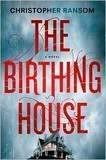
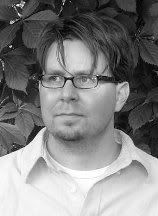
Christopher Ransom didn’t set out to write a haunted house novel. But, after the Colorado native – along with wife, Pia, and their three rescue dogs, Cowboy, Nacho, and Tater-Tot – relocated from Los Angeles to Mineral Point, Wisconsin, he found inspiration all around him. Lots of it, in fact.
Ransom had moved into a 100-year-old former birthing house, essentially a home-like alternative to hospital labor and delivery wards where women once went to give birth. This was further confirmed when the couple found an old sepia-tone photograph of a half a dozen or so maids, nurses, and midwives standing on their front porch. One nightmare later, the one-time failed screenwriter – who also did stints in hardware, reptile care, and advertising sales – spent the next three years crafting his debut novel.
Published in the UK on January 1st of this year, The Birthing House quickly reached #6 on The Sunday Times list of fiction paperback best-sellers. St. Martin’s Press wisely acquired the project stateside, and the book was released last month with a big promotional push and some impressive blurbs from the varied likes of Jack Ketchum, Jacquelyn Mitchard, and literary darling Sara Gran. Praise like this, for example, from author Michael Marshall (The Straw Men, The Intruders): “A stunning debut — swaddling the reader in dread from the very first sentence, and spiraling into a heart-stopping climax.”
Dark Scribe Magazine recently caught up with Ransom, who is currently on tour in support of the book, to talk influences, fears, and how his haunted house is an address unlike others readers may have visited and a must-read literary travel destination.
Dark Scribe Magazine: Tell us a little about The Birthing House.
Christopher Ransom:The Birthing House is primarily about Conrad Harrison, a man with a haunted history, who attempts to rectify certain major flaws in his marriage to his wife Joanna by purchasing a Victorian house that was a place for women to have their babies, back at the turn of the last century. The house turns out to be a perfect but tragic match for him. Conrad and Jo are struggling to find balance between career and domestic life, and to answer some of the questions almost every couple will wrestle with: Are we going to have children? If yes, why, how, when? If not, what’s wrong with us? As Conrad and Jo’s marriage begins to unravel, the house – or rather, the spirit that has been dormant in the house, waiting for just such a couple – begins to prey on their weaknesses, the secrets they are keeping from one another, and in particular Conrad’s simmering emotions. It’s a story about the everyday horrors of dual-income marriage, infidelity, and past relationships that leave scars, as much as it is a supernatural tale about things that go bump in the night. At least, that was the intention.
Dark Scribe: How long did it take to write The Birthing House? What was your writing process like?
Christopher Ransom:The Birthing House took me three years to write, rewrite, market to agents, and eventually find a home for at St. Martin’s Press. I was working full-time as a copywriter for Famous Footwear, which was based in Madison, Wisconsin. I commuted to work one hour each way, which left me about 2-4 hours each night to write, and I did so daily until it was finished. I spent every night between the hours of 9 pm and midnight or 2 am at my desk, as far away from the TV as I could get. I typically spent 4-8 hours writing on Saturdays and Sundays. The first draft took me nine months to complete, and then I spent another year and a half or so rewriting, restructuring, and revising every single chapter, scene, and line until I felt it was the best book it could be. I was revising and polishing the manuscript throughout my agent hunt, which lasted about four or five months.
As for what the process was really like, it was a hell of a lot of fun. I had some moments of doubt, but after writing for some 15 years, I just said, “Fuck it, I’m going to write the kind of book I wish I could find more of in the bookstores and hope for the best.” I didn’t hold much back, and it was a deliciously terrifying free fall.
Dark Scribe: What were your influences while writing The Birthing House?
Christopher Ransom: Well, I love movies, and in fact wrote eight feature length screenplays – none of which were optioned or sold – in the five or six years previous to writing The Birthing House. But I don’t know that I have any real tangible cinematic influences, though. I was quite fed up with screenwriting when I began my novel, and I tried to focus more on becoming a decent prose stylist rather than worry about plot and cinematic potential. Sure, there were some scenes in the book that felt cinematic to me, but when you’re looking at 100,000+ words in front of you, you start to realize how important and difficult the act of constructing solid, evocative sentences is.
The only two movies I have seen that approach the tone and setting of The Birthing House are The Others and The Orphanage, but I didn’t realize that until after I finished the book, and in fact didn’t even see The Orphanage until after my agent sold my book and asked me if I had seen it. I took his advice and ran out and bought the DVD, and then sat back and said, “Oh, wow, yeah that’s very close to what I saw in my head for the past three years.”
But back to the writing. In terms of style and voice or whatever you want to call it, I was probably influenced by Stephen King, in that I had hoped to keep it honest and straightforward, to tell the truth about regular people, and to emulate, if not exactly his voice, that everyman style and cast of characters, that utterly non-pretentious way with words he has. But I also read and enjoyed a lot of Clive Barker’s novels, like Imajica and The Damnation Game. I love his lyricism and the elegance he carries into the bedroom, the graveyard, pretty much everywhere he chooses to go. One gets the feeling Clive Barker finds words, as much as anything, erotic, and that’s a wonderful quality for a writer, though not many of us can pull it off the way he does—I can’t.
Another writer I admire greatly is Colin Harrison, whose prose is rich and full of wickedly smart observations about all facets of urban life and human behavior, but never bogs down the story. He’s very playful with his use of third person and close third, aka free indirect. He has the finesse and power of a boxer. He dances like Ali, and then hits you with a scene so hard you have to set the book down and wait for your head to stop spinning. I really envy his ability to achieve narrative momentum while somehow painting these characters that live and breathe, flaws and all, as well as somehow capture the throbbing pulse of New York City every time out. I named my protagonist Conrad Harrison as a reminder to myself to attempt to move him through the tale as if I were holding Colin Harrison’s pen, that’s how much I like Harrison’s novels.
Pete Dexter has a blunt fluidity in his work. His writing is graceful and simple and brave, as clean and sound as an Amish workbench. I wish I were as good as him. Mind you, I’m not saying I actually write like King, Harrison, Barker, or anyone else. I’m just saying those are some of the writers I was conscious of while I wrote my book, and being that I have reread most of their novels several times, there is a fair chance one can find traces of their style in mine, if one were to look close enough.
Dark Scribe: For jaded horror readers who’ve grown weary when they hear the term haunted house, what sets The Birthing House apart from the pack?
Christopher Ransom: That’s a great question, and one I wrestled with early on. In truth, I didn’t even set out to write a haunted house story. All I had were three characters – Conrad, Jo, and the girl next door, Nadia – and a vague sense that they would collide in interesting ways. I wasn’t even set on writing a horror story or psychological thriller, per se. But as I waded deeper into the first draft, certain elements kept coming to me. The infant’s crying and other noises in the spare bedroom. The distorted images in the window’s reflection. The almost palpable sense that something in this house Conrad and Jo lived in was wrong, something separate of them, and, I guess, separate of everyday reality. So at a certain point I had to sit back and ask myself, are we really writing a haunted house story here? Is that where this going? And, if so, what makes this original? What will be my contribution to the sub-genre that is the haunted house story?
The big answer I arrived at was birth, which sprung from this question about having children, which has been a topic of healthy debate in my real life, and the idea of birth, which I took from the house my wife and I live in. I realized every haunted house story springs from some tragedy, a death, some trauma that has left a psychic stain on the house. Well, the more I thought about it, the more I realized birth is traumatic too. It’s the other gate, the beginning of life, not the end. So, if death can open doors to the paranormal, why not birth? I kept asking myself what would a house where dozens or even hundreds of babies had been born be haunted by. And the more I played with that, the more ways I found to pit the house against my characters, to prey on their weaknesses, to use them for the birthing house’s own ends.
In addition to the birth-parenthood premise, I wanted to explore the psychological horror of infidelity in a way similar to how The Shining explored the psychological horror of alcoholism and familial violence. You know, when you’re a kid, you read all these scary books for the monsters and the blood and the far-out shit. But as you get older and your reading tastes mature a bit and you start to really think about how the best authors of horror use the genre to illuminate serious issues and real people with real problems, you start to see just how serious the heavyweights are. King did it again with Christine, using the haunted car – a premise that in lesser hands would be absolutely silly – to explore the alienation and obsession that teens and parents experience at during those high school years when adulthood is knocking on the door. Dan Simmons’s epic Carrion Comfort is one of the finest books ever written about the Holocaust and the horror people who attain absolute power inflict upon others.
Lies, betrayal, love and lust, loneliness and estrangement from the people we are closest to—these are things that scare me a lot more than ghosts. So when I realized The Birthing House was shaping up to be a horror-thriller, I made an extra effort to stay grounded in real life issues. I tried to avoid the cliché scares, of course. Or at least use them to tweak the reader in new ways. Yes, we have all read or seen the haunted house story. But every house is as unique as its occupants, isn’t it?
Dark Scribe: Who was your favorite Birthing character to write? Did any pose special challenges?
Christopher Ransom: I would have to say Nadia, the girl next door who becomes the focus of Conrad’ obsession while his wife is out of town and who serves as a living stand-in for Conrad’s lost girl, Holly, who is something of a ghost in his mind. He’s haunted by his past relationship to Holly. Nadia is nineteen and pregnant. She’s tired of living in this small town and she wants to get away from Eddie, her semi-ex-boyfriend. She’s smart, but limited in her world view. She is attracted to Conrad for his broader experience, and the desire he harbors to be a father.
She did not come to me fully formed at all. Only after the second draft did she begin to feel like a real person to me. I was only able to get into her head and make her scenes with Conrad work once I really made a serious effort to step back and write a lot of notes about her. I guess I woke up one day and realized, holy shit, I haven’t been a teenager for over fifteen years, and I’ve never been a girl or pregnant. I had to create some credible reasons for her not to run away from the birthing house, and from Conrad. She tries to do just that, in fact, but Conrad – and her own fear of becoming a single mother – brings her back. Sure, Conrad offers her money to tell her stories about what she had experienced in the house some years earlier as a babysitter. But that wasn’t enough. Her boyfriend, Eddie, was unraveling and becoming more threatening every day, becoming violent. She sees Conrad a trust-worthy adult at first, then source of advice, then a mild crush and a bit of a goofball, and eventually a possible ticket to a better life. Her parents are in denial about her situation somewhat and she is determined to take responsibility for her situation. She’s neither poor and ignorant nor fully formed and responsible.
I had to work extra hard on her dialogue, which is tricky with teen characters, because on the one hand they say inane, shallow things and think they understand everything, but on the other hand they are very intelligent and cannot be reduced to stereotypes or the tics and wardrobe of whatever personality they are trying on this season. You can’t just write a Goth or a skate punk or a preppy chick. The Goths often have plenty of self-esteem and the rich kids are just as insecure as the rest of us.
So, yeah, Nadia was difficult to bring to life, especially because she is viewed – as is everything in the book – from Conrad’s perspective. Conrad is selfish, absorbed in his problems, driven by his needs and his desires, so his vision of Nadia and everyone else is clouded. By writing in the third person and close third, I was able to keep a little distance from him and insert little revelations about the other characters he interacts with. I tried to plant clues to the reality he sometimes misses, such as Nadia’s skepticism or her frustration with him for not listening to her or not always taking her seriously. I don’t know if readers have noticed, but in many ways Nadia is smarter than Conrad. She’s pregnant; she’s already thinking like a mom, she is pretty realistic about their situation. Meanwhile, Conrad shares much in common with her immature boyfriend, Eddie, who is afraid of losing Nadia too. Conrad maybe understands this shared immaturity on a subconscious level, and despises Eddie for what he sees. Like that great Pearl Jam line, “When you hate somethin’, don’t you do it too.”
Dark Scribe: The book was released earlier this year in the United Kingdom, where it reached an impressive #6 on the London Times’ paperback bestseller list. Were you surprised by the response the book has gotten abroad?
Christopher Ransom: I was floored. My original goal for this book was to land an agent. I told my wife repeatedly, if all we get out of this is an agent, I will consider it a success. Of course I hoped it would find a publisher, but I did not expect any such thing. Then, after I landed my agent, Scott Miller, who believed very passionately that this book had more mainstream potential that some “horror” novels, I allowed myself to dream that it would find a home. Seeing my first novel in print was enough; I didn’t care about sales, and I sure as hell didn’t allow myself to dream about any bestseller lists.
My publisher in the UK, Sphere, which is an imprint of Little, Brown and Company, kept telling me the book was selling well to retail book buyers. The Sphere team did a phenomenal job of marketing the book. They really believed in it. But still, in the back of my mind, it was always just this little haunted house story. When I learned earlier this year that it was a paperback bestseller overseas, I was just stunned. It was very surreal, not least of all because I couldn’t really see it. I mean that I could not imagine it, and that I literally could not walk into a store and see it on the shelves, being that I live in Wisconsin and it was selling in the UK.
I feel incredibly fortunate. It takes a great deal of faith – on the part of agents, editors, publishers, and a whole staff of in-house marketing and sales people, as well as the merchants and the readers who actually decide to give a first-time author a chance – to launch a book. I feel pretty damn spoiled and I don’t know what to attribute it to other than people like to be scared. I knew that I had written a scary book, but you can never know if people will respond and to what degree. There are many books by authors I admire that don’t sell as well as I think they deserve to. I’m constantly looking at this author or that book and shaking my head, wondering, why this isn’t huge? Why aren’t people screaming this author’s name from the rooftops? It doesn’t always make sense.
I’ve been amazed at the fan letters I have received. People in England, Scotland, Ireland, Australia, New Zealand, Germany . . . all these places I never dreamed my book would be on sale . . . they write me these letters thanking me for keeping them awake all night and making them lock their doors! Well, I’m thankful for them for giving me a shot.
Dark Scribe: In their review of The Birthing House, Library Journal said: "As much about the terrors of humankind as it is about the supernatural, this is an exceptional debut, full of action-packed gore and carnal imagery. Ransom’s style mimics that of the early Stephen King and Dan Simmons’s horror fiction (e.g., A Winter Haunting)." Considering that both King and Simmons are credited with being huge influences on your writing, what was your reaction to reading that?
Christopher Ransom: Yes, it’s true. Dan Simmons and Stephen King are two of my favorite writers. It’s very flattering to be mentioned in the same breath as either of them, and it’s certainly helpful on the marketing front to receive a blurb that suggests fans of them might like my stuff. But let’s not kid ourselves. King has published, what, 50 books? And Simmons has published 27? Between the two of them they have enough awards on their shelves to build a Martian spacecraft.
I have published one novel, and while I am proud of it and feel that I wrote and published the book I intended, I am well aware that it’s not in league with The Shining or Summer of Night. We can talk again in 30 years and see if The Birthing House is still in print, but in the meantime, I’m going to try and remember what Dan told me just a week ago, when I was fortunate enough to spend a few hours with him in person. Dan’s a good friend of Harlan Ellison’s, and while we were on the topic of second novels, Dan quoted Harlan Ellison as saying, “Any fuckhead can write one book. Everybody’s got one book in them. Real writers prove themselves on book two, three, four, five . . .”
Dark Scribe: What’s your favorite haunted house story – and why?
Christopher Ransom: Well, I’ve already mentioned The Shining a few times. I do love that novel. And Dan’s A Winter Haunting, which shares some themes with Henry James’s longish short story The Jolly Corner. I didn’t much care for The Jolly Corner, but I love The Turn of the Screw. The Birthing House has something of a controversial ending, that is, one that is somewhat open to interpretation, like The Turn of the Screw. I’m a big fan of novels that make me think, and I borrowed that old push-pull between reality and insanity, between madness and the supernatural.
I’ve read Shirley Jackson’s The Haunting of Hill House three or four times, and there are new revelations of character every time. Ms. Jackson’s prose has such a depth and texture to it; she’s really in her own league. I’m currently rereading Peter Straub’s Koko, which is not a haunted house story, but a wonderful psychological horror novel about Vietnam and veterans of that conflict. It’s a longer novel that has many rewards.
Dark Scribe: On your website, you thank several writers for their comments and advice. How important was contact with established authors during the writing process for you?
Christopher Ransom: I’ve been amazed at the generosity of writers in general. My experience is that when established writers sense you are serious about your craft, not just out to pimp a story, they are pretty free with their advice. Scott Nicholson gave me a lot of confidence when I needed it. He read an early draft of The Birthing House and responded favorably but with serious notes. Jacquelyn Mitchard is a writer who works with a colleague of mine, and she was open to giving my manuscript a look. I thought she might give me a tip or two; I did not expect a blurb, and she gave me a killer blurb. I told her I would wash her car and mow her lawn — and I was only half-joking. My father-in-law just so happens to be Robert Gandt, former Navy pilot and author of some dozen non-fiction books and novels. He read my manuscript and told me to cut 20,000 words, which probably saved the book. Peter Blauner is a writer I emailed years ago as a fan, because I have enjoyed his work since I was in college. I appreciate the high bar he sets for himself with every book, and he gave me some advice and a blurb, which is incredible considering how busy he is with research and writing and the rest of life.
Well, we’re all busy these days. I think writers want to see other writers with actual talent succeed. We all want to see better books on the shelves. I always approached other writers with respect for their time and never asked for more than was offered, if that makes sense. But yes, receiving blurbs and even simple encouragement from established writers does wonders for the confidence, and we need confidence, especially during that phase between writing the book and attempting to sell the book. But I should add that I did not approach these folks until after I had done everything I could to make the book the best it could be, on my own, and after more than a decade of writing. Professional writers aren’t looking to hold hands and solve obvious problems, but they respect people who have put in the years of toil required to become a writer.
Dark Scribe: Out of all the writers who offered their time and wisdom, who gave you the best piece of advice – and what was it?
Christopher Ransom: Wow, that is very difficult to pin down. After reading dozens of books on writing and reading hundreds of interviews and blogs and posts on the forums and essays and all the rest, there are simply too many things that need to be digested for me to say this was the one thing. But since we’re talking about my first novel, I guess I will say that Stephen’s King’s advice in his book On Writing was very helpful, specifically the part about not looking back. He says something in there about clearing off the desk, forgetting about the dictionary and thesaurus and grammar books, and just telling the damn story.
The prospect of writing a first novel is so daunting, it can be helpful to dive headlong into it and try not to pause and look back, as King says, “allowing doubt to creep in. Doubt is poison to the writer.” Something like that. I agree. I knew that no matter how rough my first draft was, I could fix it, but first I had to have a draft. This ties into the obvious thing that writers of many levels tend to forget—that writing isn’t about talking about writing, or plotting, or outlining, or pitching, or joining writers groups and wringing our hands. It’s about writing. Writing, writing, writing.
Dark Scribe: The inevitable question: what are you working on now?
Christopher Ransom: My second novel is shaping up to be another horror-thriller that walks a fine line between the psychological and the supernatural. It deals with loss, identity, addiction, and – to some degree – guilt and the responsibility we owe to the people we love. I know that sounds terribly vague, but I can’t really reveal anything specific right now. For one, my publishers would probably be pissed. For another, I am superstitious about talking about the work too much before I am finished with a solid, working draft.
I can say that it begins in a house that seems to be haunted, but spirals out from there, and that it is ultimately not a haunted house story at all. It’s not set in Wisconsin. It takes place in West Adams, the historic neighborhood in Los Angeles where my wife and I lived for two years, and then moves east, to an abandoned gated community near Palm Desert, and eventually to a final retreat in Colorado. I guess you could say I am trying to show that sometimes you can leave the haunted house, but that which haunts you can just as easily follow you anywhere, and eventually there is a reckoning, or, in the case of my second novel, a horrific struggle for survival.
Dark Scribe: Any worries about the dreaded sophomore slump? If so, how do you keep those anxieties at bay?
Christopher Ransom: Sure, great, thanks for bringing that up! (laughs) I think the scariest thing is time. You have your whole life, or at least years and sometimes decades, to write your first novel. You can tinker with it and grow with it and feed it over a longer period. I am fortunate enough to be under contract for more books, but there are deadlines now, of course. So the challenge becomes not so much how much can one write in a day, but how many decisions can be made in a day. I think a lot of writing a novel is the act of solving problems and answering questions. Making choices — thousands upon thousands of choices. I can write 20 pages per day if I glue my ass to the chair, but that doesn’t mean I am making the 50 or 100 most important decisions that need to be made that day.
The only way I know to keep these anxieties at bay is to do the work. Put in the time. Continue to read better books. Never stop studying. It’s like impotence and writer’s block. Better to not even think about these things, or think too much at all. Just shut up and write.
Dark Scribe: What’s one thing readers would be surprised to know about Chris Ransom, the average guy?
Christopher Ransom: I’m not that dark in real life, just on the page. I’m a funny guy, or at least my neighbors and wife think so. I used to write comedy. I actually think there is a decent undercurrent of humor in The Birthing House. Some of it is supposed to be funny, in a very dark way. Hey, I’m a mellow dude. I don’t even smoke pot, but people often think I am stoned because I speak slowly. I live a very casual life. I read, I write, I cook. Love to cook ethnic food. Give me a good meal, two pints of Guinness, an episode of Mad Men or Friday Night Lights and ten hours of sleep, you won’t hear me complain much.
The ghosts and insanity and murder and obsessive lust and foul mouthed characters . . . I don’t know where all that comes from.
For more information on Christopher Ransom, visit his official author website.
In His Own Words: Hear Christopher Ransom explain the origins of The Birthing House...
]]>Introducing the Evolutionary Horror of Warren Fahyhttp://www.darkscribemagazine.com/drawing-first-blood/introducing-the-evolutionary-horror-of-warren-fahy.htmlDark Scribe Magazine2009-08-12T15:32:53ZNew BloodBy, Vince A. Liaguno
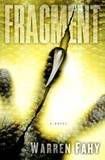
Few first-time authors shoot faster out of the gate than Warren Fahy. Fragment, his debut novel, is a science fiction-horror-thriller hybrid that’s quickly become the buzz book of the summer. With across-the-board raves from venerable review outlets like Publisher’s Weekly, Wall Street Journal, and the Library Journal, Fragment is being hailed as a modern-day variation on Jurassic Park, its author a worthy successor to the late Michael Crichton. Heady stuff for a fledgling dark scribe indeed.
But if the world at large views Warren Fahy as an overnight success, the writer himself chuckles silently with the knowledge that it took 27 years to arrive. Having done stints as a bookseller, database editor, statistical analyst, and video game scribe, the San Diego-based Fahy knows a thing or two about determination and perseverance. His first two novels – both of which he categorizes as his attempts at the Great American novel – failed to catch the interest of publishers, so the weekend naturalist turned his attention to commercial fiction. The result was an exploration of a twisted ecosystem with a giant evolutionary hypothesis at its center: what if a fragment of Earth’s development veered off on its own course and was able to advance – unseen and uninterrupted by human involvement – over millions of years?
Now, with Random House throwing a promotional budget behind the book (including a series of webisodes) many seasoned writers have never seen and merchandising on the way, news of a big-screen Hollywood adaptation seems moments away. Dark Scribe Magazine wanted the scoop on this emerging talent and sat down with Fahy during his whirlwind promotional schedule to learn more about this scary otherworld he’s created.
Dark Scribe Magazine: Tell us about Fragment.
Warren Fahy:Fragment is an adventure novel in the tradition of Conan Doyle’s The Lost World or Jules Verne’s Mysterious Island updated with modern science, reality television, and lots of very scary monsters. As a lifelong science buff, I set out to write a novel that was pure fun, discovery, and suspense with the fate of the world hanging in the balance as two worlds head for a cataclysmic collision. And I wanted all of it to play out with the verisimilitude of a Discovery Channel documentary.
Dark Scribe: What was your inspiration for the novel?
Warren Fahy: I have always been enraptured by the life we share our planet with, which, as new discoveries are made, is always staying way out ahead of our imagination. The dynamo of evolution endlessly generates incredible life forms and discoveries are being made every day that simply boggle the mind. It occurred to me that, with space travel so forbiddingly difficult and the possibility of realizing it so far flung into the future, why not take a fragment of life on Earth on a separate trajectory for hundreds of millions of years and create an alien world right here in our own backyard.
Dark Scribe: Who was your favorite character to write?
Warren Fahy: Thatcher Redmond is an opportunist who smuggles in his own agenda while disguised as a paragon of virtue and a crusader for the planet. In this sense, he resembles an angler fish, who dangles a juicy worm that is irresistible to the less devious fish around him and then consumes in one gulp any who rise to the bait. But it’s a toss-up for me, which was my favorite, because I really enjoyed writing Cynthea, the desperate reality show producer. She’s a survivor who realizes she’s becoming extinct as her biological clock runs out and will do anything to survive in the eat-or-be-eaten jungle of the Darwinian television business.
Dark Scribe: The novel has generated some impressive reviews, with comparisons to Jurassic Park and more than one mention of you being a worthy successor to Michael Crichton. As a first-time novelist, do you worry about such comparisons coming so early in your career?
Warren Fahy: Wow, good question. I am taken aback by it, of course. My focus is more on biology than technology, but I understand the comparison to Jurassic Park, of course. The story is set on an island populated by monsters, though the world is utterly alien and has nothing to do with the meddling of humans. Crichton did pioneer the modern science thriller and I owe him a debt of gratitude for writing such enjoyable books. I read The Andromeda Strain when I was 13, and Jurassic Park and The Lost World, when they came out, and I found them to be absolutely thrilling and wonderful. I think there are differences, of course—we evolved along very different paths as writers. Obviously, his passing left a huge vacuum people are eager to see filled.
Dark Scribe: What was your writing process like? Were you a full-time writer during the period you wrote Fragment?
Warren Fahy: I was a full-time writer, writing story and dialogue for Rock Star Games’ Red Dead Revolver and character dialogue for Wowwee Robotics toys. So I would write spaghetti western dialogue or character comedy all day, then work on Fragment all night. Then drop dead to sleep for two days a week. A lot of research was involved as I wanted to go as far out as I could and still not compromise the sense of absolute reality, so that involved a lot of research and consultation with biologists, geologists, artists, etc. Since I was not working with dinosaurs or something everyone could automatically accept as real, the challenge was to make them feel just as real as something you might find under a rock.
Dark Scribe: How informative was your experience as a video game writer on the process of novel writing?
Warren Fahy: I wrote about 700 pages of dialogue for Red Dead Revolver with David Ferris, and it all had to be punchy and fun and funny, or colorful and compelling and dramatic, and I also had a hand in organizing the entire story from what had started with very different sensibilities, originally. So it was good practice for setting scenes in motion to propel the story forward and for keeping things to the point and on target throughout. It was a great experience for a journeyman writer, and the guys at Rock Star are serious pros so we got along fine. I was happy to see the game outdo expectations and look forward to what they do with the sequel.
Dark Scribe: There are some impressive evolutionary theories at play in Fragment. How much research went into the book to make these come across as credible as they do?
Warren Fahy: Lots. The more effortlessly that comes across in the reading, the more effort went into the writing. It was important for the character of Geoffrey to be a modern-day Professor Challenger, which is not an easy thing to do now that science has progressed so far since Conan Doyle’s time. So he had to advance theories that took the reader out of the comfort zone to stretch the brain and get everyone inside the mind of a biologist, but the theories themselves had to be credible enough to be dreamed up by a scientist in the modern day. The goal was to bring the reader to a state of understanding the forces at work in evolution, how certain facts of life like sex and death can play an enormous role in the shaping of life itself. Once the dynamic forces involved were explored so that readers could get the hang of thinking out on the edge of theory, they would be limbered up for the dash across Henders Island. And hopefully never look at the world around us the same way again.
Dark Scribe: Who are your literary inspirations (authors and works)?
Warren Fahy: My favorite book is Les Miserables by Victor Hugo, but I love everyone from Raymond Chandler and Charles Bukowski to Martin Amis and Hunter S. Thompson. Love Ian Fleming, and Flaubert, and Asimov and Tolkien and Eco. Conan Doyle’s Sherlock Holmes fed my brain as a lad, love some Hemingway to death. The Fountainhead was a formative book when I was a young writer. I recently finally finished The Odyssey, and before that The Argonautica, which could be said to be the first books ever in the genre of Fragment, in terms of monster islands. And I can’t leave out Mark Twain.
Dark Scribe: Clearly, the book is Hollywood-bound. Having a bit of fun, slip into our make-believe casting director’s chair and tell us who you see playing your various characters.
Warren Fahy: Oh, that’s always fun. I can’t speculate about Hollywood too much. It’s like predicting the weather in London; just bring your umbrella. What I can say is that I imagined certain people while I was writing Fragment. I thought of John Hurt or Brian Cox as Thatcher Redmond, Sigourney Weaver or Annette Bening as Cynthea, Will Smith as Geoffrey, Andy Dick as Andy. A young Scott Glenn as Zero, Bruce Campbell as Briggs, Nell as a mix between Jodi Foster and Julianne Moore, and heck, since we’re dreaming, Sean Connery is Captain Sol!
Dark Scribe: What are you working on now? Any plans to revisit Henders Island in the future?
Warren Fahy: I’m actually writing the sequel now, though Henders Island itself won’t be a location. Which is bad news for the planet, I’m afraid…
For more information about Warren Fahy, visit his official author website.
]]>From Gypsy Lore to Lobotomies: Meet Lisa Mannettihttp://www.darkscribemagazine.com/drawing-first-blood/from-gypsy-lore-to-lobotomies-meet-lisa-mannetti.htmlDark Scribe Magazine2009-05-11T15:15:06ZNew BloodBy, Vince A. Liaguno
“I live in the house I grew up in which I inherited after my Mom passed away and she haunts it...but I rather like that,” Lisa Mannetti says as DSM settles in for a chat with the author of The Gentling Box. In fact, Mannetti is full of unabashed candor about hauntings and psychic experiences.
It’s this frankness coupled with a scholarly background in 18th and 19th century English literature that informs her Bram Stoker Award-nominated debut, in which the fledgling scribe conjures a magical gypsy mythology steeped in historical fiction.
In her first interview with DSM, Mannetti dishes on how childhood fears came to inform her writing, palling around with Stephen King’s assistants, and who followed her home from Lizzie Borden’s house.
Dark Scribe Magazine: Tell us all about The Gentling Box.
Lisa Mannetti:The Gentling Box is set in 19th C. Hungary and Romania. The protagonist, a half-gypsy horse-trader named Imre, realizes that in order to save his wife and his daughter he must do the one thing he’s sworn he’d never do — which is to ‘gentle’ them. In fact, Imre has never even ‘gentled’ a horse — which involves using a wooden and metal device which essentially lobotomizes them.
When the novel opens, he is suffering from a fatal disease — glanders — which is essentially a flesh-eating disease which afflicts both horses and humans. His wife, Mimi, has been ‘taken over’ by a choovahanee or sorceress named, Anyeta. Mimi has been struck mute and believes she has become some kind of animal; all her own gypsy magic has fled and she is begging him to use a Romany talisman known as the hand of the dead to cure himself and to save their young daughter, Lenore. Imre knows that to claim the hand of the dead will mean that unless he wants to suffer undying torment, he will also have to be “gentled.”
Three or so pages later, Imre, not sure what he will do and, knowing he is dying, begins to narrate the intricate story that has led up to this horrendous situation.
Imre loves his wife and his daughter deeply, yet in the year he tells us about before we go back to the “present” and discover what he decides to do, we see him seduced by a childhood love and engaging in wild and passionate sex, watching his small circle of friends beset by the sorceress and trying to find a way out from under the extreme pressure he experiences.
It’s a horror novel with many supernatural events, but it’s realistically written and I’ve been told it’s a page-turner that hooks the reader right from the outset. It also has moments that have been deemed “gross” and my first agent actually lost her lunch...literally. That said, it’s also written with the discerning reader in mind and it’s literary to the extent that I paid very careful attention to the language and to character development and to details. It also contains many poignant moments that might just make a reader reach for the Kleenex.
There are no punches pulled: the novel is fully resolved and the final chapters pick up the threads Imre wove from the outset.
Dark Scribe: How did the idea for the book come about?
Lisa Mannetti: I’ve always been afraid of gypsies. [It’s] a childhood fear my mother sort of encouraged (laughs), including dressing me up as gypsy for several years running on Halloween and telling me to watch out for a certain house where gypsies lived because they stole children – abandonment issues are sort of a big in my family – but I was also mesmerized by the play Equus in which the horses’ eyes are put out and equally intrigued by the fact that Tennessee Williams (my favorite playwright) was horrified by the fact that his sister, Rose, was lobotomized at a time when surgeons and psychiatrists did not really understand the full impact of what was being done to the patients. I also had a friend in high school whose mother was a nurse and whose father was a doctor, and this poor woman endured many shock treatments. At that time there wasn’t a very good gauge of how much treatment is effective and how much treatment would result in a damaged personality. It terrified me as a teenager, especially since I thought her husband, as a physician, was on the cutting edge. He was on the cutting edge all right....but this formerly-brilliant nurse was reduced to the human equivalent of rags.
Dark Scribe: There’s quite a bit of buzz about the authenticity of the world you create in The Gentling Box. How much research went into the book and what was the research process like?
Lisa Mannetti: I did a lot of research, but I have a Masters degree in 18th and 19th Century English literature from Fordham University and basically every paper we turned in had to be original work that could potentially be published…so I like research and I’m used to it. But I like it to filter down into the book or story so that it doesn’t feel extraneous. I like to make the “history” part of the current action and, while it’s ancillary to the story that’s being told at rocket-sled pace, it contributes another level of intrigue and interest to what’s going on with the characters and the story itself.
On a lighter note, I was living in Dutchess County when I wrote this book and the librarians were hunting up sources from the smallest libraries in the system, from Vassar College to Westchester and NYC to supply me with books about gypsy culture, language and 19th century Hungary and Romania. I probably only used about ten percent of what I learned, but I sure as hell enjoyed reading up on the other ninety percent!
Dark Scribe: The book is garnering some excellent reviews. Do you find this type of praise intimidating in terms of crafting a follow-up?
Lisa Mannetti: I think every author worries about that. Realistically, there have been some great books out there that were one shot deals: But would anyone say they’re sorry that Harper Lee produced To Kill a Mockingbird? You have what you have in you; you do what you can do.
I brought the book I’m working on now, The Everest Hauntings, to a boot camp session sponsored by Borderland and I was told by one of the instructors that I have created something completely unique, something that has never been done before.
That’s plenty for me to have faith and keep writing and rewriting and keep going. I’m obsessed with Everest and have been for years and own and have read more than 50 books on the topic and anything else that is remotely related.
Sometimes weird coincidences pop up; when I was reading K2 The Savage Mountain for background, I discovered that one of the climbers who was supposed to go on the trip in the 1950s died on another mountain just months before the expedition. Richard Burdsall grew up in my town and my father worked for his father. It never occurred to me, but ironically, on my daily walks, I pass a street named for him and his family.
Dark Scribe: Which was your favorite Gentling character to write?
Lisa Mannetti: Wow. This is a toughie because my initial agent on the book who repped some pretty cool writers had me rewrite it completely, at which point I tossed everything but the idea of gentling, the concept of gypsies and the co-mingling of Romany culture with the ‘hand of the dead.’ I mean, it all went. Every bit. I even changed the character names. I can’t actually narrow it down to one...but I will say my faves are probably Imre and Constantin (a clairvoyant). But, I do like all my characters...Anyeta, because she is so evil, was also a great character to work with. Ditto Zahara, who seduces Imre.
Some of my characters do despicable and very manipulative things...but that’s what draws me – and hopefully – the reader.
I’m lured by the dark side. Someone like Bernie Madoff gets right under my skin....think of him pretending to be friends with all those people all those years and wielding enough power and charisma to draw in someone like Elie Wiesel. Blows my mind.
Dark Scribe: Write the book and edit later, or edit as you go? Which approach works best for you?
Lisa Mannetti: Each book has its own mandate. You have to do whatever works for you at the time to get this book down. Sometimes you need to tinker — your mind is actually taking a break from the big picture and keeping you plugged into the story while your subconscious works out the next set of details. Sometimes you need to zoom ahead. I’ve been known to get up in the middle of the night and go jot down a paragraph I believe at the time is essential. In my experience, there is no one way, not even for any particular writer. It’s the story and the book that demand a response from you as a writer. And the story and characters and the book have their own way of letting you know how to tell it. The story inside the book will also let you know when you are on target and you can zoom ahead.
Dark Scribe: We heard through the grapevine that you’ve got something of an obsession with famed axe-murderess Lizzie Borden. Any plans on channeling that fascination into a future project?
Lisa Mannetti: Lizzie is always in the back of my mind. I have a non-fiction article that was published in Spooks! (Twilight Tales) which garnered an honorable mention in one of the Year’s Best Fantasy and Horror collections and which I’m very proud of. I have been obsessed with Lizzie since I was about 19...thanks (again) to my mother who bought me a terrific and well-written book at a Vassar book sale by Victoria Lincoln. In fact, the first time I went to visit the Lizzie Borden House, I was driving along with two companions in my car I’d never met — two women who showed up for coffee and doughnuts for Necon one year and who decided, like me, they should skip miniature golf and scuttle through the shadows on the dark side by visiting Lizzie. As I was driving along and asking where they hailed from they mentioned Bangor, Maine. I wanted to know if they ever saw Stephen King around town: They turned out to be Stephen King’s assistants — and that was pretty wild for a suburban Catholic school girl. Anyhow, I have been back many times, and, yes, I do have psychic experiences when I visit and many of them have been very odd and sometimes scary as hell. I have a short story on my Chancery House website about one trip, and I’m sure there’s at least a Lizzie novella cooking down the road. After all, she has followed me home on more than one occasion and I love writing about her.
Dark Scribe: What do you do when you’re not writing?
Lisa Mannetti: First of all I read...I cannot go to sleep without reading. This is a habit I had in childhood and when my parents would come upstairs after the 11:00 news, I would turn out the light in my room and read with a flashlight under the covers until they were asleep and I could turn on my bedside lamp again. Even as a kid I often read till the wee hours. I also sneaked reading fiction during the day by hiding paperback copies of Wuthering Heights, Frankenstein, and Dracula inside weightier textbooks like geography, world history and earth science. But I also paint and I sculpt (clay) and am psyched because am taking a new clay course this summer. I really like being around people so I tend to be very social after the day’s work is done, whether it’s visiting with friends or yakking on the phone.
I also really like visiting other places. I’ve travelled a lot with my Dad since my stepmother passed away in 2004, but I also lived on my own in an apartment in Venice (off season — no tourists) for four months and taught myself Italian. I shopped with the locals for pesce and verdure and carne and it was in 2000 when the dollar was so strong that it actually cost me less to live there than at home.
I’m a great walker, but I haven’t been good at any “sport” since grammar school when I was the best jump roper in the class (laughs).
Dark Scribe: What’s ‘The Chancery House’ and how did that endeavor come about?
Lisa Mannetti: In 2002, there were some very interesting sites suddenly appearing on the web. Hard to believe it’s already ancient history! Anyhow, I wanted to create a virtual haunted house. I wrote a YA novel called The New Adventures of Tom Sawyer and Huck Finn that was inspired by these two wonderful cats I had — Tom and Huck. In the book, they are cats who are reincarnated as familiars to a witch, and when she loses her powers they ‘help’ out by opening an inn called — you guessed it — The Chancery House.
The book itself is very “Twain-like” – of course you know Twain loved cats – and the site offers everything from a virtual haunted house, to free Tarot Scope (a skill I picked up writing The Gentling Box) to horror fiction, links to horror writers, free gothic e cards (I do all the photography and graphics); cemetery art (photos I’ve taken at cemeteries around the world) and a whole lot about the Lizzie Borden House.
When I first started, Gina FioRito, a friend of mine, really got me going because I knew nothing about how to design web pages and she got us up and running. I pretty much maintain all nowadays, but as much as I love the site and we’ve had 3.5 million visitors (I use Stat counter so forget whatever the website says because it resets all the time [laughs]) it is taking a back seat to my writing.
Tom, the wittiest cat in the world, and Huck, the sweetest cat, inspired both the book and the website. They were both smart as hell and very mischievous.
Dark Scribe: What can you tell DSM readers about your next project?
Lisa Mannetti: Well, my current agent is shopping a macabre gag book I did called 51 Fiendish Ways to Leave Your Lover. Glenn Chadbourne did the illustrations and it’s a very funny book. Essentially, it draws on the humor we experience when we’ve been dumped or have wanted to get rid of someone who has driven us to the brink. Glenn is just amazing. He did 51 illustrations, plus the cover, in record time. He and I have been working on a Tarot Deck for a few years called The Tarot of The Brothers Grimm (with Robert Dunbar as co-author).
I’ve also served recently as guest editor for Terrible Beauty, Fearful Symmetry (DarkHart Press) that should be out any week now, and we have some wonderful stories from James A. Moore, Edward Lee, Hal Bodner, Angeline Hawkes, Lisa Morton, Weston Ochse, Matt Warner, John Everson and lots of others. The cover was done by Daniele Serra and it’s just stunning. The intro is by David Thomas Lord.
Mostly though, I am thinking and working on The Everest Hauntings, my next novel — which is a ghost story.
Dark Scribe: Best moment so far in your writing career?
Lisa Mannetti: Well, I have two: Finishing The Gentling Box after my former agent made me rewrite it; and being nominated for a Stoker Award. I truly almost fell out of my chair when I read the HWA newsletter!
For more information on Lisa Mannetti, visit her official author website.
]]>The Chronicles of Joel Sutherland, Act One: The Ice Storm Comethhttp://www.darkscribemagazine.com/drawing-first-blood/the-chronicles-of-joel-sutherland-act-one-the-ice-storm-come.htmlDark Scribe Magazine2009-02-08T17:48:28ZNew BloodBy, Vince A. Liaguno
If there’s a future how-to manual on entering the fiction market properly, Joel Sutherland is the guy to write it. The quiet, unassuming dark scribe is the epitome of manners and grace, deft at self-promotion without crossing over into overzealous territory. And while many authors start out all polite thanks and humble gratitude only to see that congeniality ebb over time and with success, one suspects Sutherland will actually remember where he came from.
But don’t let this mild-mannered librarian’s boy-next-door looks and matching good manners fool you. When he’s not staging a lively storytime for toddlers at the Canadian library in which he works surrounded by his literary inspirations, he dips his writing quill in blood. Yes, beneath the clean-cut appearance and genteel demeanor lurks a darkness — one that he’s channeled into Frozen Blood, his well-received debut novel from Lachesis Publishing.
Sutherland recently sat down with DSM to chat about his unexpected freshman success, letting go of literary inhibitions, and how a communicable viral disease is credited with his foray into writing.
Dark Scribe Magazine: Tell us about your debut novel, Frozen Blood.
Joel Sutherland: I've been having difficulty pining Frozen Blood down and defining it lately — every day I think of it as a different type of novel. It's a haunted house story, a tale of the apocalypse, an eco-thriller – global warming is a hot topic these days (laughs) – a book about revenge and greed and grudges and addiction and insanity and survival and cabin fever...
The one thing that it is, above all else, is a novel about family. Families that tear each other apart and then, hopefully, find the strength and courage to build them back up. The family members in Frozen Blood do some terrible things to each other, but the challenge was to make them likable, or at least relatable. Of course, this is a horror novel, so things don't necessary end that well between them. When I tell this to my own family, by the way, they look at me with pure horror on their faces, and then someone inevitable asks, "Um, people aren't going to think this is how we treat each other, are they?"
They don't like it when I smile and laugh without answering.
Dark Scribe: What was the inspiration behind the book?
Joel Sutherland: Back in the 90s, my hometown, Ottawa, was crippled by a storm so huge it requires capitalization: the Great Ice Storm. A state of emergency was declared when five inches of ice coated the city, causing trees, roofs and power lines to collapse under the weight. My house was without power for more than a week, while some people in remote locations were without power for over a month. The military was called in, we were advised to stay indoors, school was cancelled for seven days, and canned goods and generators flew off the shelves. In total, there were 35 deaths, 945 injuries and 5 to 7 billion dollars in damages as a result of the storm.
To a seventeen-year-old kid in his last year of high school, it felt like the apocalypse. It was exciting, scary, and incredibly beautiful — seeing everything encased in ice was like a scene out of The Chronicles of Narnia.
I like to think of the storm in Frozen Blood as the Great Ice Storm on speed.
Dark Scribe: How long did the book take to write? What was your writing process like?
Joel Sutherland: The entire process, from conception to publication, has been close to three years. I initially wrote a short story about a family trapped inside during an apocalyptic hailstorm and sent it to Lachesis Publishing for an anthology they were publishing. They turned it down because it didn't fit with the style of the other stories, but enjoyed the idea enough to ask if I'd be interested in extending it into a novel. The trick was turning 3,000 words into 80,000, and for a while I wasn't sure how to do it, but fortunately I had enough of those 'aha!' moments spring into my mind to structure a satisfying novel.
I'd say I spent about a year and a half outlining, writing, and rewriting the novel, then another year and a half editing it, going through numerous drafts. My editor, Louise Bohmer, was instrumental in this process. She's also – as anyone who has met her will attest – a fantastic person, and the book wouldn't be the same without her input.
I wish I had more of a set writing process, as some of my writer friends do, but I'm much more of a play-it-as-it-comes kind of guy. I try to write every day, but sometimes that means writing in the morning, sometimes in the evening, and other times I awake in a cold sweat, middle of the night, and race for the nearest computer/notebook/scrap of garbage to jot down a few ideas or even write an entire chapter. When inspiration calls, you've got to answer.
Dark Scribe: Who was your favorite character to emerge from Frozen Blood?
Joel Sutherland: Easily, the main character, Tara, but I'll admit that's a tough question. Here's the thing: none of the characters in Frozen Blood are perfect. None of them always say the right thing at the right time, none are without flaws, and certainly none are angelic. But that's life. Messy and difficult. Very little black and white, but plenty of gray.
That's not to say that the characters are completely unlikable, or that there's no one to root for. Some reviewers have mentioned that they were amazed that the book not only has a sympathetic protagonist, but a sympathetic antagonist, as well. That was music to my ears. You hate some of the things they do or have done, but you don't hate them altogether. Tara, my favorite, is so beautifully screwed up that I can't help but feel sorry for her, desperately wanting her to pull everything together in time.
Dark Scribe: The book has generated some very good buzz, even qualifying for the preliminary ballot in the Bram Stoker awards. Surprised?
Joel Sutherland: Beyond words. Although it's not a nomination, appearing on that list is easily the highlight of my writing career to date. Writing can be such a solitary pursuit, and often it's impossible to read one's own work objectively. I have stories I love that have yet to be accepted, and stories I've felt were good – but not my best – that have not only seen publication but have received glowing reviews and feedback. It's hard to guess how readers will respond.
I'm very proud of Frozen Blood, and I have a lot of faith in it. It's amazing that people are digging it. The buzz, the reviews and the preliminary ballot achievement have made me sleep a little easier at night, to say the least.
Dark Scribe: Writers tend to be their own worst critics. Do you tend to see the flaws in your own work?
Joel Sutherland: Yes, and once I've spotted a flaw, it's all I can see! Have you ever read interviews with movie stars who said he/she couldn’t bear to watch their own films? I've tried that with my writing, and man, have I ever failed in spectacular fashion! Try as I might to ignore it, it's not long after my contributor's copy arrives that I'm pouring over every word of my own work.
After some consideration, I think those movie stars are liars.
Dark Scribe: What was the biggest obstacle you’ve had to overcome with your writing?
Joel Sutherland: There have been many lessons learned and obstacles overcome over the years, but the biggest one that comes to mind is learning to free my inhibitions while writing. There are things that happen, characters' thoughts, and language used in Frozen Blood that I blush when I picture certain family members, friends and co-workers reading it. I had to constantly remind myself that this is a horror novel, through and through, written for horror fans, and to ignore the voice in the back of my head trying to tone down some aspects and censor others. Hopefully people that know me personally will be able to separate 'Joel — husband, son, brother, friend, librarian' from 'Joel — horror author', and realize that I'm not as crazy as that book might make me seem!
I've often told people close to me that I don't expect them to read it — but they better well buy it!
Dark Scribe: Which writers do you most admire or draw inspiration from?
Joel Sutherland: The list is a long one and is constantly expanding, so I'll mention a few of the writers I've recently discovered and their books that I've drawn inspiration from. John R. Little, author of Miranda and recent winner of [DSM's] Black Quill Award. Gregory Lamberson, author of Johnny Gruesome and another recent winner of the Black Quill Award. Sarah Pinborough, author of The Taken. And Gord Rollo, author of The Jigsaw Man. I have no doubt Pinborough and Rollo will one day be honoured with a Black Quill Award.
Dark Scribe: Tell us about your background and a little about a day in the life of Joel Sutherland, working librarian.
Joel Sutherland: I grew up in Mississauga and Ottawa, played a lot of baseball, collected a lot of comics, took part in a lot of snowball fights and hid under a blanket during a lot of horror movies. I guess you could call mine a typical childhood, and a good one to boot. Nothing traumatic happened to push me into horror writing, as I hear so many reporters ask of horror writers.
Once I realized that I was far too, um, Canadian to make it as a professional baseball player, I turned to another one of my loves: film production. I entered the Film Production program at York University in Toronto, had a great time, and graduated with dreams of landing a string of jobs in the industry. As it turned out, I graduated just after the SARS outbreak hit Toronto, shutting down most of the American productions in "Hollywood North". I had one job, dolly grip for a WWE commercial, and that was it. To pass the time I wrote more fiction than I ever had, and that led to me getting published. It was an unusual path, but I'm thankful for it.
Shortly after graduation I was hired as a librarian and haven't looked back since. Although it can be challenging for a bibliophile to work while surrounded by books — kind of like an alcoholic working in a liquor store — it's a dream job. I discuss books with other bibliophiles, place the best books into the hands of reluctant readers, assist the public in all avenues of information gathering, and even run a weekly Family Storytime. One day, a teenage boy wandered up to my desk and asked where the "classics" were kept. I explained that classic literature would be found with all the other fiction books, organized alphabetically by author's surname. I then asked if he had any author in mind, expecting him to say Jane Austin, Charles Dickens, Ernest Hemingway, someone of that sort.
He looked at me straight faced and answered, "Yeah, Stephen King." That was priceless.
When I'm not working or writing, my interests lie in spending time with my wife, Colleen, and our Goldendoodle who doesn't know he's a dog, Murphy. Somewhere in the cracks of my free time I try to cram in some schoolwork—I'm close to completing a Masters in Library and Information Studies by correspondence from the University of Wales, Aberystwyth. I'm busy, but I’m happier that way.
Dark Scribe: What’s next on the literary horizon?
Joel Sutherland: A few of my short stories, as well as my first audio podcast, will appear in anthologies and magazines in the coming months. I worked on polishing Frozen Blood to a high sheen as close to the release date as I could get, so I haven't had much time to work on my next project yet. I'm currently outlining three novel ideas, so it will be exciting to discover which one emerges as my favourite. I've also been bouncing ideas back and forth with a talented and successful friend to co-author a novel. However, I think the very next project I'll tackle is a novella idea I'm rather fond of.
Like I said, busy. But happy.
For more about Joel Sutherland, visit his official author website.
]]>David Jack Bell: ‘Condemned’ to Successhttp://www.darkscribemagazine.com/drawing-first-blood/david-jack-bell-condemned-to-success.htmlDark Scribe Magazine2008-01-07T16:36:22ZFew emerging writers can stake claim to blurbs from the likes of David Morrell and Jack Ketchum - especially for their debut novel. But newcomer David Jack Bell can proudly do just that, with praise coming in from all directions for The Condemned. DSM wanted to meet the buzz-generating Dr. Bell and get the scoop on what promises to be a meteoric rise to stardom in the horror genre.
Dark Scribe Magazine: To start off with, tell us a little something about The Condemned.
David Jack Bell:The Condemned is an urban horror story that takes place in a decaying, dying city. My protagonist, Jett Dormer, works in the city collecting abandoned cars that are then turned into scrap metal to fuel the nation’s war effort. When his work partner and best friend is killed on the job, Jett has to live with the guilt and decide whether or not to go back into the city and recover his partner’s body. It’s a story about the choice between the obligations we owe to our friends and family versus the obligations we owe to society as a whole.
Dark Scribe: Where did the inspiration for The Condemned come from?
David Jack Bell: A couple of places, really. I read a newspaper article about Philadelphia’s efforts to remove abandoned cars from the city streets. The abandoned cars struck me as a great metaphor for our abandonment of inner cities. Then, I lived through the 2001 riots in Cincinnati, where I was living at the time. I lived in the city, and we were under curfew and lockdown. The streets were empty and quiet, and we couldn’t leave our apartment. Meanwhile, the people out in the suburbs were partying like it was 1999. I couldn’t stop thinking about that contrast.
Dark Scribe: Did you shop the book to many publishers? What was the timeframe like from when you finished the book to when you secured a publisher?
David Jack Bell: I only dealt with Delirium. The novel began life as a short story called “Abandoned Cars” which was published by Greg Gifune in his late, great magazine, The Edge, Tales of Suspense . I stayed in touch with Greg over the years, and when he moved on to Delirium, he asked me if I had ever thought of turning the story into a novel. It was a long story to begin with, and I had never really stopped thinking about that world or the events that inspired it, so I jumped at the chance to turn the story into a novel. The book went through several revisions with Greg’s help, and it was eventually accepted.
Dark Scribe: What would you say sets The Condemned apart from other books in the recent resurgence of zombie fiction?
David Jack Bell: I would like to think I have created unique characters who are facing unique dilemmas, and I’d also like to think that the world I created, the landscape that those characters inhabit, is unique and distinctive. I did try to do something unique in terms of the explanation behind the zombies, or as my book calls them, The City People. Ultimately, the readers will decide if there’s anything truly special about it.
Dark Scribe: Did you intentionally set out to write something that was trendy at the moment, or have zombies been a long-standing subject matter of interest?
David Jack Bell: I wasn’t trying to be trendy. I’m not sure I’ve ever done anything trendy in my life, unless you count a brief flirtation with hair gel in the mid-80s. I have always been fascinated by zombies. One of the first horror movies I ever saw was Night of the Living Dead . It showed late at night on a local TV station right before Halloween when I was twelve or thirteen. I watched it alone, huddled against the couch cushions. The zombie is a blank screen onto which we can project any and all of our greatest fears. It’s a timeless horror trope. In other words, the zombie will always be with us.
Dark Scribe: In your official biography, you list an array of odd jobs as preparing you for your life as a writer - including stints as a delivery driver, janitor, AV grunt in a library, bartender, bookstore clerk, and telemarketer. Looking back, did any of these early career choices lead you to believe that the words “debut novel” would be used in the same sentence as your name? What’s the feeling like?
David Jack Bell: I guess I always believed somewhere deep down inside of me. There were times when the dream seemed farther away than at other times, but I never gave up. I think writers need persistence as much as anything else. Stubbornness might be a better word. I come from a long line of stubborn people. As to how it feels to have my first novel published…it feels great. Incredible. A dream come true.
Dark Scribe: David Morrell compared the vibe of The Condemned to the feeling he had when he first read Richard Matheson’s I Am Legend - lofty praise indeed. Any pressure on a newer writer from a blurb like that?
David Jack Bell: David is a great teacher and a great friend to new writers like me. I’ve met him at a few conferences and workshops, and he is as good a teacher as he is a writer, which is saying quite a bit. When he delivered that blurb, I almost fell over. I was really honored. And I Am Legend is one of the greatest horror novels of all-time. I’m not sure it puts any pressure on me. If anything, it feels like validation. If someone like David Morrell is willing to put his stamp of approval on the book, then it must be okay.
Dark Scribe: From which writers do you draw inspiration?
David Jack Bell: Too many to list, I’m sure. But there are the big guns—King, Koontz, Matheson, Morrell, Monteleone, F. Paul Wilson, Jack Ketchum, Ed Gorman, Charles Grant. Also, George R.R. Martin, Michael Moorcock, Glen Cook, James Crumley, Robert B. Parker, James Lee Burke. And I always return to Melville, Poe, Flannery O’Conner, Hemingway, Kerouac, Bukowski. There are really too many to mention, and it changes every day.
Dark Scribe: It would appear from your bibliography that you’ve consciously built up from short fiction in small press magazines and journals to your first small press novel. Is plotting out a career trajectory important for writers looking to establish themselves, or is it more important to write, write, write and let the chips fall where they may?
David Jack Bell: I think it is important to have a sense of where you are and where you want to go, and then do your best to figure out how to get there. Saying that, I’m not sure how much of a plan I’ve ever had. I have always written what I wanted to write and then tried to find a market for it. It sounds like I’m saying both approaches are needed, and that sounds about right. There’s a time to write, write, write, but writers also have to be aware of the ever-changing market and industry. This is a business, too, and only a fool wouldn’t try to learn as much about as possible.
Dark Scribe: What do your students think of your success? Any interesting nicknames like “Dr. Zombie” yet around campus?
David Jack Bell: My students are happy for me. A lot of them read horror and fantasy so there’s a natural interest on their parts in what I’m doing. As for nicknames…I think they still call me names behind my back, usually when grades are being handed out.
Dark Scribe: With impressive blurbs from Jack Ketchum, Thomas Monteleone, Scott Nicholson, and Morrell, any plans of shopping The Condemned around to the bigger publishing houses after its run with Delirium?
David Jack Bell: No, I’m quite happy with Delirium. Greg and Shane have been wonderful to work with. It’s like having two street-smart brothers watching out for me. They’ve been through the battles, and they’re more than happy to advise and guide me. I probably wear them out with my endless questions, but they tolerate me with great patience. And I really think that Delirium is growing and moving in the right direction with their new trade paperback line and horror book club. I’m thrilled to be in the same company with the other Delirium authors.
Dark Scribe: What’s in store for the follow-up novel? Can you give DSM readers a hint at what you’re working on?
David Jack Bell: I have another novel completed, something a little quieter and perhaps even creepier than The Condemned. I’m proud of it and hope it will see the light of day soon. I’m also working on a sequel to The Condemned, so I haven’t left that world behind yet. I have a number of stories to send out, and I just had one accepted at Cemetery Dance . I’m very, very excited about that.
Dark Scribe: Has the out-of-the-box success of The Condemned put added pressure on you for the follow-up?
David Jack Bell: The only real pressure is that which I place on myself. I want to keep writing and keep improving. I feel like Delirium has given me a great opportunity here, and I want to keep telling stories and reaching more and more readers.
Dark Scribe: Tell us a little something about David Jack Bell, the man behind the dark words. What’s life like when not writing?
David Jack Bell: It’s a simple life really. My day job teaching at a small college takes up a lot of my time, and I really enjoy that work. I carve out my time to write when I can. I spend whatever time is left over with my wife, and we go to a lot of movies and go out to eat and spend time in bookstores and read and that’s about it. When we have a lot of time off work, we usually head for the beach, either in Wilmington, NC or Florida where my in-laws live. Even then, we always bring our books and our computers. I think I sound like a geek. Maybe in 2008 I’ll take up a dangerous hobby, something dark and disturbing like sudoku or gardening. Check back next year and I’ll let you know how that’s going.
To learn more about David Jack Bell, visit his official author website.
At first glance, Fran Friel would appear to be an anomaly. Although her debut novella, Mama’s Boy , is chock full of horror, the writer behind the pen is anything but. Sweet, personable, and talented as hell, the amiable dark scribe sits down to chat about the pressures of early success and the things she’s learning on her way to greatness.
Dark Scribe: Tell us a little something about Mama’s Boy .
Fran Friel: The story takes place in the fictional Penn's Asylum where severely disfigured Frank Doe is coaxed from twenty years of mute silence by a gifted young doctor. Newly hired, Rebecca is far more talented than Penn's normal mediocre staff. In the doc's confidence, Frank begins to reveal the dark secrets of his past, one the doctor is both horrified and excited to discover. Seems she's come to the right place.
Ultimately, Mama's Boy is a tale of the creation of a human monster and his legacy. During the early part of the writing, Mama’s Boy was a very uncomfortable story to write. I know it sounds crazy, but it felt like Frank was sitting behind me, urging me on. It was dark stuff, darker than I'd ever attempted, but in the end I'm grateful for Frank's pressure to tell his story. I learned that I could go where a story needs to go, to be truthful, even if it makes me uncomfortable. And I also learned not to be so quick to judge my characters, because they are likely to have something important to teach me. Frank was a monster, and his actions were inexcusable, but he was a "made monster," not born that way. How would he have been different if someone stopped the monster that made him?
Dark Scribe: Where did the inspiration for Mama’s Boy come from?
Fran Friel: The inspiration for Mama's Boy was a twisted path, to say the least. I was a member of a literary fiction writer's group at the Zoetrope.com Virtual Studios where members offered the occasional writing prompt to get the creative juices flowing. For Valentine's Day a phrase was offered as a prompt. I wasn't writing horror at the time, but the phrase sparked the image of a man trailing the tip of a sharp knife from the neck to the navel of a naked woman, while he spoke the words of the prompt, "And that's why I love you." I guess getting such a twisted image from a sentimental phrase was a clue to my future--horror writing or a visit to the asylum. Fortunately, I chose the horror.
I never forgot that Valentine's image, so a few months later when I took a writing class, I expanded the flash into a short story told from the victim's point of view. When my classmates critiqued the piece, I got the usual, I don't like horror, so I don't like this story line, but the teacher, Terri Brown-Davidson, really liked it. And her encouragement got me through a lot of difficult "rejection" days to come.
Later I expanded the story again to novella length for an anthology submission, but I rewrote it in first person, this time told by the antagonist. It wasn't intentional, but writing from multiple perspectives was a great way to get to know the characters. Thankfully (in hindsight, of course), the novella got rejected, so I submitted it to Insidious Reflections magazine as a possible series. It was one of those timing and dumb luck moments, because it turned out that Insidious Reflections was embarking on publishing a novella series for their Insidious Publications imprint. They loved Mama's Boy and offered to publish it as their first limited-edition. I expanded the story yet again for the book, adding a subplot told in third person to help break-up the long first person narrative. I'm a recycler...can you tell?
Dark Scribe: The novella has received widespread critical praise and a Stoker nomination. Does such success at this early stage in your career create added pressure for the follow-up?
Fran Friel: Yes, it does a bit. I'm a perfectionist and Mama's Boy is far from perfect. At this stage, I'm still learning a lot of the fundamental craft of good writing. I can tell a story, which is vital, of course, but it's my goal to be a good writer, as well as a storyteller. Mama’s Boy's Stoker nomination puts more light on all my work with the expectation of Stoker quality writing. I'm not there yet. Some folks have asked why they don't see more of my stories published. Truth is, I've been practicing the craft of writing, but I didn't want to publish stories that, frankly, sucked. I didn't want a bad story to be the first thing a reader saw of my writing, perhaps forever turning them away from my work.
But, as they say, the cat's out of the bag, and I can't goof around using the excuse that I have to wait to get better for my work to be "seen," now. Weston Ochse's Storytellers Unplugged blog, gave me a great wake-up reminder when he spoke about being caught unprepared when a publisher approached him with a great opportunity. I'm determined to live-up to Weston's challenge. I've started a new work schedule that provides full focus time for my writing, less Internet lollygagging, and a withdraw from a lot of extra-curricular writing activities that were drawing my focus away from my own work. Since I have a tendency to do stuff for everyone else before I focus on my own work, this has really freed me up. I know it's cliché', but I'm really excited about writing, like a kid in a candy store.
Dark Scribe: If you were casting the movie version of Mama’s Boy, whom would you cast in what roles?
Fran Friel: I see my stories like movies in my head, so I have some strong visuals, but it's tough to find the right fit. Frank Doe is pretty easy, though. I see Edward Norton in the role with that wicked energy he embodies so well, along with his boyish charm. Rebecca I envision as a younger version of Jennifer Connolly--long black hair, feline in appearance, deeply intelligent...or perhaps, Natalie Portman. Mama? I'd say a younger Susan Sarandon in the early scenes, but she's perfect for Frank's adult years. However, if I could morph Kathy Bates into a slender redhead, she would be the essence of Mama.
Dark Scribe: Insidious Publications released Mama’s Boy as a limited edition and a lot of readers missed out on a terrific piece of horror fiction. Any plans in the works to bring the novella to the masses?
Fran Friel: Thanks for the wonderful compliment. It's been over a year since Mama’s Boy sold-out, and I'm still getting requests for the novella, and as of yesterday, folks are still asking to do reviews. Since Mama's Boy was a limited-edition, Insidious Publications is honoring the agreement with their customers and not taking advantage of a call for another printing. It was a tough call for them, but I really respect their integrity on this issue.
With my Insidious Publications contract complete, I'm now free to take the work elsewhere for publishing. I'm thrilled to report that I’ve finalized plans to re-release Mama's Boy along with a collection of short stories with Jason Sizemore at Apex Publications in 2008.
Dark Scribe: What has been the biggest mistake you’ve made as an emerging writer?
Fran Friel: Not starting my serious pursuit of writing earlier in my life was a mistake. I spent a lot of my life doing what I was "supposed" to do rather than what I longed to do. But with that said, everything I've done outside of writing has made me a better writer, plus the maturity level helps. Things like rejections and delays don't upset me like they would have when I was young and impatient.
However, time management is the major mistake I've made since starting my writing career. I have plenty of time to write compared to most people, but over time, I've frittered a lot of it away by spreading myself too thin in online writing community projects, as well as general messing around online. Granted, it was all writing related and it helped me in many invaluable ways, but it reached a point of diminishing returns so I had to cut and slash my activities. Now, my work days are writing specific, with weekends and occasional evenings for networking and playing online. It was hard to extract myself (Internet addict, that I am), and I'm still "clearing my desk," but frankly, it was a relief to finally get my head fully in the game.
Dark Scribe: Conversely, what has been the smartest thing you’ve done to hone your craft?
Fran Friel: Writing classes, critique groups and reading! I started out with a couple of local adult education classes, that got me on track with prompts and writing basics. Since then, I've studied with Terri Brown Davidson (Gotham Writers' Workshop), Paula Guran (Writers Online) and the masters I mentioned earlier from Borderlands Press Novel Boot Camp. I'm a ravenous student, so guaranteed, I'll continue to study the craft. Don't tell my husband, but I'm considering an MFA program. He thinks I should stop all this crazy studying and just write. He's my greatest (and most critical) fan, but if I'm going to teach at the college level some day, I'll need that MFA.
I was unable to find a local writing group that would accept a newbie, so I started my own. Then I found Zoetrope.com Virtual Studios, founded by Francis Ford Coppola in the 90's, and I dove into those literary shark infested waters of critique and be critiqued. Blood was spilled, but I hung tough, got better at writing, and ultimately found the genre underground at Zoetrope -The Horror Library. The HL was like a soft warm horror hothouse for new writers. I won their Slush Pile contest, and eventually joined the official ranks of the Terrible Twelve.
Author Nick Grabowsky finds himself on the receiving end of one of Friel's patent motherly hugs.
And of course, I read everyday. Science fiction is my favorite, but I read widely in the horror genre. I'm actually trying to catch up, because I didn't read much horror before I started writing it. I also enjoy fantasy, classics, mainstream - I'm just looking for a good story. I recently read Treasure Island for the first time. Wow! Now I'm a pirate story lover for life. Errol Flynn here I come!
Dark Scribe: Any crazy fans yet?
Fran Friel: Only one, but they were fairly harmless. I've actually been blessed with incredibly gracious and supportive fans. When I didn't win the Stoker, I really wasn't upset at all for myself (kind of secretly relieved...hence, the pressure question reply), but I felt very bad for all the folks who were rooting for Mama's Boy. They'd been so excited for me, I felt like I'd let them down. But I've promised them all, I'll keep trying!
Dark Scribe: You possess one of the sweetest online presences of any writer out there, always lending words of support and encouragement to other writers and skillfully dodging the contentious issues that pop up from time to time on message boards. Is horror writing an outlet to unleash your darker side?
Fran Friel: (laughs) That's a very kind assessment! Thank you so much. Author, Maurice Broaddus, told me that "sweetness" makes me scary, because "they don't see it coming."
I suppose writing horror is an outlet for the dark side for most of us in the genre. For me personally, I guess you could say I've been exploring the extremes. I worked for nearly two decades as a holistic therapist, and I spent years studying holistic technique and philosophies, and teaching folks how to explore all aspects of themselves--light and dark.
My training, my personal process work and the work with my clients exposed me to a lot of the darker side of human nature. Lots of people call this profession, Lightworking. I guess in some ways, writing horror is similar. The work I'm exploring as a writer also exposes the darker side of our world, and I hope it also allows a little of the light to seep into those thirsty cracks in the facade.
When I first started writing seriously, my work tended to be light in nature, but it was missing the depth of what was lying beneath the surface. It was nice, but unsatisfying. I guess after all those years working "in the light," now exploring the opposite for a time is necessary to help find the balance in my life and in my writing.
Dark Scribe: Which writers do you most look up to?
Fran Friel: I can't possibly name them all. There are so many writers that have provided little sparks to my soul, igniting my passions and literally steering my life's course. I know it may sound trite, but as far back as Dr. Seuss, I've been inspired. He taught me to love words, and I literally became obsessed with them. Bradbury's Illustrated Man sent my imagination into overdrive, and Orwell's 1984 and Animal Farm forever changed my view of the world. Then Arthur C. Clarke and Gene Roddenbury expanded that view beyond my world. These people, and many others, made my youth magical.
More recently, the word magicians that pushed me over that "I'm a writer now" cliff, were Julian May, Peter Hamilton and Neil Gaiman. May and Hamilton for the sheer scope of their imagination and laser brilliance, but there was something about Gaiman in particular. Reading Gaiman's work always feels so intimate, like he's chuckling or whispering secrets between the lines...and doing it just for me. I think he's a wizard, perhaps. Joe Hill's 20th Century Ghosts and Craig Davidson's Rust and Bones have effected me similarly. Damn, I want to write like that!
And then there are the mentors, and they don't even know they're my mentors: Gary Braunbeck, F. Paul Wilson, Tom Monteleone, Elizabeth Massie, Tom Piccirilli, Christopher Golden. These wonderful people teach by example. They write like fiends with Faustian contracts, and they treat fans and "young" writers (like me) as if they were their family. Again and again, they show kindness and a amazing generosity of spirit. When I grow-up, I want to be just like them.
Dark Scribe: Where do you see yourself in the next 10 years?
Fran Friel: Grayer! And a better writer, I hope. Of course, I'd like to have a repertoire of well-read novels, and I'd like to also be doing some teaching. It's been a great joy in other professional areas of my life, and I miss it, so I hope to combine my love of writing and my love of teaching at some point down the road. To start the process, I've been considering offering workshops at the local high school to see if I can inspire a few new writers (and readers). Eventually, I'd like to teach at a small private college.
 It’s hard to believe that nature aficionado and would-be adventurer Rhodi Hawk could sit still long enough to pen her weighty debut novel, A Twisted Ladder (Tor/Forge, 2009). But the banjo-playing, road trip-loving Texas belle is both disciplined and dedicated to the craft that’s earned her high praise from industry stalwarts like F. Paul Wilson and Joe Lansdale.
;) Rhodi Hawk: The fans seem to be a pretty broad mix. I don’t have any short stories out and A Twisted Ladder is my first book, so most of the folks who came to the signings hadn’t read any of my work yet. I’ve been learning about my readers after the fact, mostly from those who get in touch with me online or by sending me books to sign. The time spent “touring” was actually a five-month road trip that was thinly disguised as a book tour. The route zigzagged all across the US. I did in-store signings on Saturdays, and during the other six days of the week I would drop in on random bookstores to sign stock, or I’d call in for the odd radio interview. But mostly I went exploring. I would often wake up in the mornings with no idea where I was going to be that night. Sometimes I wasn’t even sure whether I wanted to head east or west, just so long as I made it to the next Saturday signing. Facebook friends sometimes voted me in one direction or another. It was a unique opportunity to formulate the backdrop of the sequel, which focuses on drifters and the homeless, because there I was, going from place to place with my banjo and my dog, meeting all sorts. Being on the road is isolating and liberating—both can be good for a writer. But I admit I’m glad to be settled down again.
Rhodi Hawk: The fans seem to be a pretty broad mix. I don’t have any short stories out and A Twisted Ladder is my first book, so most of the folks who came to the signings hadn’t read any of my work yet. I’ve been learning about my readers after the fact, mostly from those who get in touch with me online or by sending me books to sign. The time spent “touring” was actually a five-month road trip that was thinly disguised as a book tour. The route zigzagged all across the US. I did in-store signings on Saturdays, and during the other six days of the week I would drop in on random bookstores to sign stock, or I’d call in for the odd radio interview. But mostly I went exploring. I would often wake up in the mornings with no idea where I was going to be that night. Sometimes I wasn’t even sure whether I wanted to head east or west, just so long as I made it to the next Saturday signing. Facebook friends sometimes voted me in one direction or another. It was a unique opportunity to formulate the backdrop of the sequel, which focuses on drifters and the homeless, because there I was, going from place to place with my banjo and my dog, meeting all sorts. Being on the road is isolating and liberating—both can be good for a writer. But I admit I’m glad to be settled down again.